When I went out to lunch with a friend a couple of days ago, we had a salad covered in a creamy, sweet/sour sauce and mixed with dried cranberries, beets and apple. It was to.die.for.

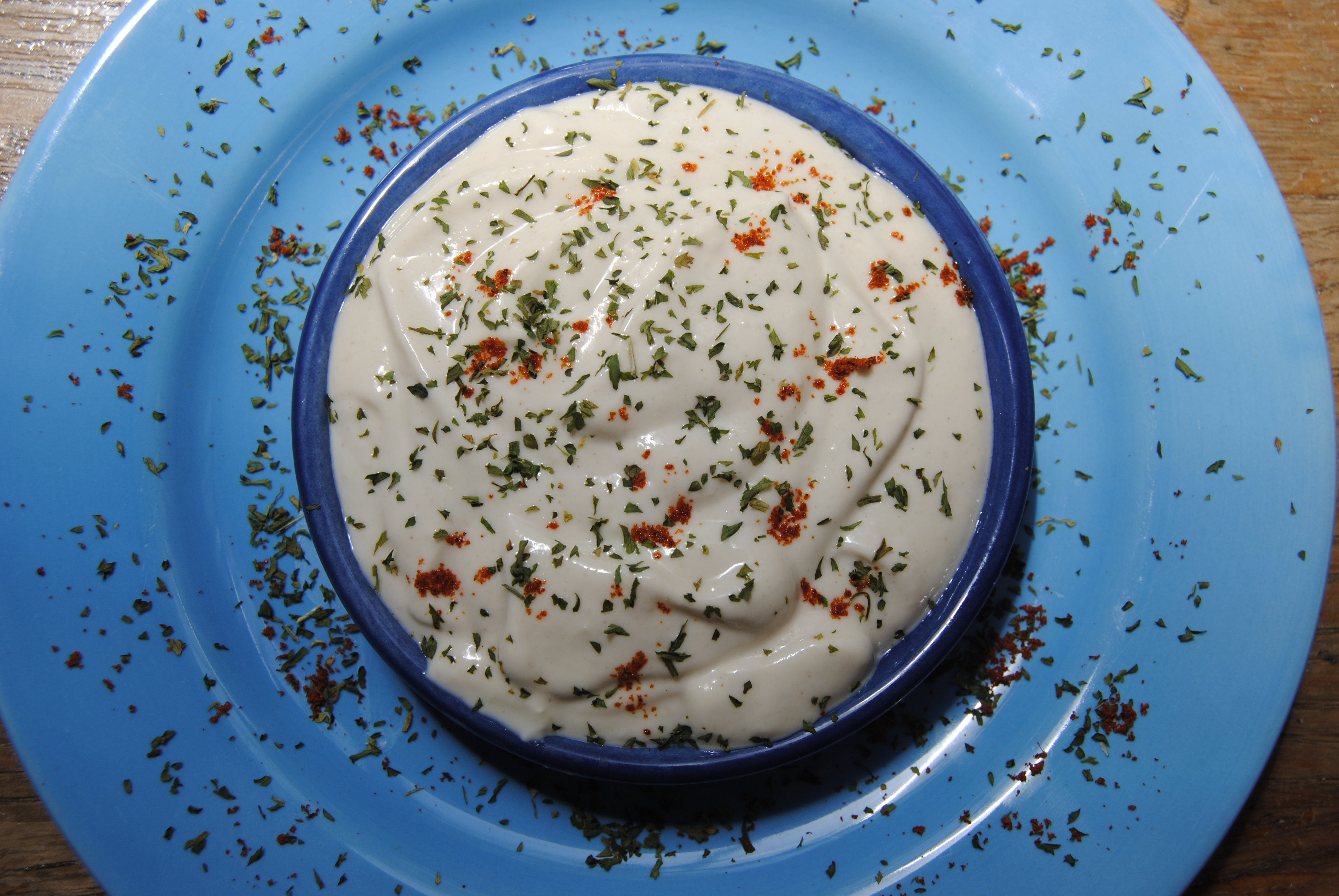
We gave it our best shot at guessing what was in it and then decided just to ask. Simple ingredients, apparently: raw tehina, yogurt, salt, pepper, lemon and garlic.

What you need:

1/2 cup plain yogurt (can be regular, low fat or diet)

3 tblsp tehina

2 tblsp lemon juice

1 garlic clove; minced (optional)

1/2 tsp salt

parsley and cayenne pepper for garnishing

How to do it:

Just combine all the ingredients. This sauce can go on meat, salad or even with a quiche/kuku! As always, you can increase any of the flavors if you like things more lemony or more yogurty. If you prefer a plain, regular tehina dip, check out this recipe.

If that name scares you and makes you think it’s zucchini cooked with some sort of tropical bird, rest assured. No birds were harmed in the making of this breakfast. Only unborn baby chicks. Oh wow, that’s so sad.

I wrote last time about Olive Roasted Almonds as being the sophisticated sister of shlumpy popcorn and homely potato chips. Well, this Kuku is like the royal palace of quiches/frittatas. It has sophisticated flavors and it’s also really easy to make. You can do it in a frying pan or in the oven. One small warning: if you have ever had any indication that you might be OCD, do not attempt making this. Zucchini will be all over your counter, dill will become a new feature of your cutting board and we haven’t even gotten to all the pieces that didn’t make it into the mixture and are now hovering over your drain.

This recipe was found here and includes my small addition of herbs on top. It would also be good with chard, spinach or kale on top, too. Go crazy!

What you need:

2 large zucchinis (or 1 lb of zucchini); grated

2 medium-sized onions; finely diced

4 eggs

4-5 garlic cloves; minced

1/2 tsp ground turmeric

1/2 tsp baking soda (optional, but it will add some height)

salt and pepper to taste

1 cup plus a little more of mint and dill; finely chopped

1 tsp of the oil of your choice for frying

How to do it:

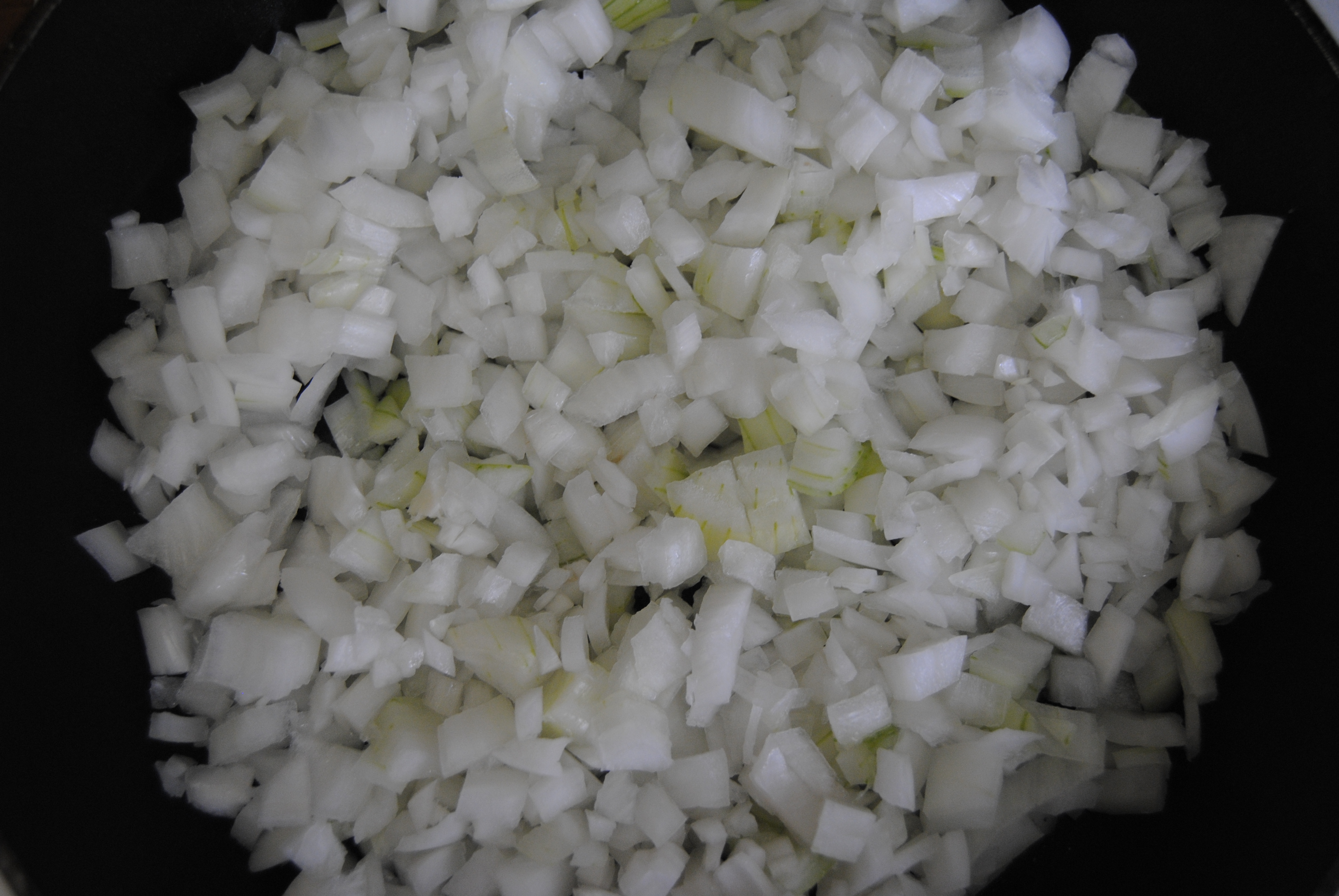
Preheat your oven to 375 F. In a frying pan, heat up some olive oil. My cousin Banafche taught me that most Persian food requires heating up the oil first and then putting in the onions so they make a loud sizzling sound. Add your garlic, too.

Not pictured: sizzling sound

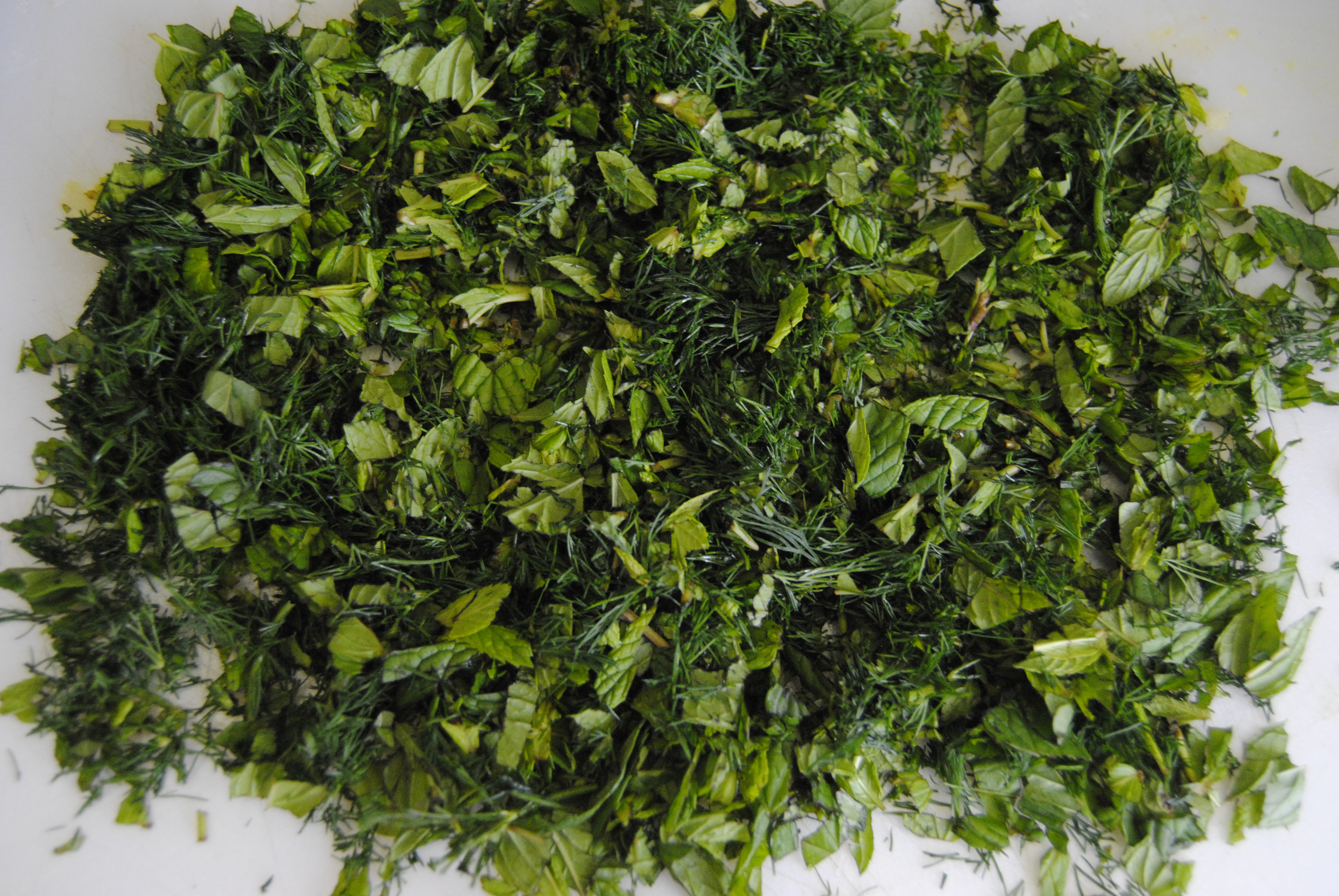
When the onions become translucent, add the turmeric and take a big ol’ whiff. mmm. Okay, now give it a good mix and let the onions and garlic saute a little longer. Grate your zucchini now and add it to the onions. This part gets a little rough, as you need to wait about 15 minutes for the moisture to evaporate. Zucchinis are majorly watery. While you are waiting anxiously, crack your eggs into a bowl and whisk in (or if you’re me, fork in) baking soda, salt & pepper. Once the zucchinis seem dry or when you completely run out of patience, transfer them to a sieve (and press down on them with a spatula over and over or even grab some sheets of paper towel to soak up the water). Make sure all of the moisture is out. A cheesecloth would work wonders here. While it’s draining a little, chop up your herbs and set aside.

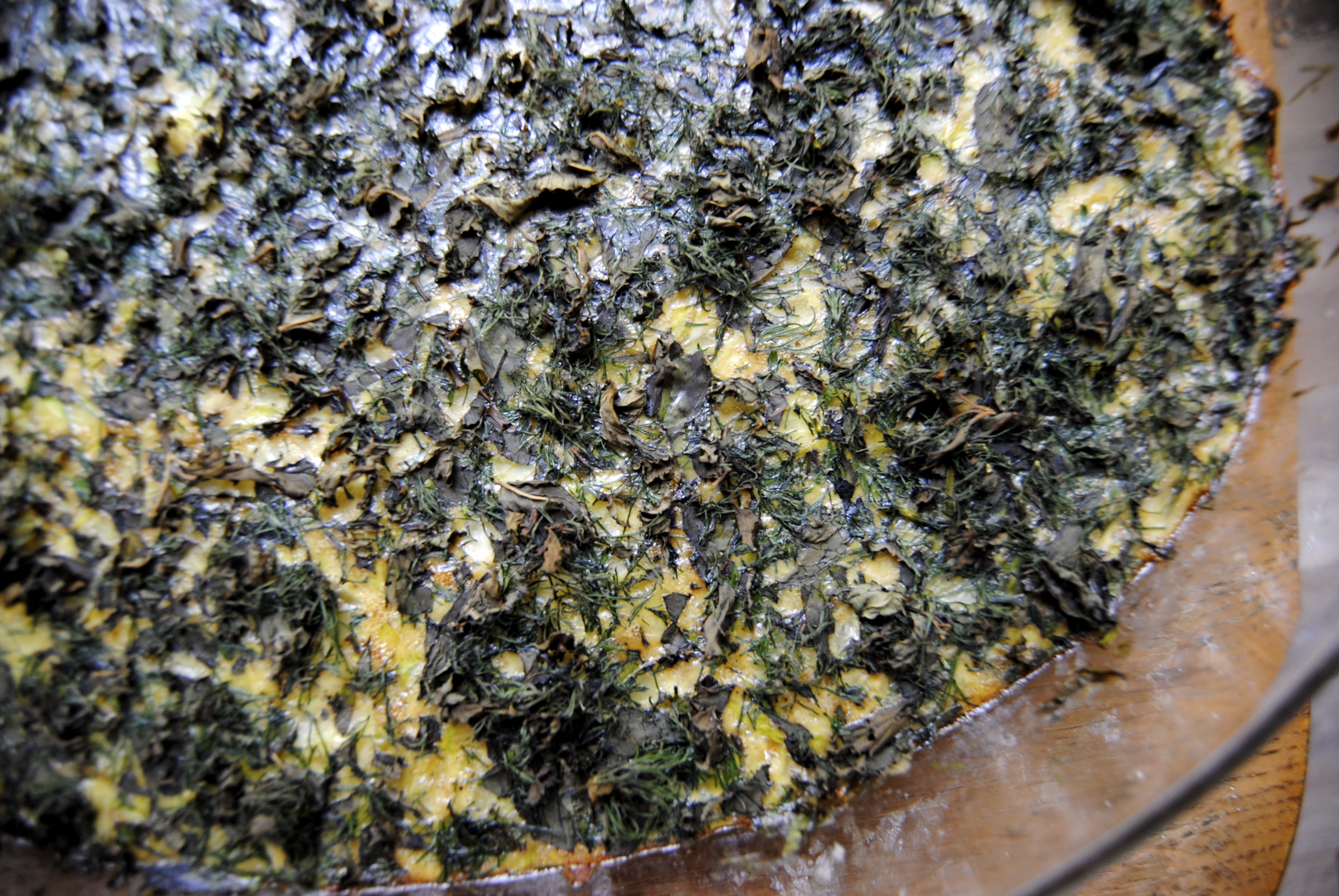
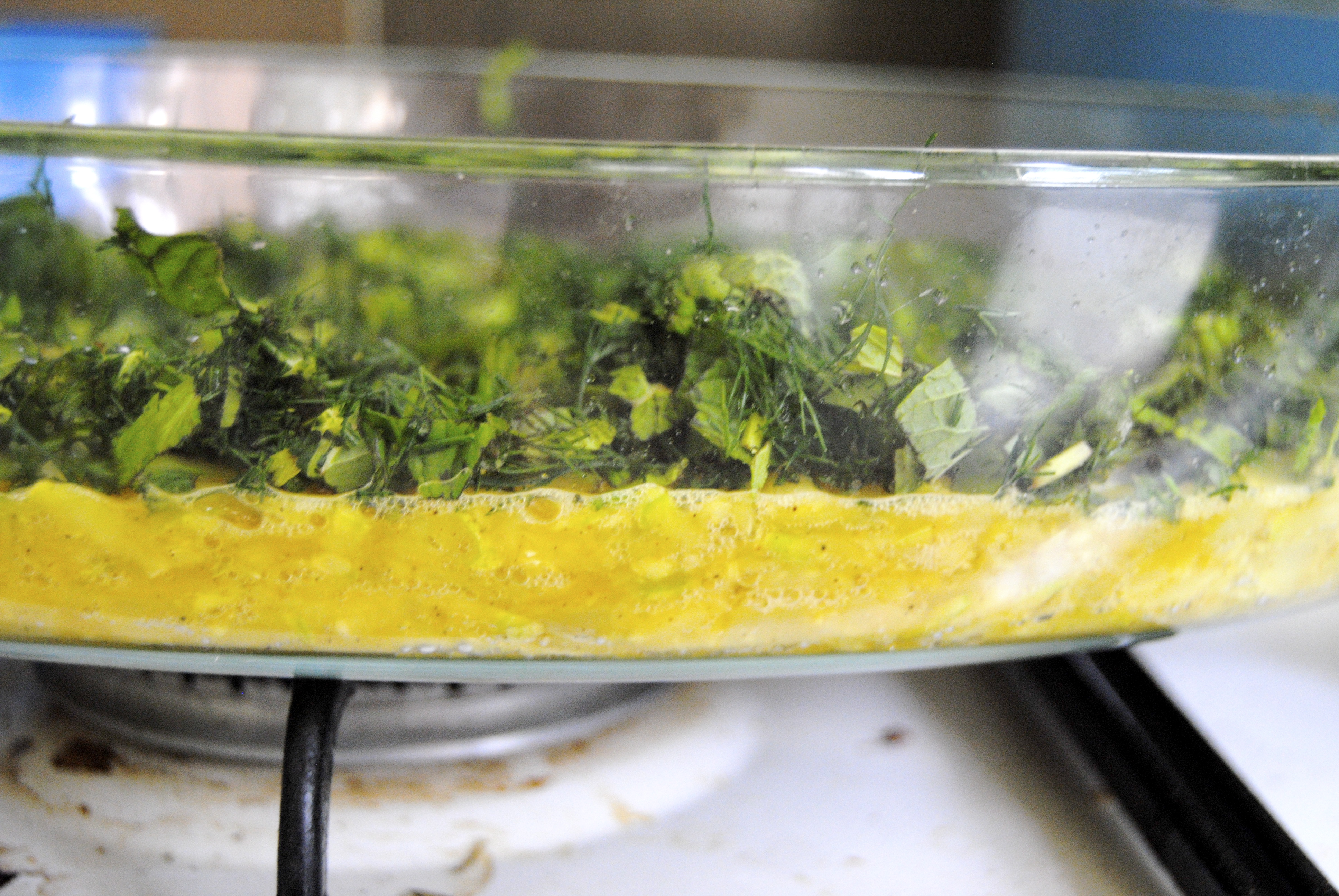
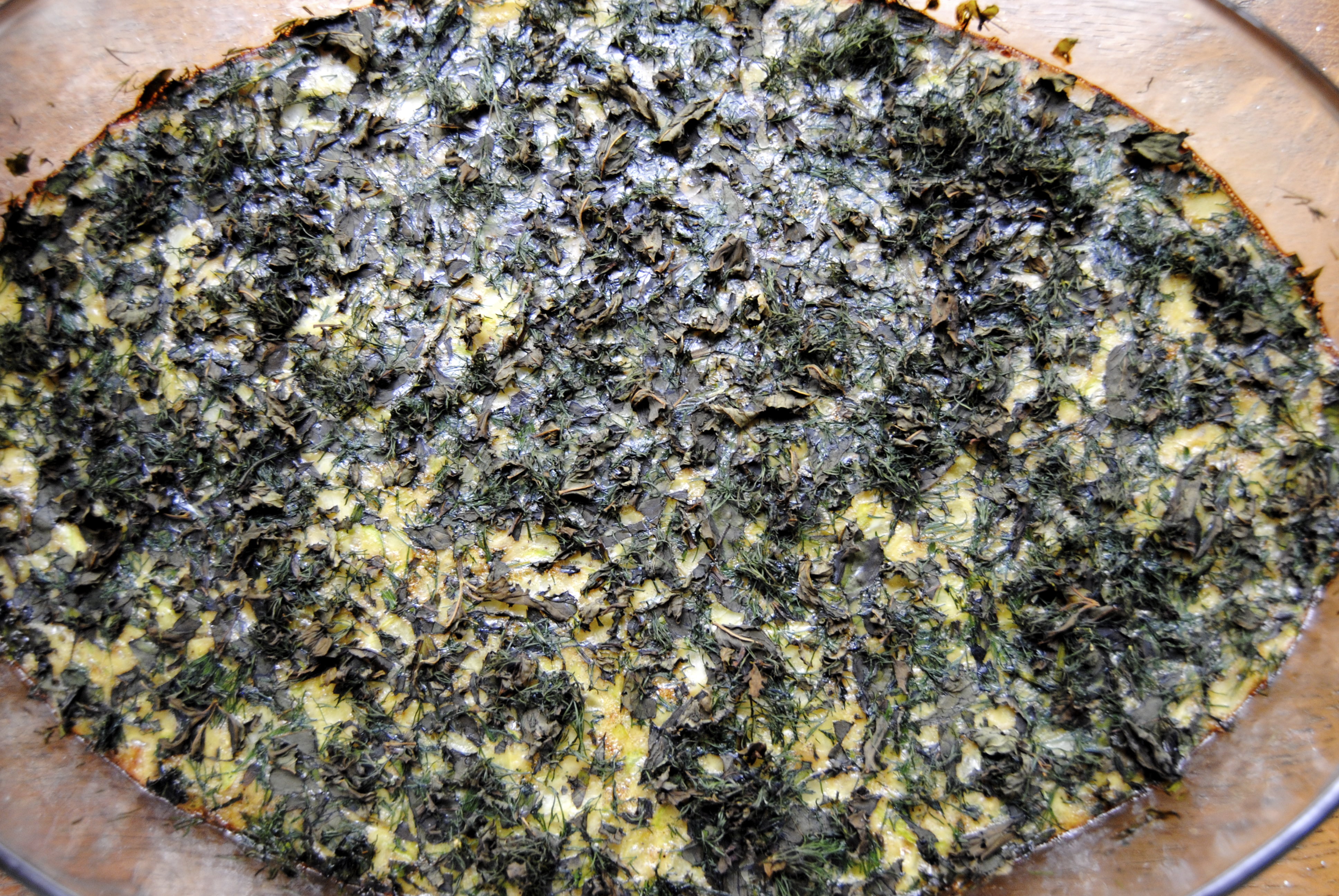
Okay, yay, so that’s finished. Combine the eggs and the zucchini, onion, garlic mixture. Pour the mixture into a pyrex dish, aluminum baking tray or whatever you usually use. The smaller the tray the thicker they’ll be, and you can see in my picture that I used a large dish and they spread out quite thin. I would try them in a brownie dish. Sprinkle the herbs so that they completely cover the top, like this:

When you remove the Kuku from the oven, look for a goldeny brown hue (about 30 minutes, depending on your oven). If it’s not quite there yet, leave it in a little longer. You can serve this warm, cold for breakfast or lunch, it’s an appetizer, meal or side dish. Goes great with this Yogurt-Tehina sauce. Enjoy!

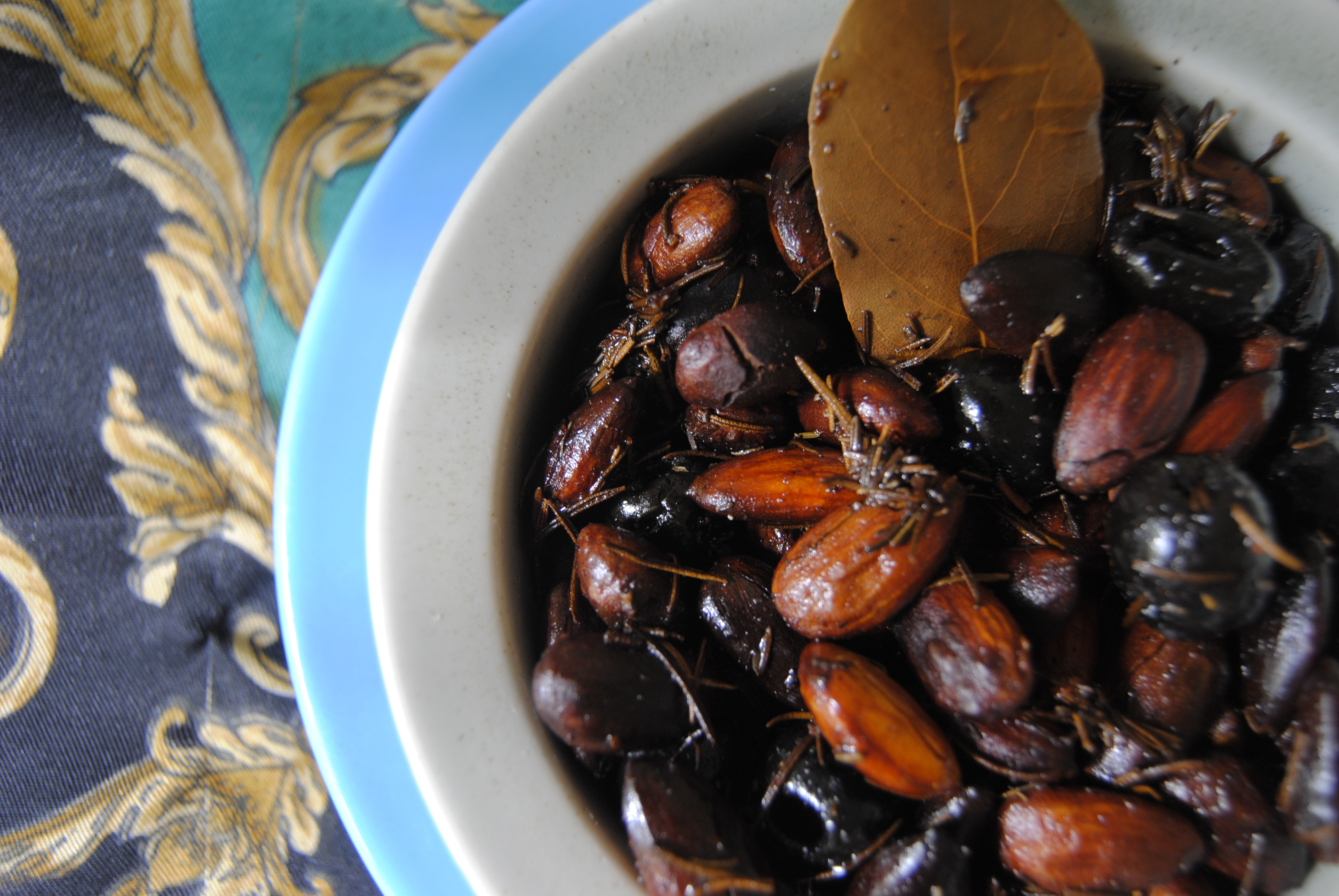
My friend told me about this incredible appetizer that her friend brought to a dinner: olives and almonds roasted with a bunch of spices and bay leaves. I think I thought it sounded interesting more than anything else. And I have to be honest, I took my first bite with caution. But what a surprise! They were gone in seconds. Note to all of you: it’s a bad idea (read: extremely awful, horrible) to eat this within 15 minutes of any meal that contains tehina. You WILL get a stomach ache. But really, the almonds are nutty and smoky, the olives are almost tangy and the fried rosemary and other spices calm everything down. Think of this as the sophisticated sister to shlumpy popcorn, homely chips, or whatever treat your normally snack on. Serve it with a spoon though because you definitely don’t want everyone’s hands reaching into the bowl and pulling out oil-covered fingers.

What you need:

1 cup raw almonds

1/2 cup black olives, greek olives, green olives or whatever your favorite olive flavor is

1/2 tsp red wine vinegar (optional)

a pinch of salt (really, just a pinch or you’ll be sorry)

1 bay leaf

1 tblsp rosemary

1-2 tblsp olive oil

1/2 tsp lemon; zested

1/2 tsp cumin (if I were doing this again, I might try a little more cumin than this)

How to do this:

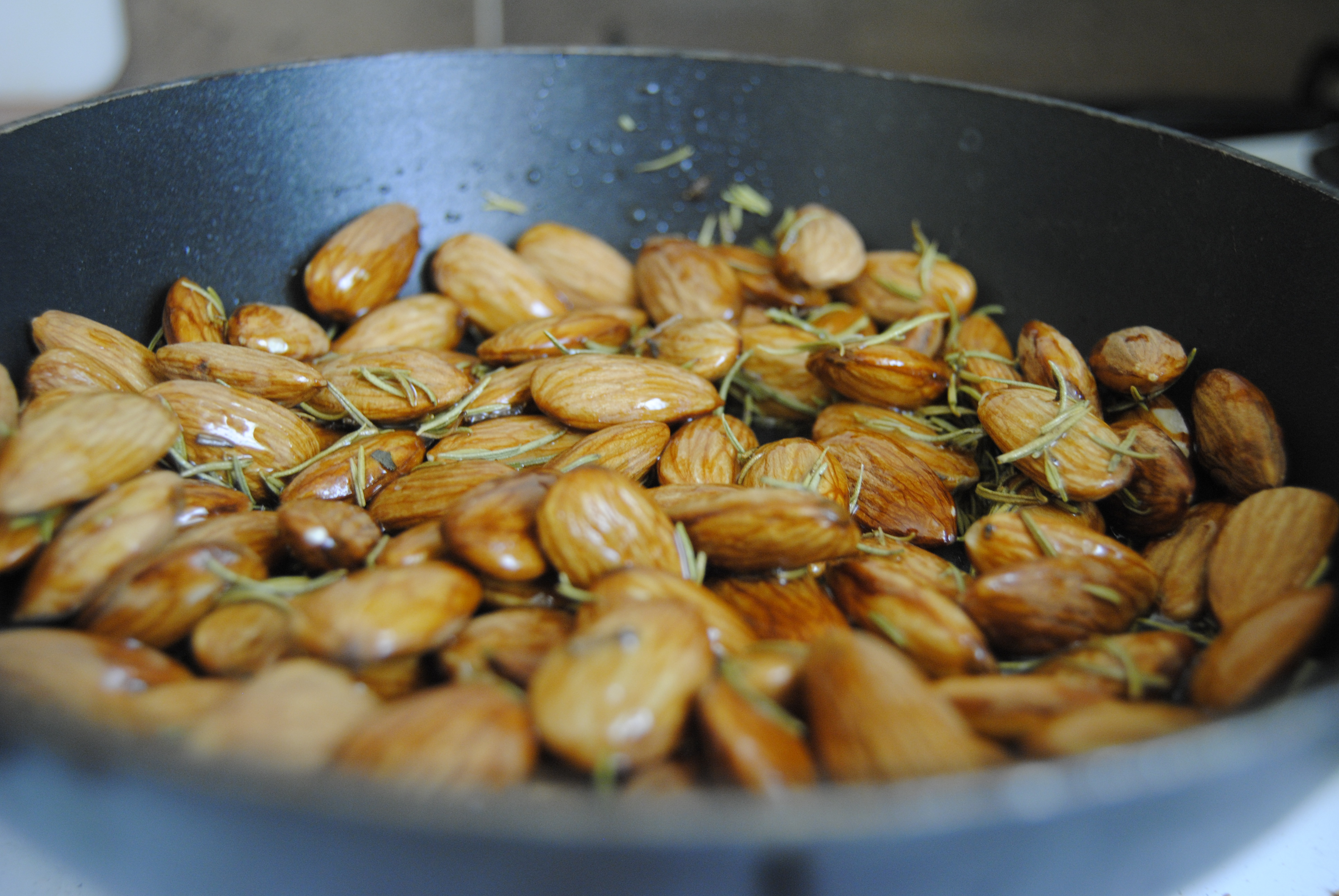
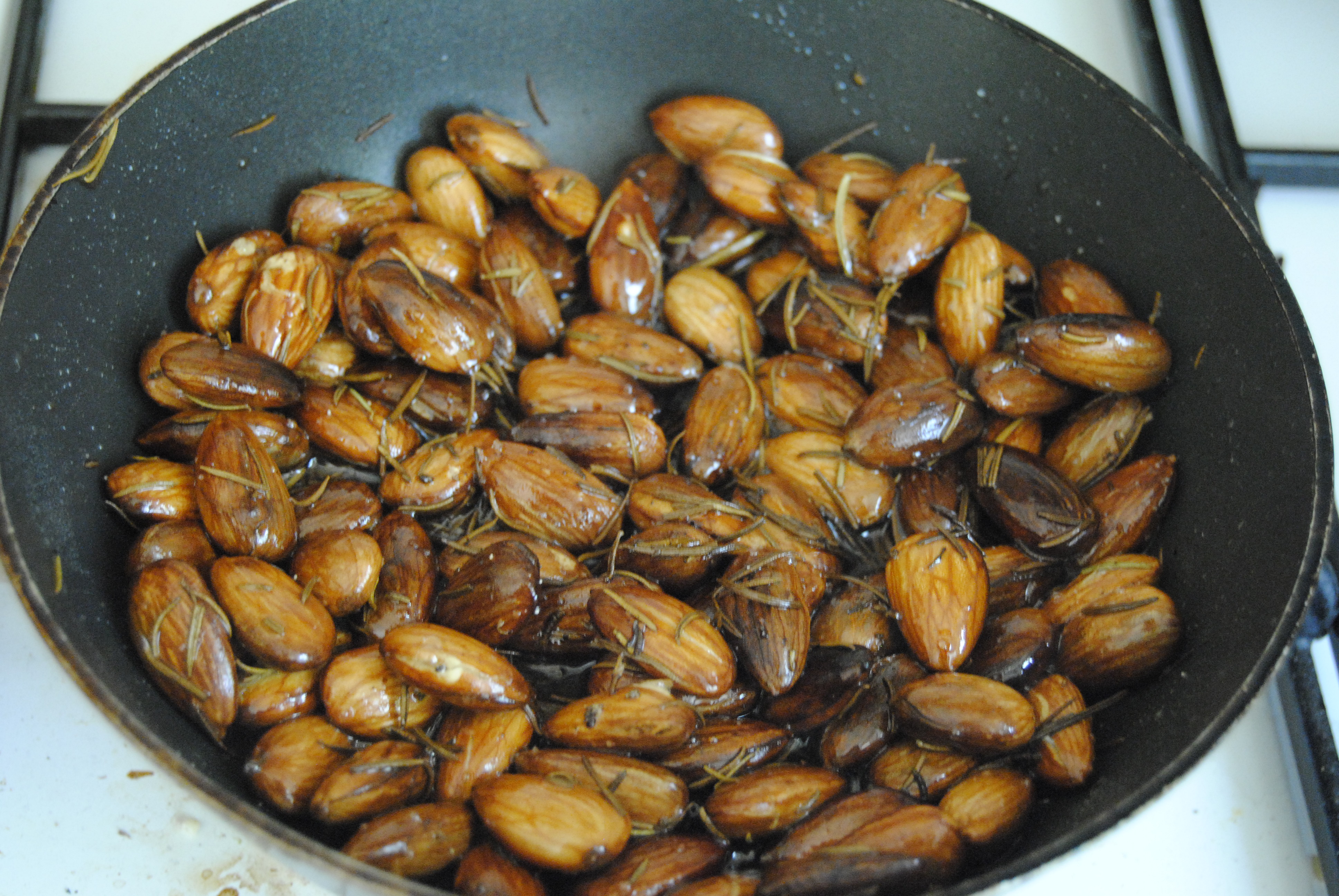
Preheat your oven to 325 F. Heat up the oil in a frying pan over med/high heat for about two minutes. Add the rosemary and toss them with the oil. Just take a second and breathe this in. It smells so good. Reduce heat to medium and add the almonds, tossing them with the oil and rosemary until covered. Let them roast for about ten minutes or until they become a golden brown like this:

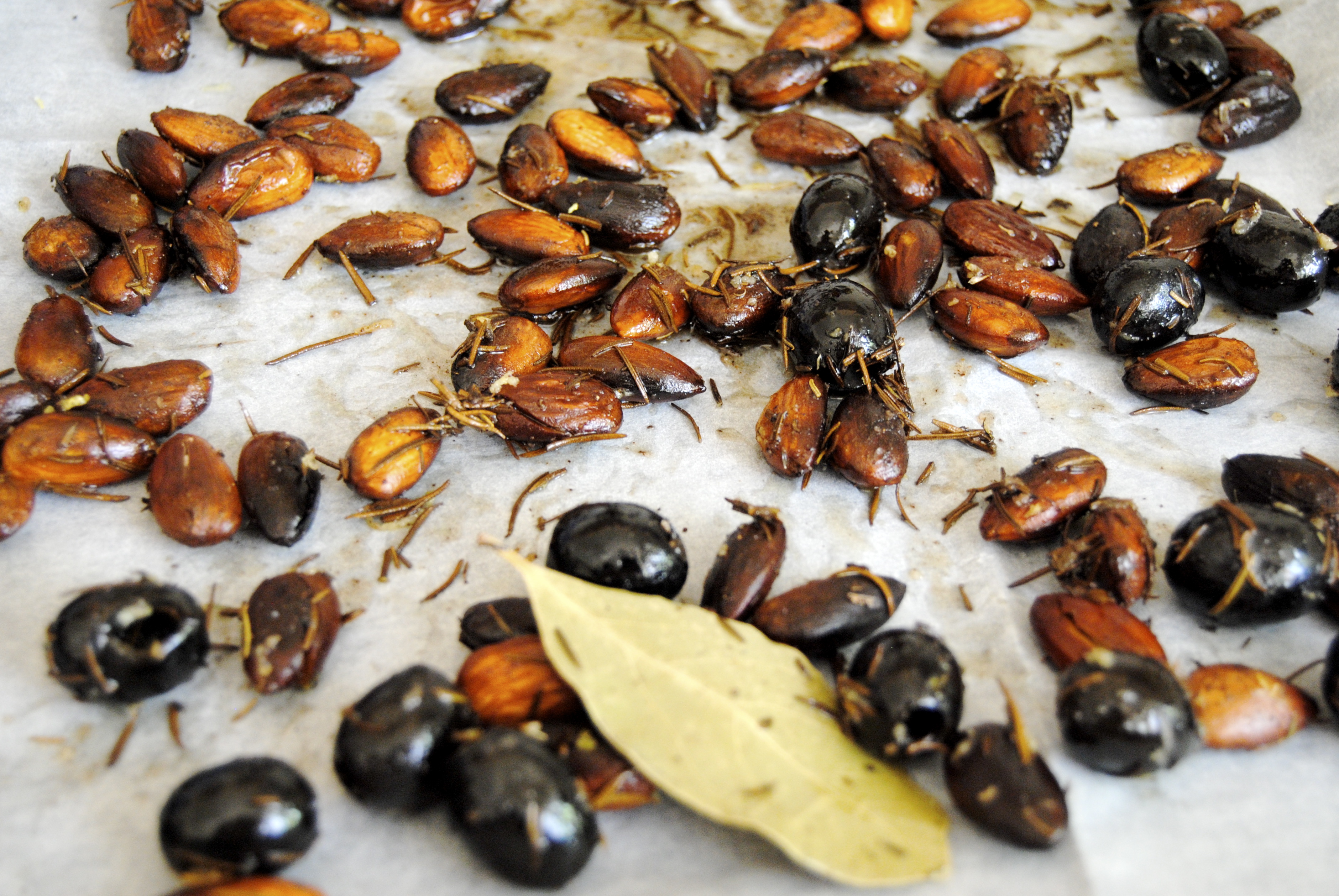
Add the bay leaf. Step away from the pan if you don’t need to be near it or you’ll get burned from oil. At this point, the almonds should begin to be making a frightening popping sound. This is good. Remember to stir every two minutes or so so that the almonds don’t burn. Add the olives and the red wine vinegar (if you’re using it). Mix in well. Remove from heat and wait a minute or two. Then add the lemon zest, cumin and salt. Spread out on parchment paper like this:

and roast for 30 minutes. Give the pan a good shake every ten minutes so nothing burns. Serve warm.

This is my least favorite word to say in Hebrew besides every word that has an “r” in it. I can’t roll my r’s well, and it’s a huge problem for me when I go to order an Americano at a coffee shop and, well, I just sound so American! But this is my least favorite word because the “t” sound and the “kh” sound are so back-to-back you hardly get a chance to reorganize your mouth before it’s time to get to the next consonant. It’s so unlike what it’s referring to: a smooth, neutral tasting dip that goes on salads, meat, vegetables, falafel, inside sandwiches and cookies (well, at least raw tehina does), or can be dipped into with pita, chips, pita chips, fingers, spoons, and, okay you get the idea. It’s the most versatile paste ever.

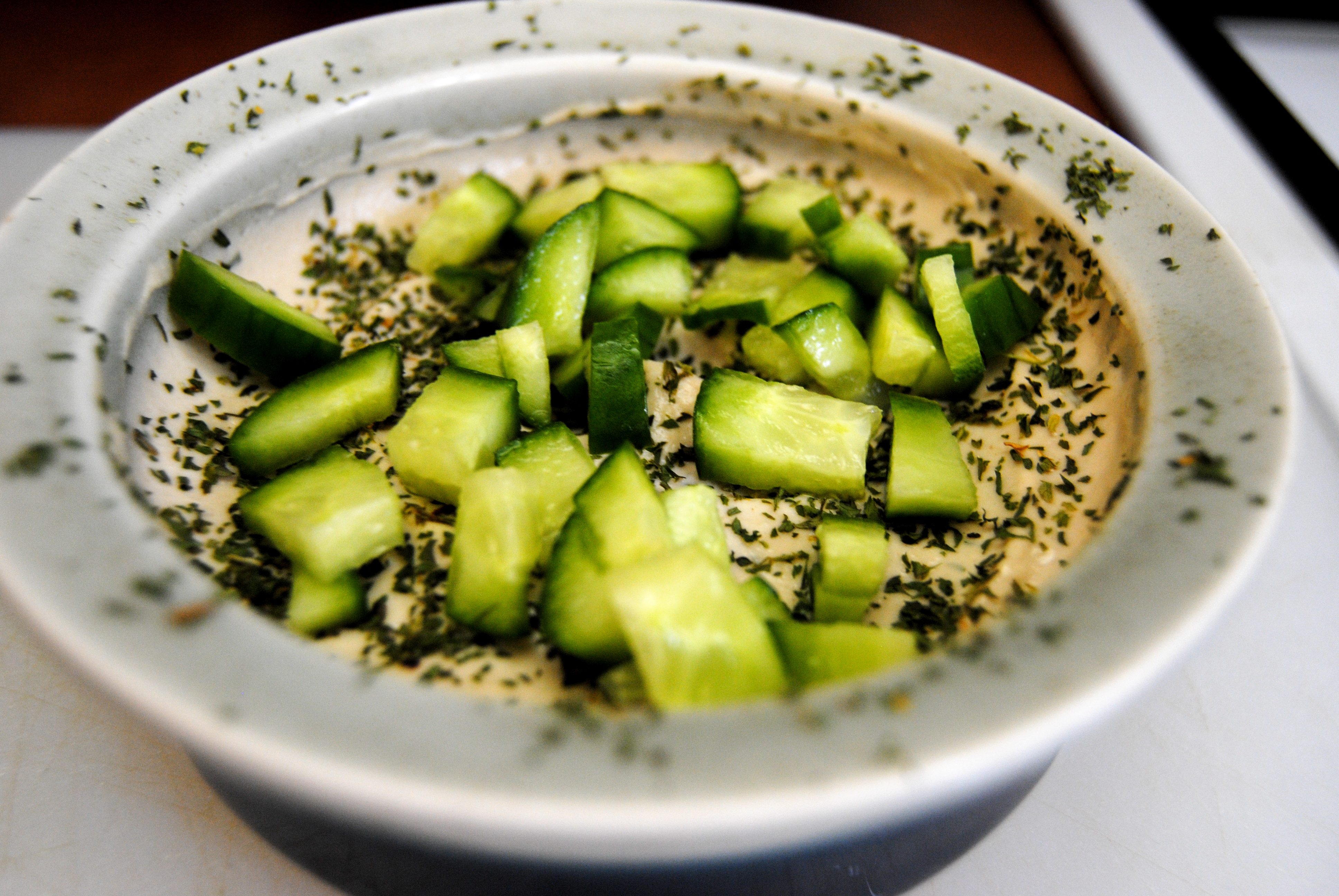
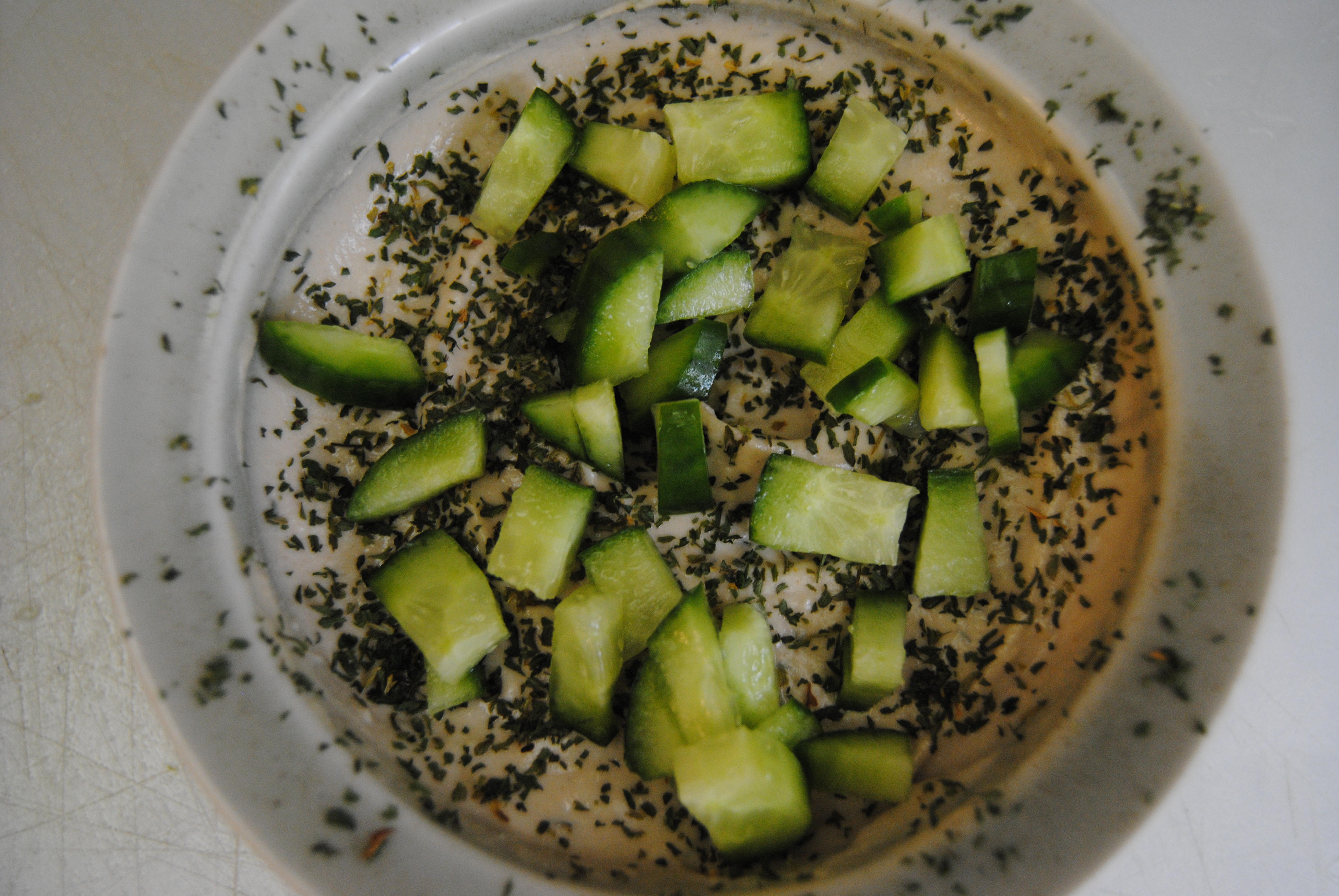
The Arabic word tahinia, means “to grind,” which makes sense because tehina is a paste made from sesame seeds. You can buy it naked in the store and then you get to dress it up, kind of like Barbie. I like mine with cucumber and dill/dried parsley. I’m salivating.

Here’s how we do it:

1/2 cup raw tehina paste

1/4 cup lemon juice

1-4-1/2 tsp salt (depends on your taste)

1/4 tsp garlic; minced

1/4-1/2 cup water (**if you are putting in the fridge for later, you’ll want 1/2 c of water because it will thicken in the fridge. if serving it immediately, you can stick with 1/4)

toppings: 1 persian cucumber (Trader Joes); finely chopped or 1 tblsp dried parsley, chopped dill or mint (optional…but not really. just do it!)

and (please read on!) ADD WATER LAST!

You must add water at the end, otherwise it will become a disastrously tough consistency. And speaking of consistency, it’s really fun to watch how this changes consistencies with each new ingredient. Be sure to stir this well and add some dried parsley, fresh dill (chopped) and get your favorite vegies for dipping. But pay attention because tehina in very high in calories, though it’s also very healthy. Keep in mind, this is a base. Feel free to add more of anything, though it’s unlikely you’ll want to add less. If you want to make homemade hummus, tehina is a key ingredient. So you can also think of this as practice. We’ll get to hummus (one of my favorite words to say in Hebrew…khoo-moos) another time! And don’t forget to check out the Yogurt-Tehina Dip.

Problems?

Too thick? Add water tsp by tsp

Too thin? Add more paste

Just tastes too plain? Add more lemon, salt and/or garlic slowly.

 dsc0048

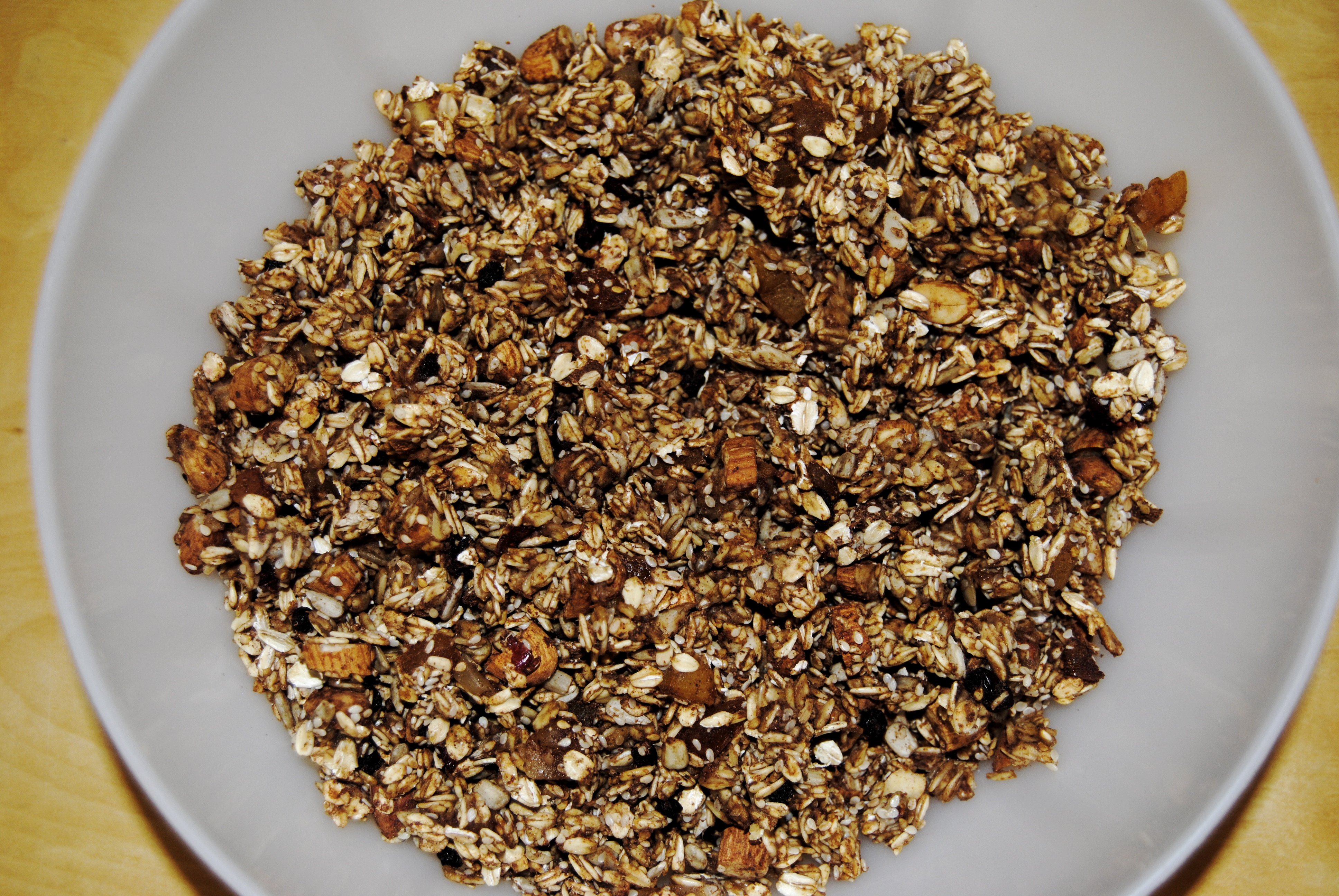
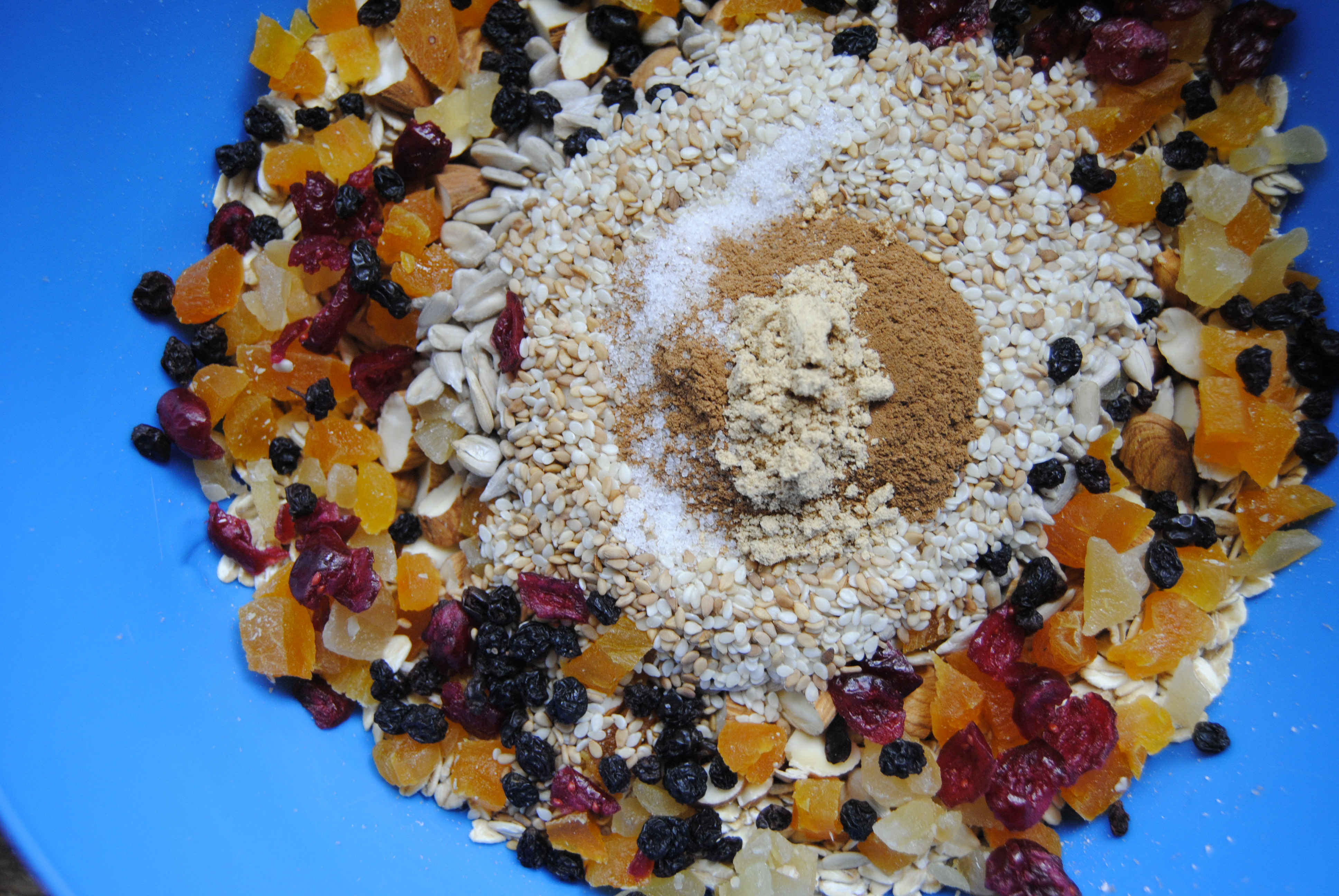
I don’t know about you, but I’m not a huge breakfast person. I always want something like that I can take on the go quickly, but the granola at the store is packed with so much sugar and not a lot of the A+ ingredients that leave me feeling happy, instead of guilty. And feeling guilty is just a bad way to start any morning. 148 calories in 1/2 cup…pretty awesome considering breakfast should contain 25 percent of your daily calories. So, onto this miracle of miracles.

Makes 7 cups.

What you need:

3 cups old fashioned rolled-oats

1 cup almonds; coarsely chopped

1/2 cup sunflower seeds

1/3 cup sesame seeds (untoasted)

1 tblsp dried candied ginger, chopped

1 tblsp dried blueberries

1 tblsp unsweetened dried cranberries

1 tblsp (or five whole apricots) dried apricots; chopped

3 tsp ground cinnamon

1/2 tsp ground ginger

1/2 tsp salt

put aside:

1 cup unsweetened applesauce

1/2 cup date honey (silan), or any other “healthy” sugar alternative such as agave nectar or even honey (though I don’t know what the calorie content would be with those substituted instead)

How to do it:

Mix up the dry ingredients well. On low, heat up the applesauce and date honey over low heat. We don’t want to boil it, just get it a little warm.

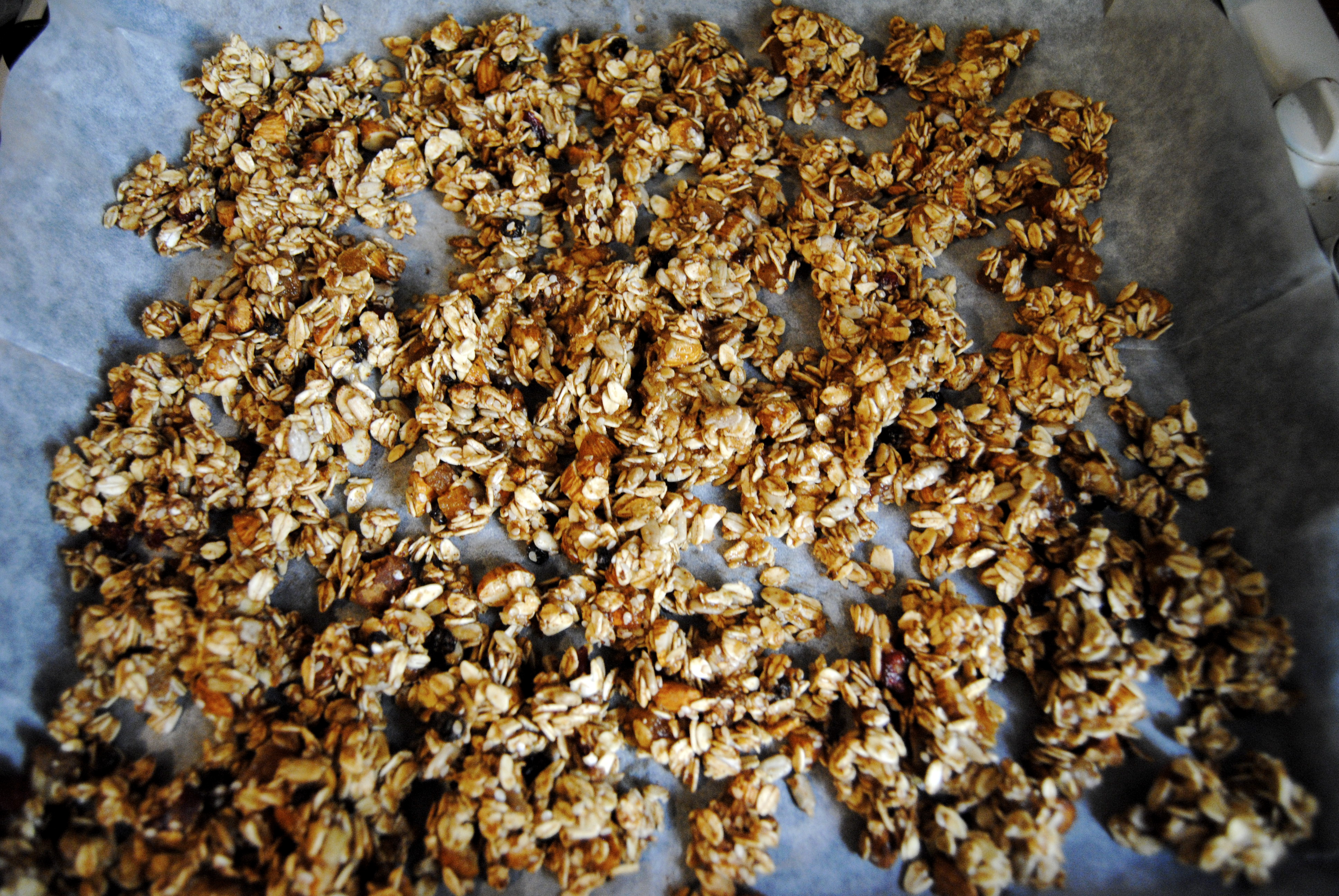
Mix it into the dry ingredients and combine very well. Heat oven to 325 degrees and lay granola onto parchment paper.

You will need two trays. Spread the granola out and be sure to leave some in chunks because that’s the best part! Bake for 45 minutes, returning to the oven every 10 minutes or so to mix the granola around so it doesn’t burn.

dsc0041

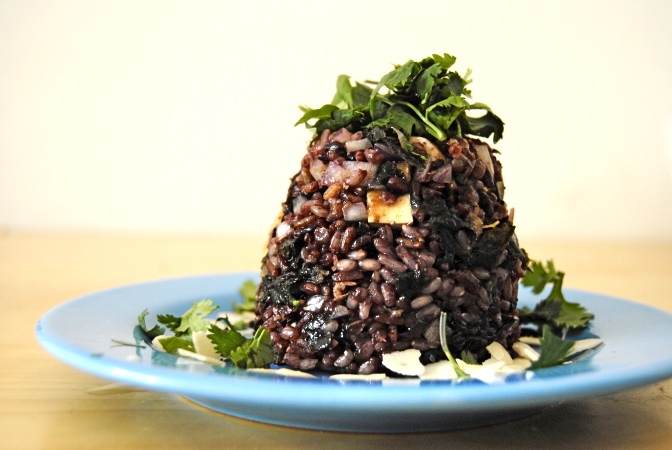
A Moroccan Tent filled with lots of yummy, healthy flavors. This salad turned out to be so delicious! So, let’s get right to it.

Serves: 2-3

Recipe adapted from here

What you need:

1 C wild rice

3 nori sheets (i used regular sushi rolling sheets, but you can use any kind of seaweed you like. the more the better!)

50 g of tofu (or four 1/2 in. slices from one of those small blocks you can buy at the store)

1/4-1/2 of a red onion (depending upon how much you like onion, I suppose)

1/2 tsp of salt

a pinch of sliced almonds and cilantro for garnishing

If you’re beginning to wonder how that would have any flavor at all…it wouldn’t.

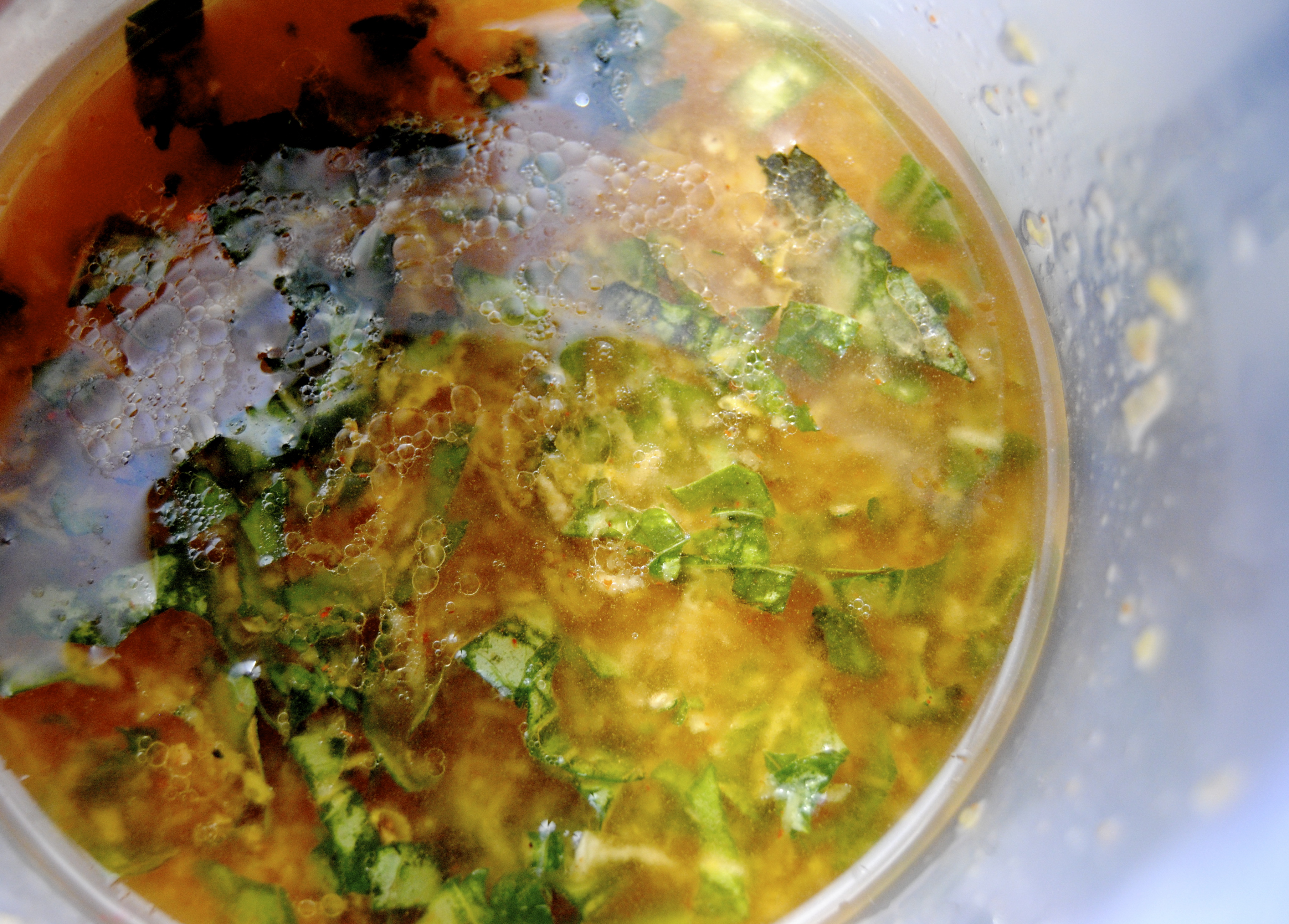
dressing

Here’s how you make the dressing:

3 tsp of date honey (silan), but if you can’t find this, you can just use honey, agave nectar or another

‘healthy’ sugar option

2 pinches of ground cayenne pepper

2 tblsp water

2 tblsp vegetable oil (or if you have sesame oil on hand that would be better)

1 tsp rice vinegar

4 basil leaves; finely chopped

1/4 tsp garlic; minced

1 tsp soy sauce

1 tblsp lemon juice

zest of 1/2 of a medium-sized lemon

zest of 1 inch’s worth of ginger, peeled first


How to do it:

Boil the rice in two cups of water for three minutes then lower to a simmer and cover until cooked. While the rice is cooking, turn your oven to 325 F and lay seaweed on a pan to bake for 15 minutes.

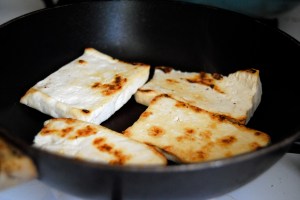
*Dry-fry your tofu until its becomes golden-brown on either side. It’s helpful to press down on it with your spatula. When it’s finished, set it aside. While the nori is baking and the rice is still cooking, making the dressing. Once the nori and rice are finished, crumble the nori into pieces and mix with the rice in a bowl; add the onion, tofu (cut into cubes), salt, and the dressing and combine well. Stuff the mixture into a cup or a mug, flip it onto a plate to create a “Moroccan tent,” and garnish with sliced almonds, pecans or walnuts and cilantro. Enjoy!

*Note: Dry-frying is simply frying the tofu without any oil or water. This will allow any moisture to seep out, and if you were

marinating the tofu, this is when you’d put it in a marinade to, well, marinate. Let’s face it though, it also saves you oil calories, so, wahoo for that!

All-Purpose Spice Mix and Rub


I mentioned Baharat in a previous post, but I wanted to give you a sense of what it looks like. Baharat is Arabic for “spices,” (the plural form of bahar, “spice” and, incidentally, the Persian word for “spring,” (as in the season), which is where my mom’s side of the family gets its last name, “Bahary.” Baharat can be used to season all kinds of meats, and, as I mentioned before, I even use it when I make zucchini bread! It will keep well in a tightly-lidded jar for up to six months.

So, you don’t live in the Middle East but want to try it out. Here’s how you can make it:

There are Syrian, Libyan, Tunisian, Moroccan, Turkish and even    Iranian versions of this (called Avideh). For this recipe, we’re using  the Tunisian version. Blend this well and keep in a tightly-lidded jar.

1 tblsp each of cardamon, cinnamon, ground ginger and black pepper

1/2 tbslp each of allspice and nutmeg

Can you smell it already?!


Mafroum (Muh-froom)—Stuffed Potatoes, and NOT for the faint of heart

Algerian Stuffed Potatoes in Sauce

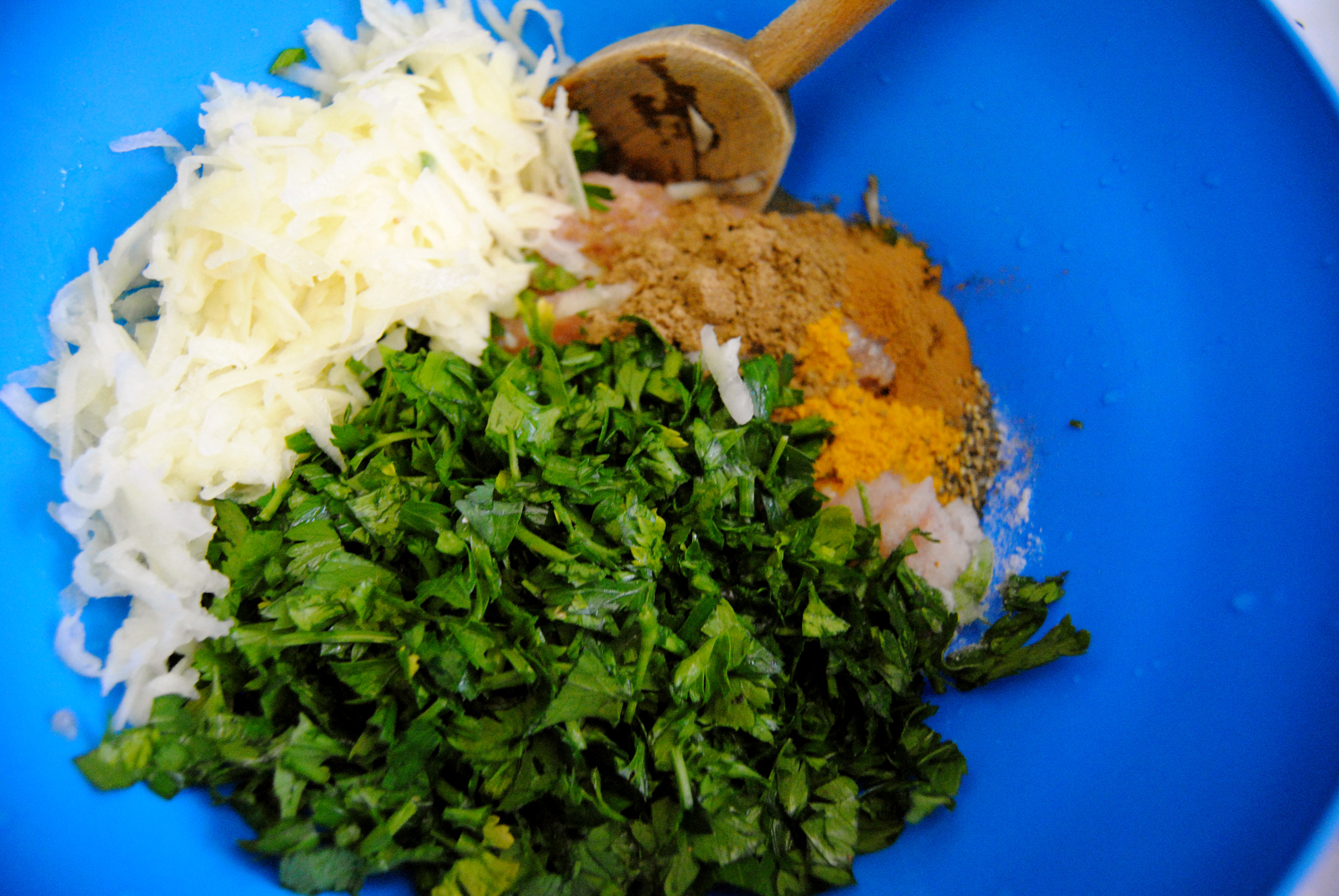
Is it Tunisian, Libyan, Moroccan or Algerian? Different people will give you different answers because it’s so good everyone wants to claim it! This recipe is inspired by Boulet, meat-stuff potatoes that all the women in my fiance’s family make for Shabbat dinner. When we tried this recipe, we thought that we had made Boulet but quickly learned from our landlord, who dropped by to fix something while we were cooking, that we had actually made Mafroum, a dish his Moroccan father used to make. Whatever its name, Mafroum is a potato stuffed with meat, spices and herbs and covered in a spicy sauce. It’s a bit of a laborious meal to prepare due to all the herb chopping, but when the baharat-spiced meat melts in your mouth and hints of mint tickle your throat you’ll see it was well worth the work.

From:  Fresh Flavors from Israel, a book from the Al HaShulchan magazine but found on another blog.

Serves: 6 people, allegedly. The two of us made quite a dent in it. So, I’ll say that if you stick to reasonable portions, this dish serves four, maybe five people happily.

Potatoes:

six medium sized potatoes, roughly uniform in shape; peeled

salt and pepper

1 C flour

2 beaten eggs

oil for frying

Stuffing:

1 lb ground beef (I used ground turkey because it’s healthier)

1 cup fresh parsley; chopped

1/2 tsp salt and ground black pepper

2/3 tsp Baharat spice (**recipe included below**)

1/3 tsp ground turmeric

1/2 tblsp sweet paprika (if you don’t have this, we skipped it)

1/2 tsp ground cinnamon

chili pepper to taste (we used cayenne)

1/2 tsp ground ginger

1 potato; grated coarsely, rinsed, and drained till dry

Sauce:

1 large onion; chopped

4 cloves of garlic; crushed

4 celery stalks; coarsely chopped (save the leaves!)

3 tblsp tomato paste

1/2 cup tomatoes; chopped

1 tsp salt

1/4 of a cabbage; chopped in coarse chunks

approximately 1 liter of stock (chicken or vegetable) or water

3 tblsp each of fresh mint, parsley, and celery leaves; chopped
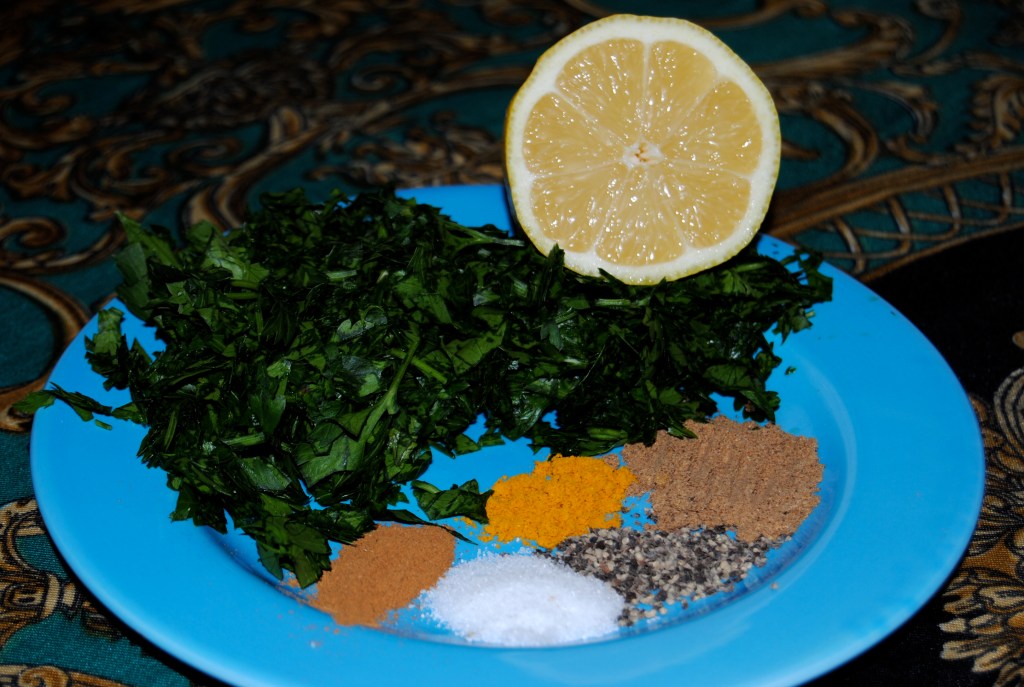

**Baharat Spice Mix, as promised**

There are Syrian, Libyan, Tunisian, Moroccan, Turkish and even    Iranian versions of this (called Avideh). For this recipe, we’re using  the Tunisian version. Blend this well and keep in a tightly-lidded jar.

1 tblsp each of cardamon, cinnamon, ground ginger and black pepper

1/2 tbslp each of allspice and nutmeg

Can you smell it already?! (Secret: I even put a pinch in my zucchini  bread!)

How to do it:

Let’s start with “Stuffing.” Combine the meat with all the spices. Beat it well, take off your jewelry and get your hands all up in there if you’d prefer, cover it and place it in the fridge for about 30 minutes to allow the flavors to intensify.

While that’s happening, we’ll focus on the “Sauce.” Chop the onion and put it aside. Chop the garlic and celery stalks and set them aside, separately from the onion. Diced tomato goes in its own corner as well. Now grab those potatoes! If they aren’t already peeled, do it now. Slice each potato the long way and (please read on!) slice almost all the way through. You only want to create an opening, not slice them in half. Something I learned the hard way. Stuff the potatoes with the meat mixture and clean off the edges by patting it flat.

In a wide pan, heat up your oil. While it’s heating up, put flour, salt and pepper mixed together on a large plate. In a bowl, place the beaten eggs. Roll the potato in flour gently, making sure it’s covered. Now roll it in the egg mixture. Fry the potatoes until golden. Tongs work well, but if you don’t have them around, I used two forks in either hand, but kind of scary if oil is flying all over the place. Remove from pan and place on paper towels to remove excess oil.

Pour out most of the oil and saute the onion in a small amount. Add the garlic and celery and wait several minutes. Add the tomato paste and chopped tomato. Stir, cover, and cook for 10 minutes on low heat.

Season with salt & pepper again, lightly. Add the cabbage and stock/water.

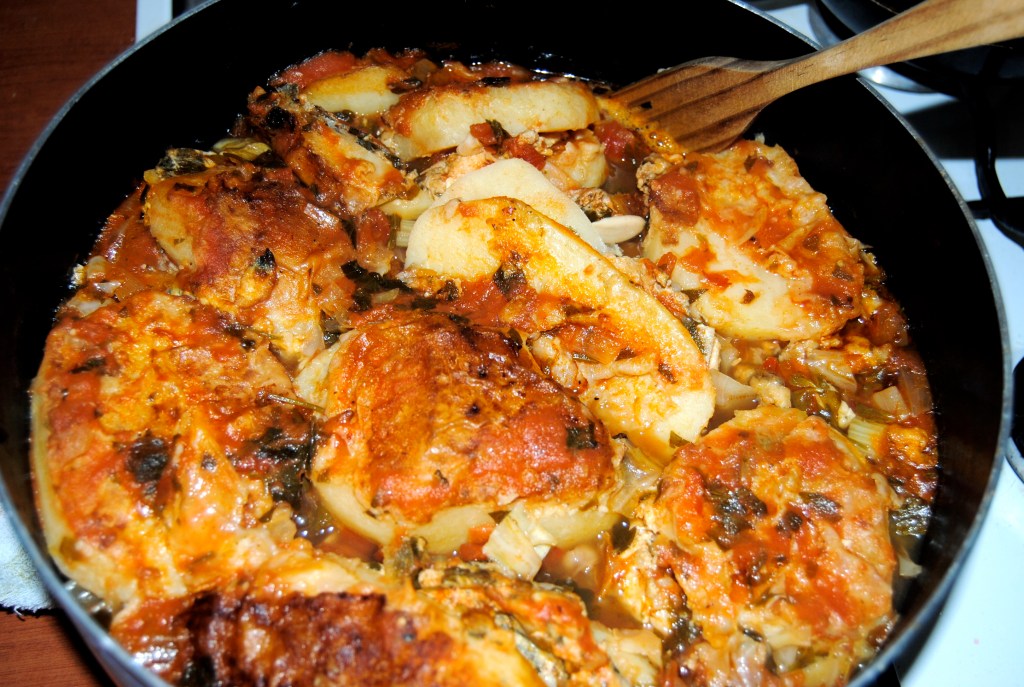
Put the potatoes into the sauce, in one layer. Add the chopped mint, parsley and celery leaves. Put the lid on the pan, slightly ajar. Cook over low heat for 2 hours or until the potatoes are tender. Serve it with salad or over a bed of whole wheat cous cous or spinach.
Silvie’s Shakshuka (Shawk-shook-uh)

Silvie's Shakshuka (Shawk-shook-uh) 

There is no more perfect a dish to begin this blog with than Shakshuka, meaning “a mixture” in the North African Berber dialect Tamazight because Shakshuka was the first “Israeli” dish I learned how to cook when I moved to Israel. My soon-to-be Tunisian mother-in-law taught it to me as her mother taught it  to her, and I make it about once a week. Have it for breakfast in a small pan with one egg, have it for lunch or have it for dinner. Or make it smaller, cut the pepper in long strips, crank up the heat and serve it as a spicy small side dish.

serves: 4 moderately hungry people

4-5 garlic cloves; minced or chopped finely

1-2 tblsp olive oil

8 oz of your favorite tomato sauce or just one can of diced tomatoes (if you’re in Israel, just use the shakshuka sauce sold in cans or plastic containers)

2 red bell peppers; diced

1/2 green bell pepper; diced

1/2 hot pepper; chopped finely

4 eggs (or one per person)

salt and pepper to taste (this will depend upon the flavor of the sauce you choose)

My additions: 1 tsp turmeric; 1/2 yellow onion, diced; 1 C spinach, chard, kale or your favorite leafy green, chopped; dried or fresh parsley to sprinkle. If you don’t have the right peppers on hand, any color will do just fine.

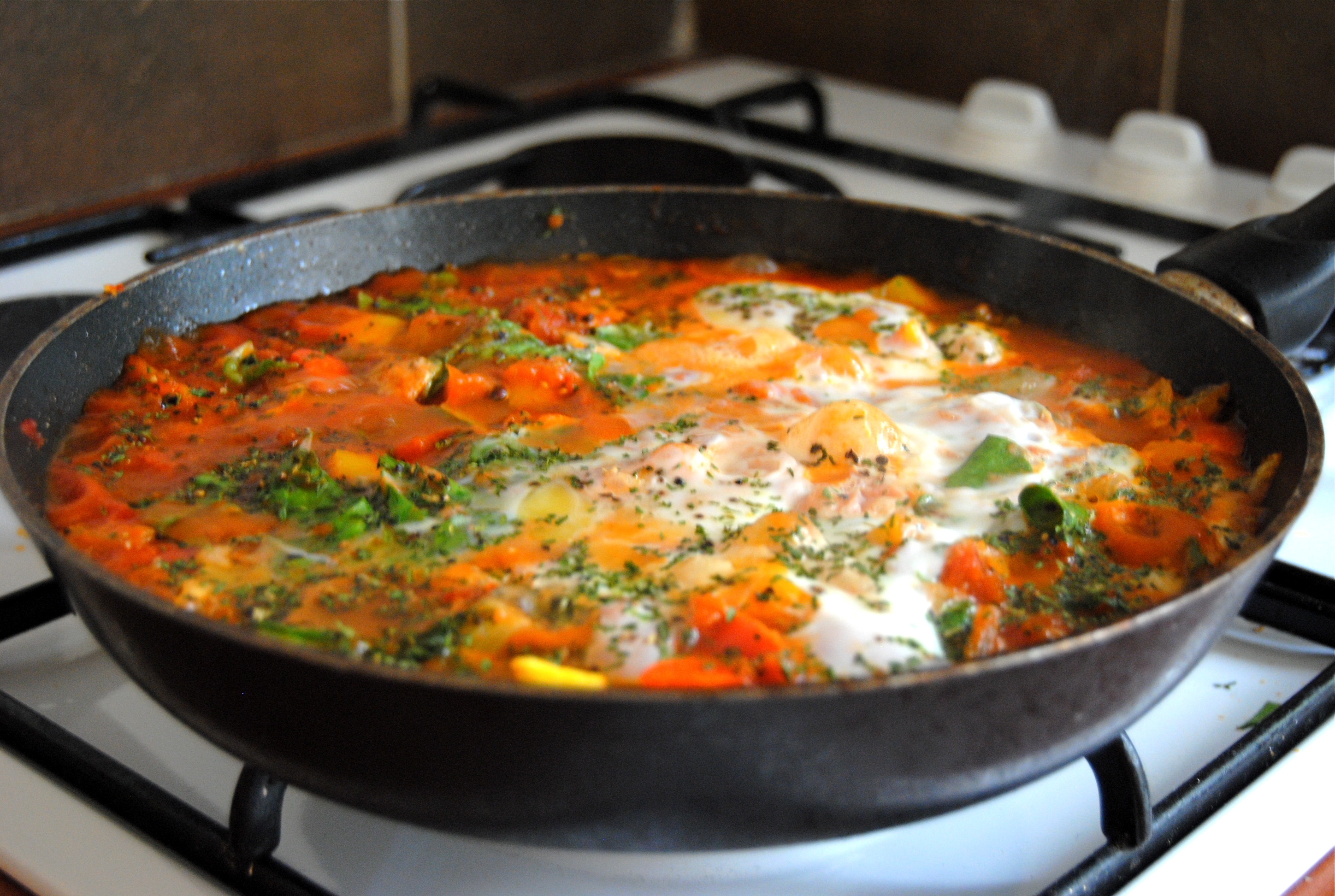
Heat up your oil in a pan on medium heat. Add the garlic and when you begin to salivate, add the turmeric and onion. Mix in the turmeric well. After a few minutes, pour in your tomato sauce, add your salt and pepper (I use quite a bit of pepper and about 1/2 tsp of salt) and lower your heat to med-low. When it begins to boil (or after about five minutes), add the peppers and hot pepper. Stir in the peppers until well blended. If it looks like your sauce isn’t sauce-y anymore, add in a tblsp of water, or if you begin to smell it burning, add in a tblsp of water. Then add in your leafy green of choice. Now, DO NOT MIX YOUR SHAKSHUKA ANYMORE. Crack the eggs one by one on either side of your pan. Take a fork and spread the egg white around so it isn’t creating a puddle in each spot. Cover with foil if you’re short on time (will take about 15 min. to cook) or let it cook uncovered until the whites are cooked. Cook until the eggs yolks are only slightly hard. (You can see I spread out the entire eggs, which you can do, too.) Sprinkle parsley on top. Enjoy!