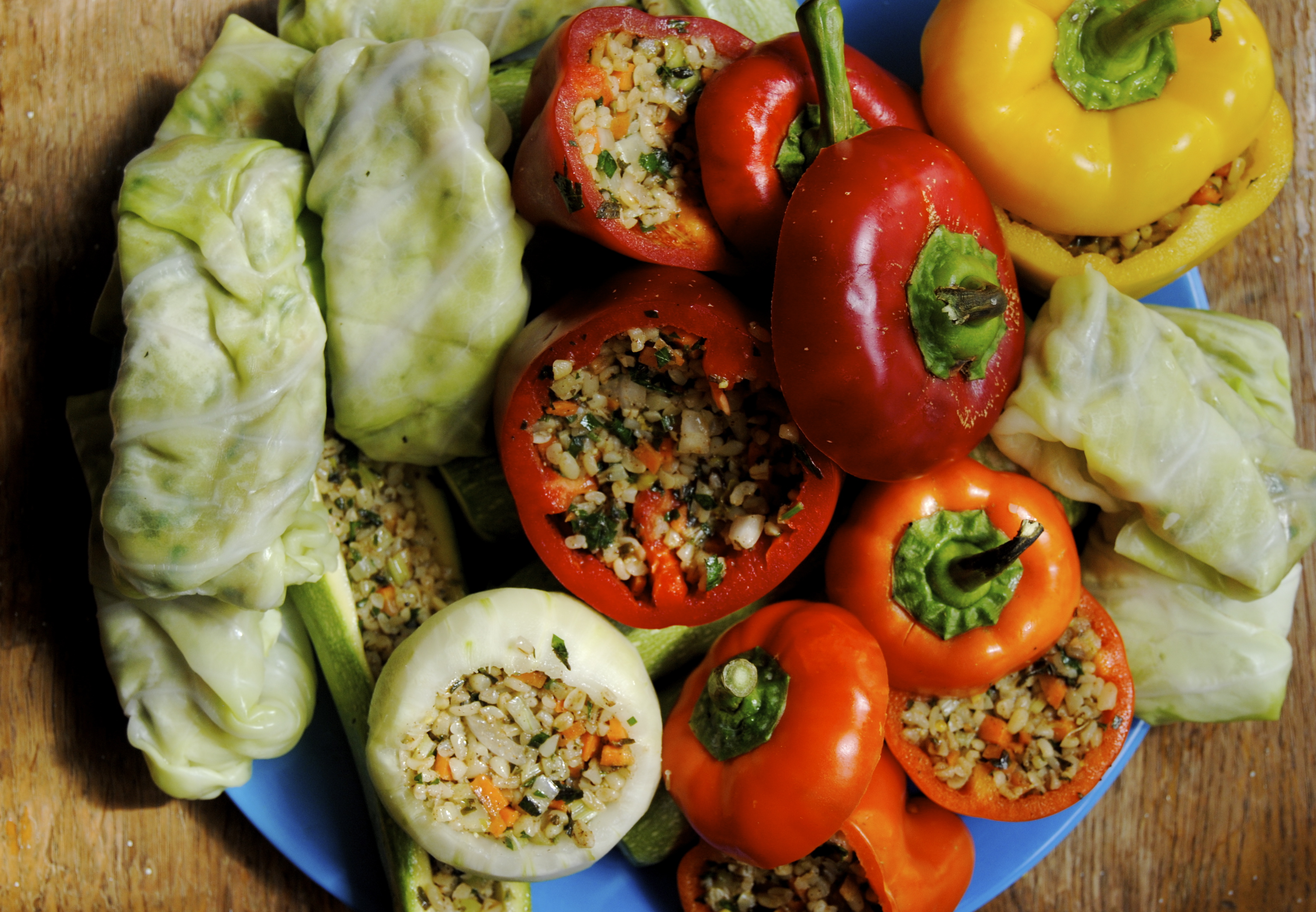
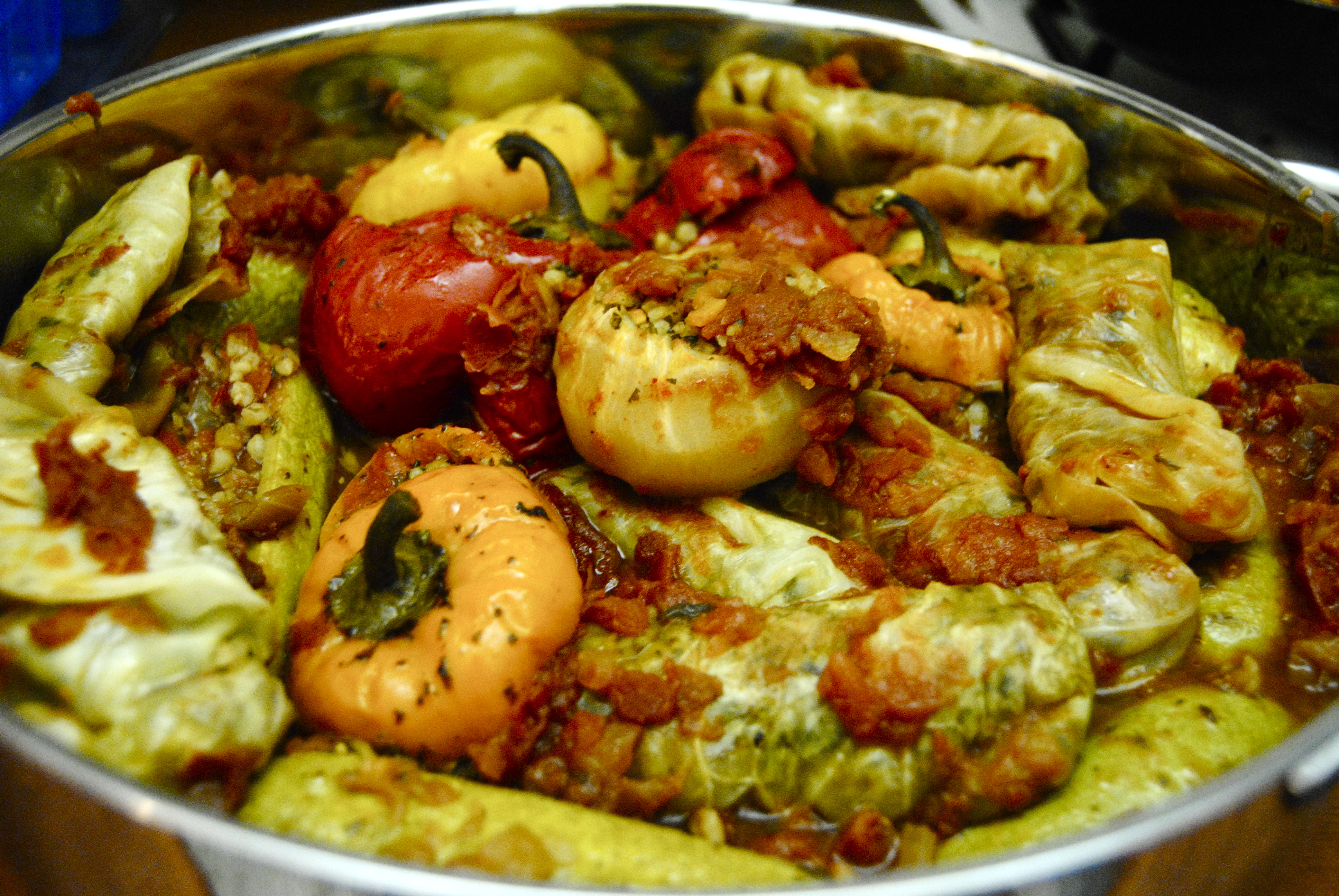
While making these, I realized that I really love stuffing things–as if being a unofficial member of Over Eaters Anonymous wasn’t enough of an indication. I made this for Shabbat dinner a few weeks back and it was really a great dinner idea because once you make the stuffing, you just let everything cook in a lot of sauce for an hour or two. It requires almost no attention! I made this once for my seven-year-old brother and sister and stuffed red peppers with meat, carrot and ptitim (Israeli couscous/pasta balls) and they were overjoyed. When I make it for grown ups, it’s fun to be a little classier.

This recipe has a lot of ingredients. Don’t skimp on the spices or the sauce, but if you want to switch up the stuffing ingredients, do so recklessly! You could do feta, herbs and rice…you should do rice, raisins and lentils….you could do rice, cinnamon, green beans and meat…the combinations are endless! And who even needs rice? Soak some bulgur! Boil a lentil…or 100! Try a mung bean! Eat a chickpea! You get the picture…But don’t just do peppers. Stuff a tomato, a zucchini, an eggplant, a kohlrabi, an onion, a beet, maybe even a radish! I don’t know about that one though. If you do it, let me know.

Serves: 10-12

What you need:

For the sauce:

2 containers of tomato paste

1 cup water

3 tsp garlic; minced

1 tsp of salt and pepper, each

2 large cans of diced tomatoes (OR 1 large container of low-sodium V8 Juice)

add a tsp of chili flakes if you’d like some heat

about 1 pound of vegetables good for stuffing, OR:

8 small zucchinis

1 kohlrabi (you can use as many as you want. I was just experimenting and so I only tried one but it was PHENOMENAL)

5 small peppers

1 head of cabbage (will make about 15 stuffed cabbages)

For the stuffing:

1 carrot; finely diced

4 stalks celery; finely diced

3 cups of bulgar (you can use rice or quinoa, too, but if you use rice, only stuff the peppers 3/4 of the way full)

3 tsp baharat spice

1 cup of parsley; finely chopped

1 cup of mint; finely chopped

3 tblsp pomegranate syrup

salt & pepper to taste

juice from one lemon

2 tblsp olive oil

How to do it:

First core the cabbage (if you can’t because it’s too hard, not to worry). Boil some water and place the entire cabbage in it for 5-10 minutes. Turn your cabbage on different sides throughout this time so that it all cooks evenly. This will make the leaves soft and easy to work with. While it’s in the water, check if the leaves are separating from the “body,” strain the water and run the cabbage under cold water. Gently peel of entire leaves and place them on paper towel for a few minutes to dry a little.
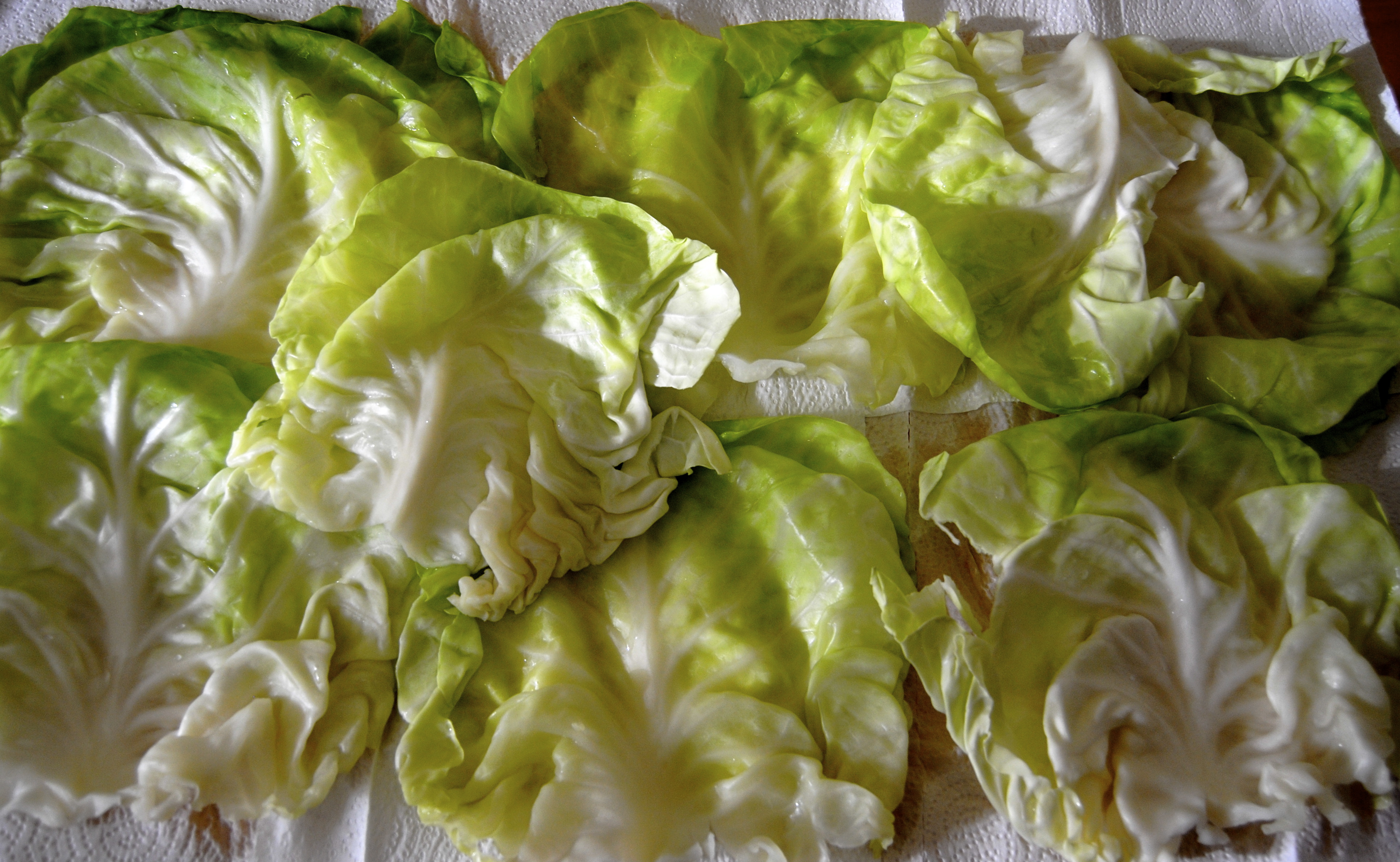
Cut the vein out of each cabbage so that the leaves are easy to fold. This one leaf will make two stuffed cabbages. Place all the cabbage leaves in a pile, cover with extra paper towel and set aside.

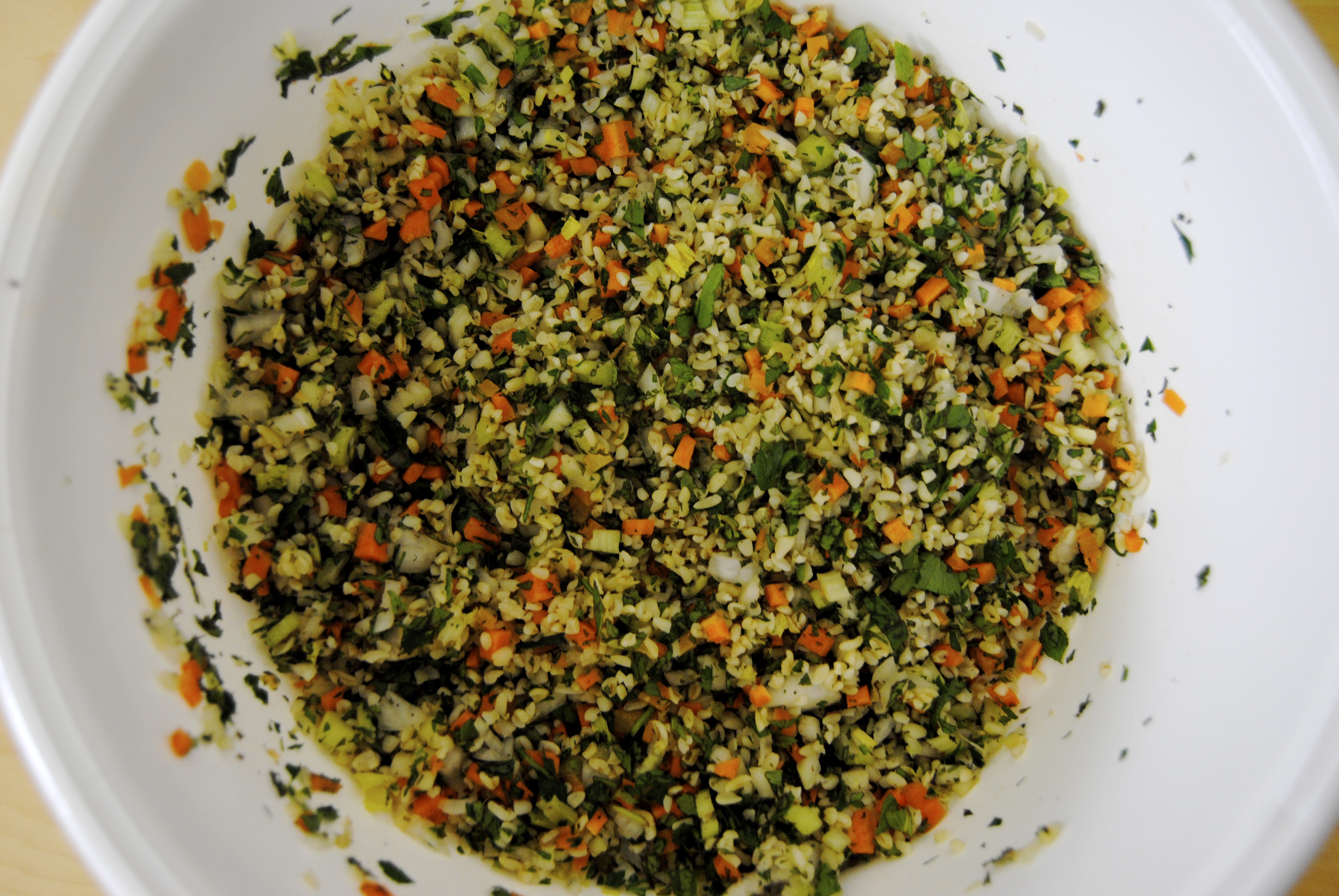
Over medium heat, fry the carrot and celery in a little oil for five minutes or so to soften. Remove from the heat and combine with the other stuffing ingredients and mix well. Set aside.
While the mixture is cooling, boil the tomato paste, garlic, water, salt & pepper. Let boil for about 10 minutes (or until it thickens a bit), simmer for a few more minutes and then set aside (it will thicken while it sits).

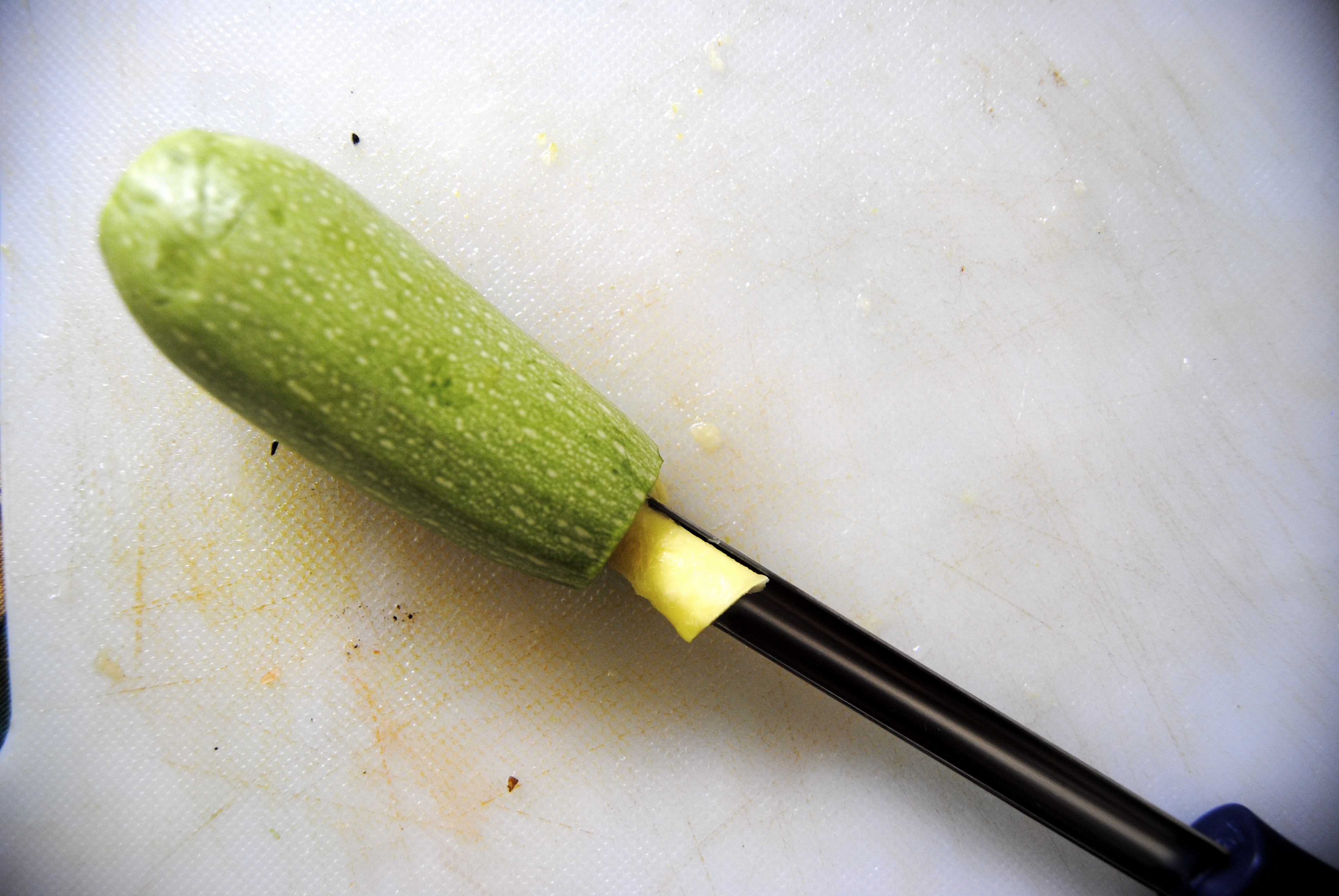
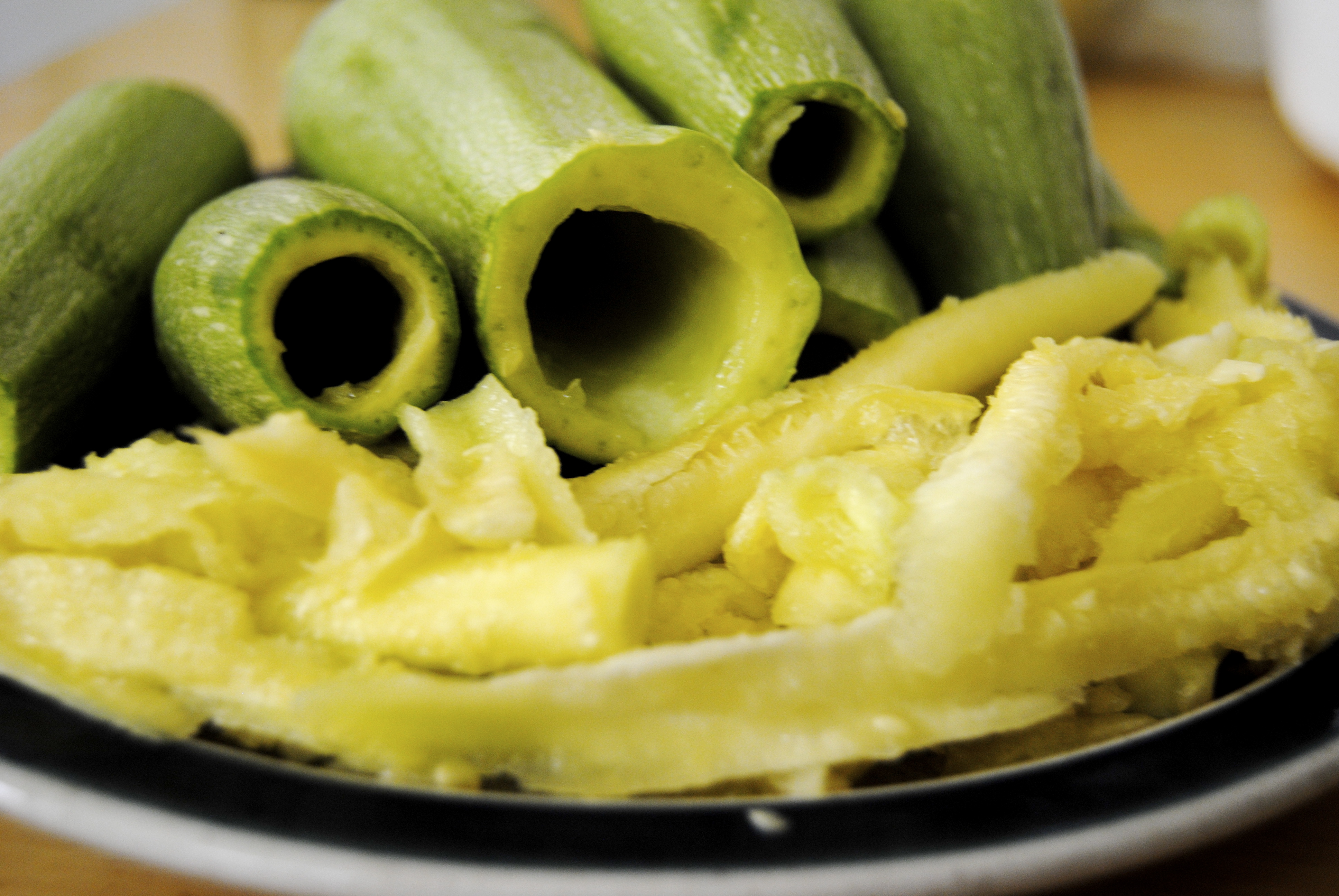
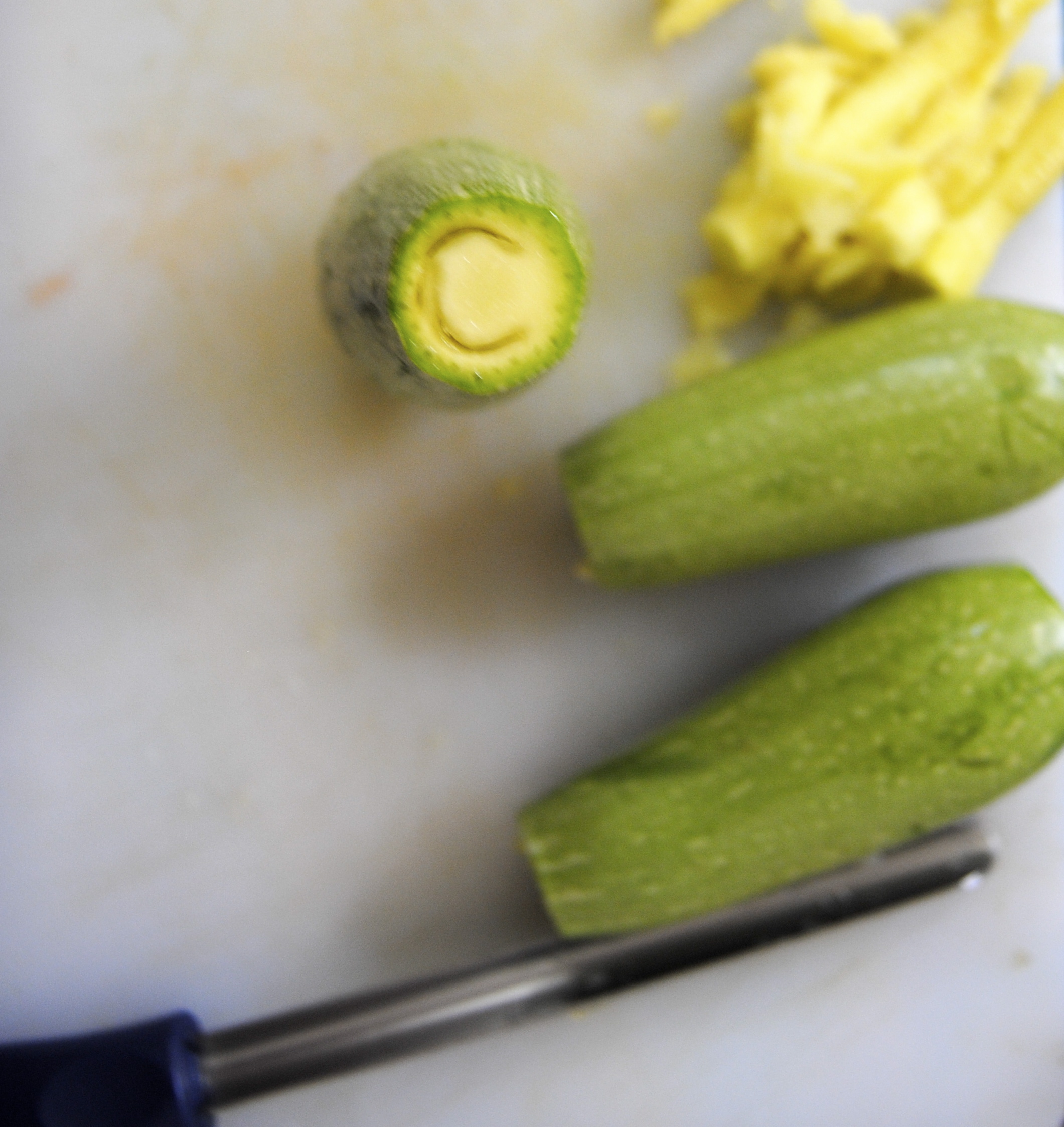
Then core the zucchinis. I never imagined this could be so fun. Make a “c” shape by pressing the corer into the zucchini once, removing it and then pressing it in again. Once you’ve done that, you can twist out the innards by twisting your wrist. Careful you don’t go to fast because you might cause a deep break in the zucchini. Do not go all the way through. Save the innards for a frittata!
How to stuff cabbage:
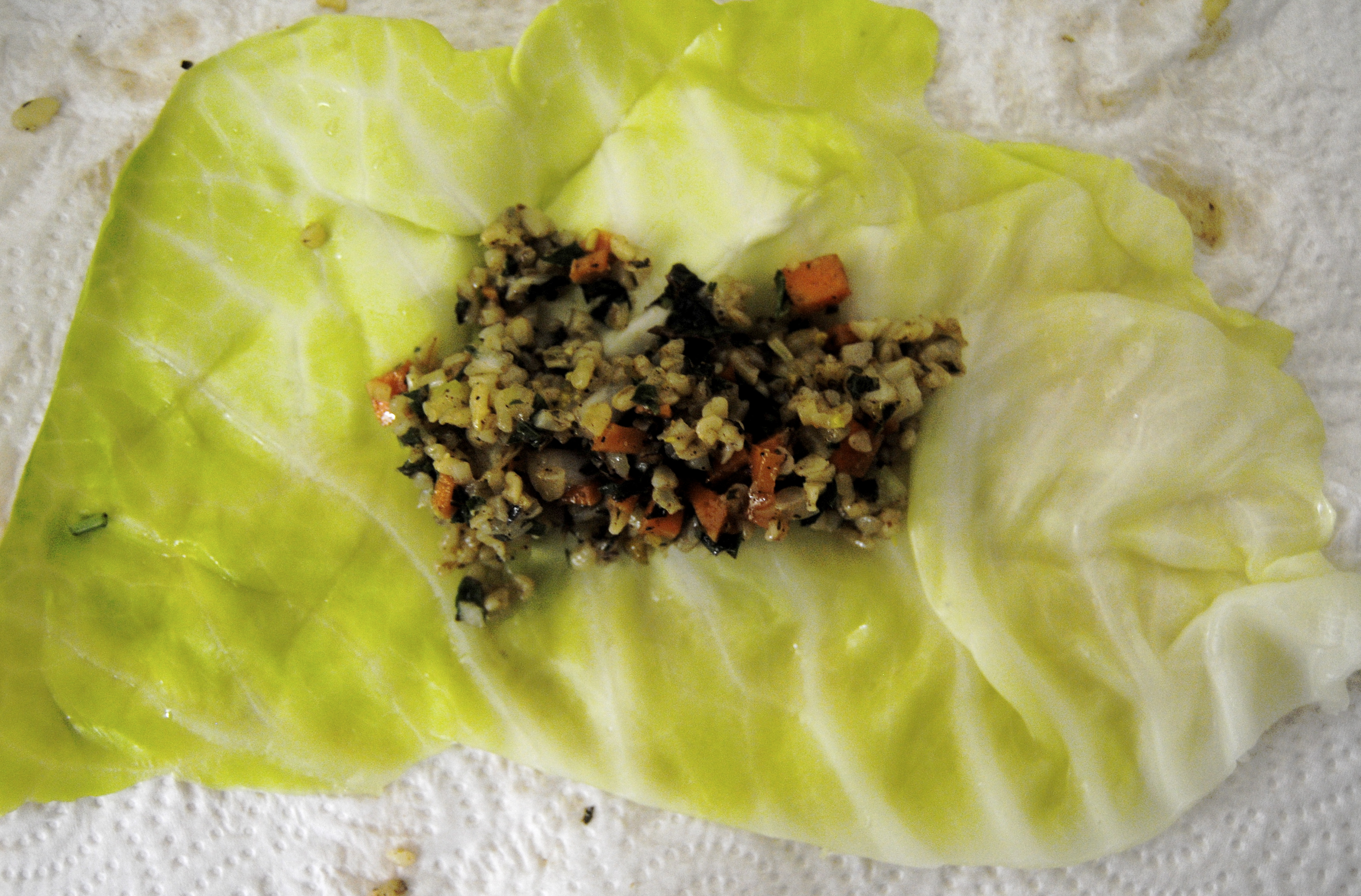
Place 2-3 tblsp of the mixture into the center of a cabbage leaf
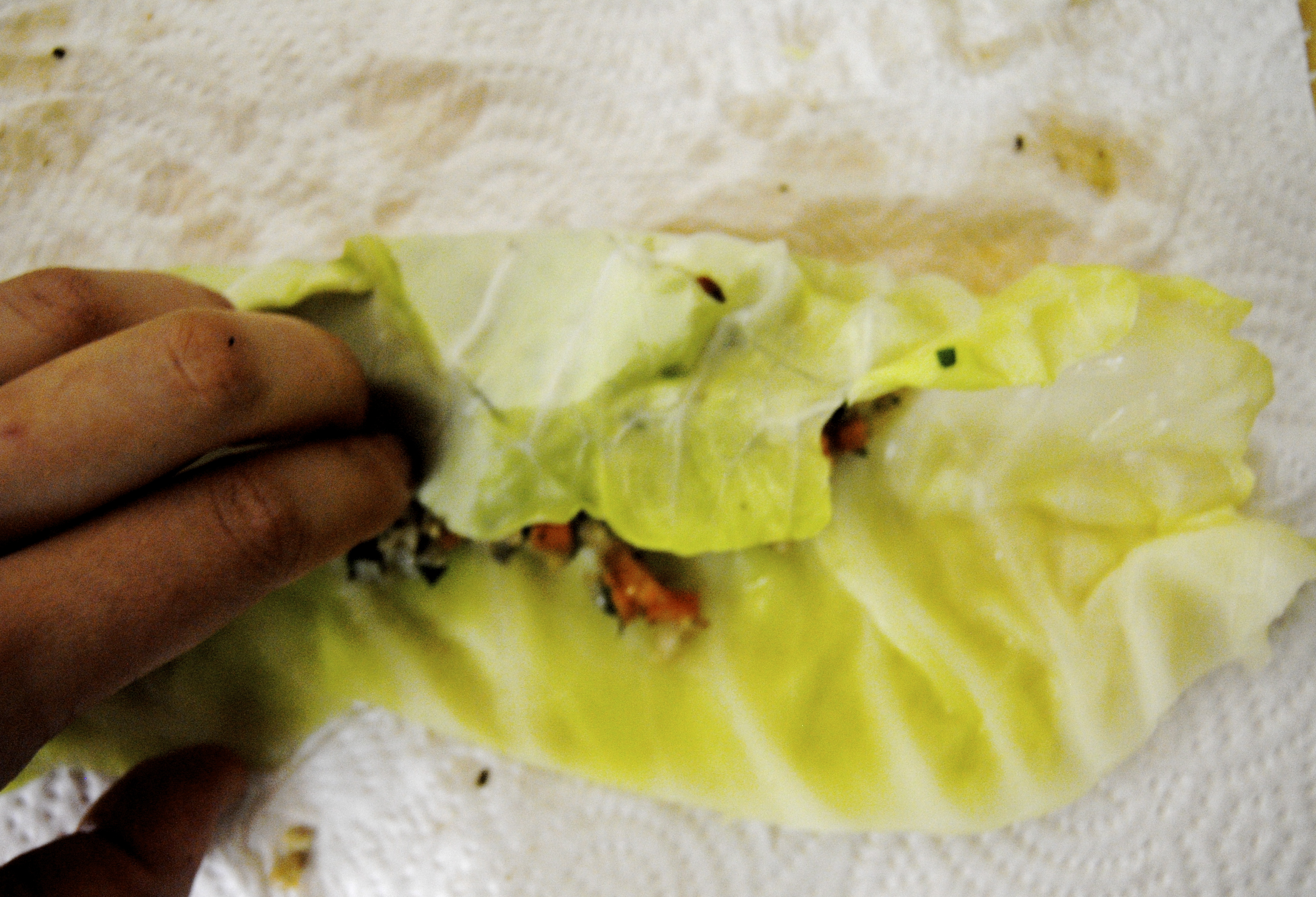
fold the top over the mixture so it completely covers it
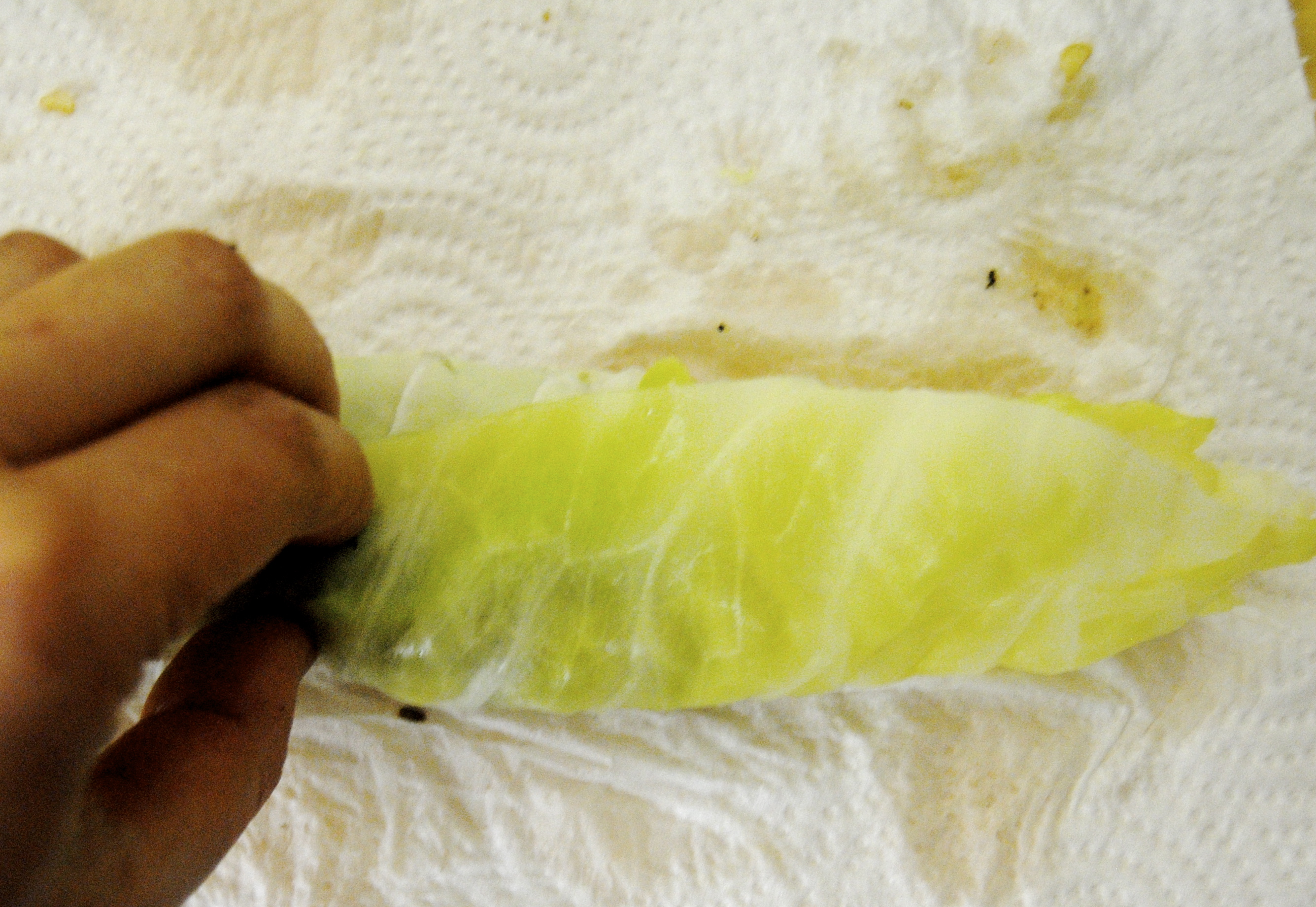
fold the bottom up over the top now

fold one side over to the center
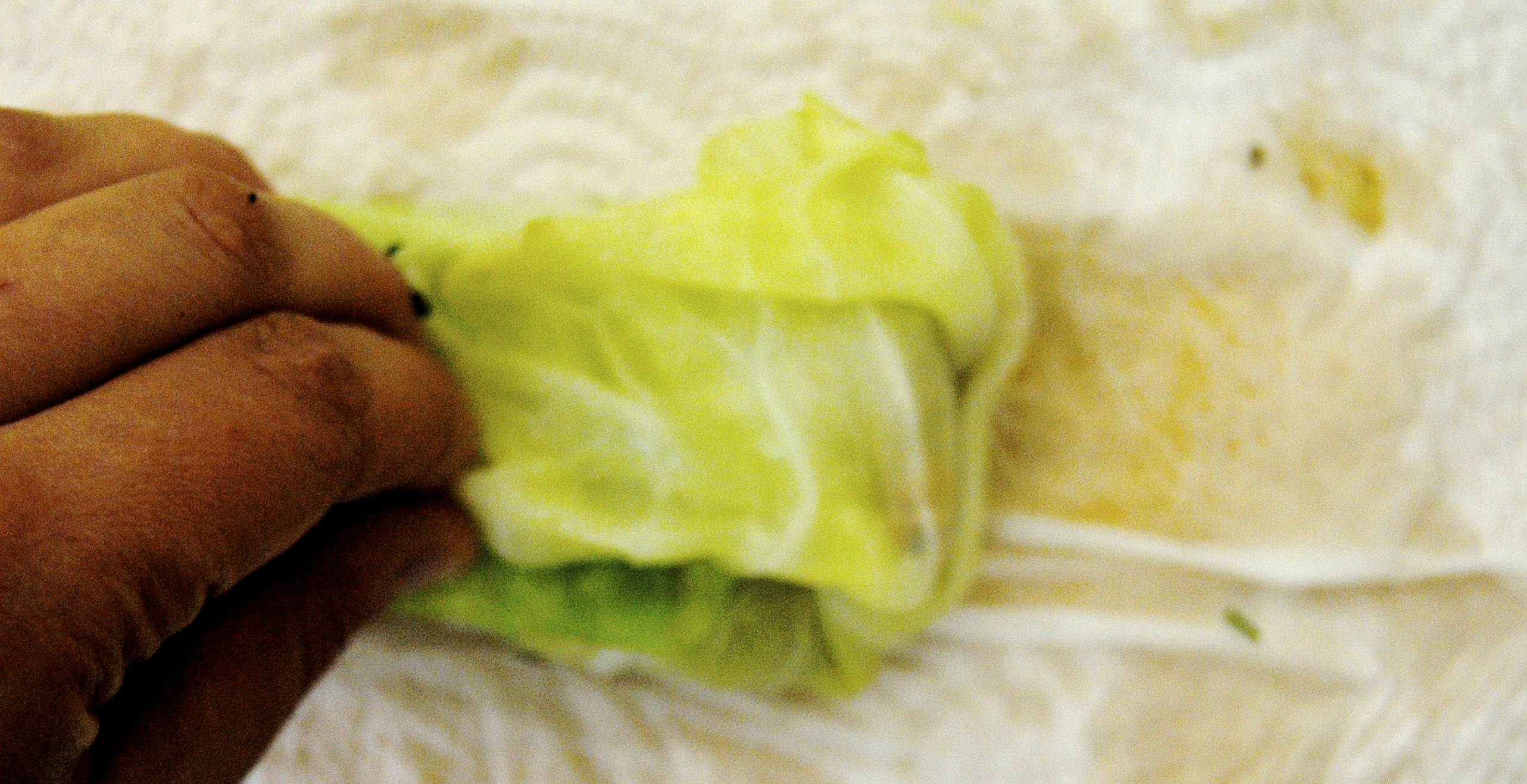
fold the next side over to the center

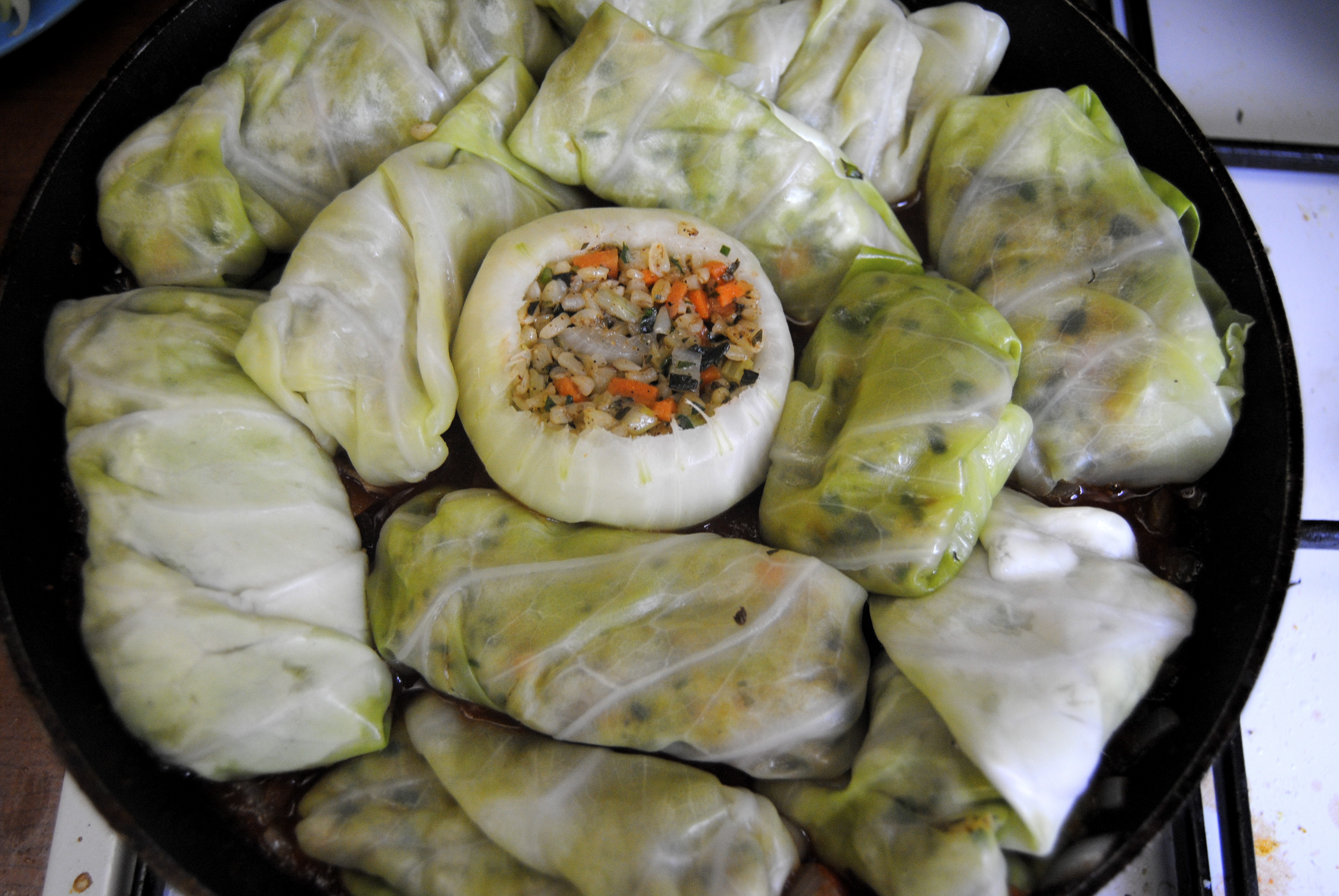
Stuffing the peppers: Slice off the tops (do not discard), remove the seeds and fill to the top with the bulgar & vegetable mixture. If you decide to use rice, only fill the peppers 3/4 of the way because the rice will expand while being cooked. The zucchinis are simply stuffed as tightly as possible, and the kohlrabi is peeled, cored and stuff easily, too.

Now, back to our sauce. Take the tomato paste mixture and pour it into one large pan/pot or into several if you don’t have one large enough to fit all of your vegetables. The tomato paste mixture will go underneath all the vegetables to keep them from burning and allow them to soak up all the delicious sauce. I think it’s easiest to line your pot(s)/pan(s) with the zucchini and then fill in the spaces with cabbage, since they’re more flexible. They’ll also create a stiff border for the peppers so they don’t fall over. Place the peppers in, with tops, and cover all the vegetables with the diced tomatoes and add water until the vegetables are covered. Bring to a boil and then let simmer on low for about 2 hrs, checking to make sure nothing is burning.
So, this was my first rice pudding ever and I am a HUGE fan, mainly because it was so easy a four-year-old could do it (if you were a totally reckless parent and let your child use a stove). It was done in about 12 minutes and was so refreshing it almost felt like health food.

Fereni is served on various occasions, but often eaten warm to soothe a sore throat. Apparently, this is commonly served to infants and young children, but this is definitely not baby food. Like I’ve said before though, if children request it, you know it’s good. It’s very soft, simple and you don’t feel like you went overboard on a dessert afterward. Give it a try!

Recipe found here

Serves 2 people comfortably and 4 stuffed people who don’t want too much dessert

What you need:

2 cups soymilk (or any milk, this is just what I had at home)

2 heaping tblsp of rice flour

1 tsp rose water (or if you have pure rosewater, 1-2 drops)

3 tblsp white sugar

cinnamon and pistachio for garnish

How to do it:

Heat the milk over a low flame and add the sugar, rice flour and rose water. Combine well until the sugar and flour are completely dissolved. Stir continuously until the pudding thickens. Gradually increase the heat for about five minutes and then arrive at a boil. Let boil while constantly stirring. You’ll wonder why it’s not working yet and think you messed up until suddenly it’s like POW! and the mixture thickens. Stir while it boils and thickens until it’s really thick (about 10-12 minutes). If you find you’re having troubles and it’s not really thickening, add a little more rice flour. Top with pistachio and cinnamon and serve warm or chilled. Enjoy!


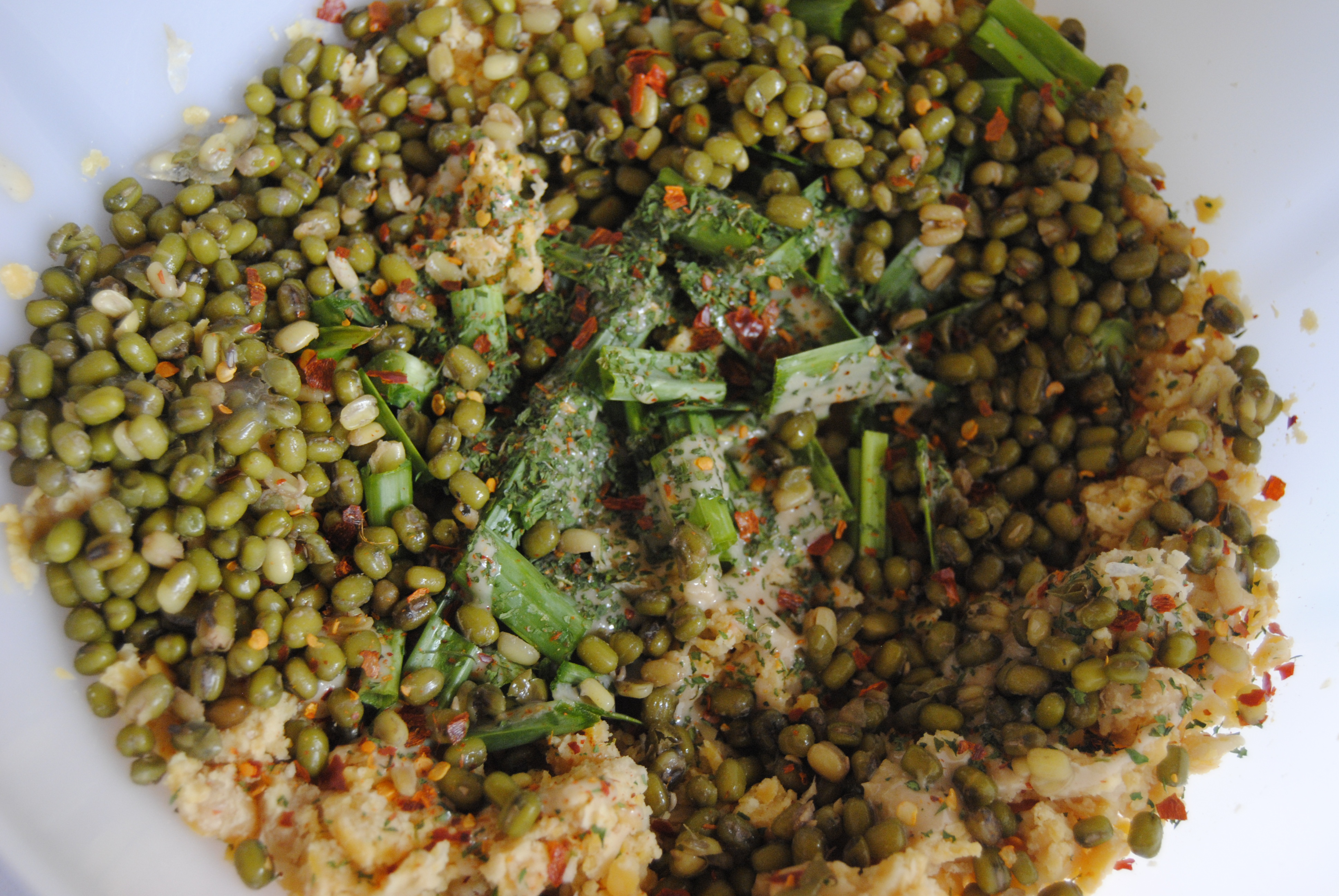
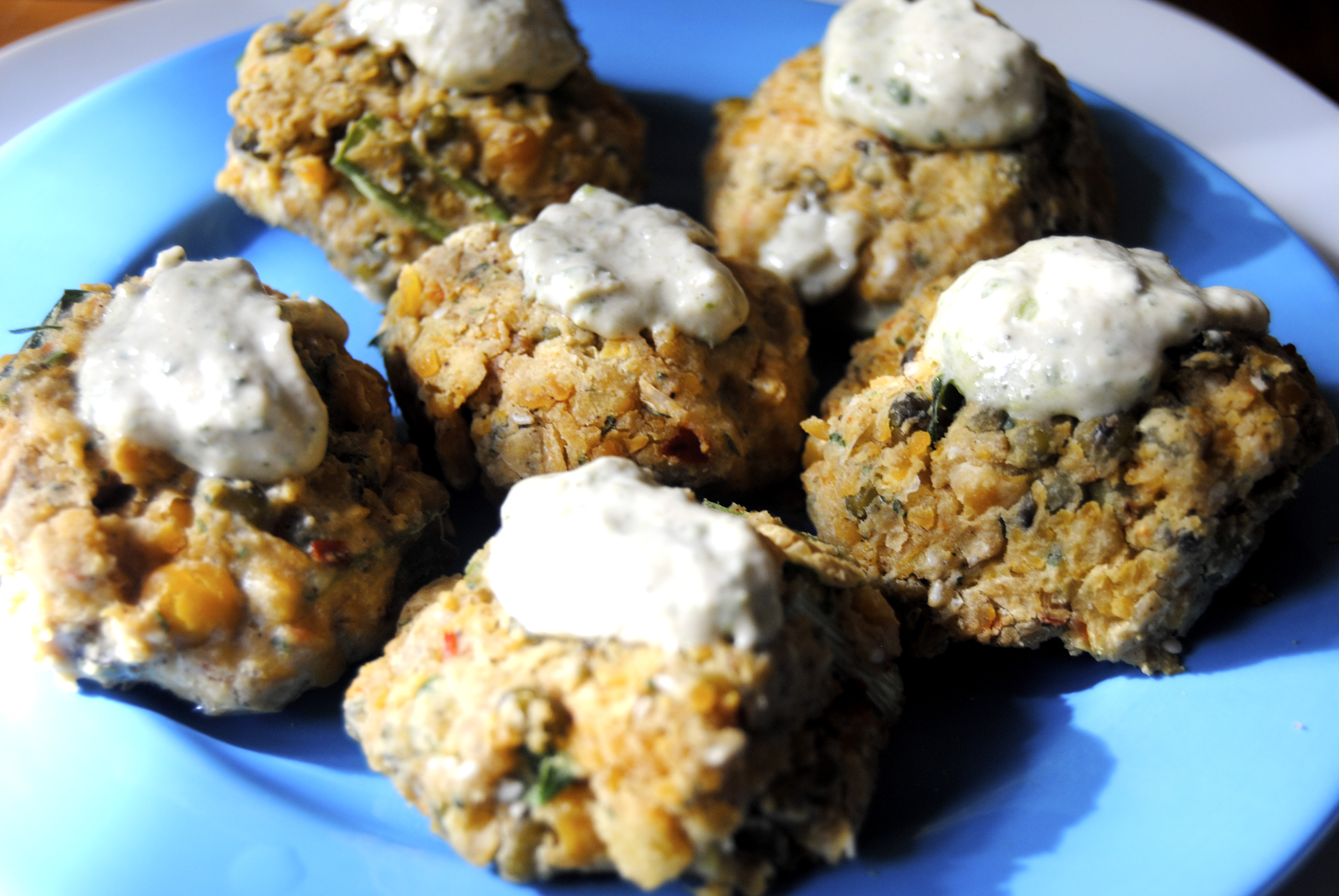
I soaked way too many chickpeas the other day and we weren’t sure what to make for dinner. Fortunately, my pal Penny had recently introduced me to fried chickpea patties (not like falafel though), which reminded me a lot of latkes. I ditched the oil and tried spicing them up with some of my favorite spices and baking them to lose the extra calories. They were really soft, warm and almost comforting. If you don’t have time to soak the chickpeas, just buy the canned ones. And if you don’t have mung beans on hand, you could try lentils, kidney or white beans. Fortunately for me, I had beans and chickpeas and mung beans that were on “their way out,” so this came together in about 20 minutes total (and most of that was cooking time). I made these twice this week because they’re light, which is good for the hot weather we’re having in Jerusalem.

Makes 16 sliders

What you need:

3 c chickpeas

2/3 c mung beans (omit if you are pressed for time)

1 cup green onion; cut into 1″ pieces

1/2 c grated carrot (I forgot to add carrots this time, which is why you don’t see it, but it’s better with ’em)

1 tsp baharat spice

1 tblsp schug (scroll to the bottom of this link’s page for instructions on how to make a small batch)

1 tsp salt & pepper, each

1/2 tsp ground ginger

1/4 c sesame seeds

1/2 tsp chili flakes

2 tblsp olive oil

3 tblsp raw tehina paste

1 egg

How to do it:

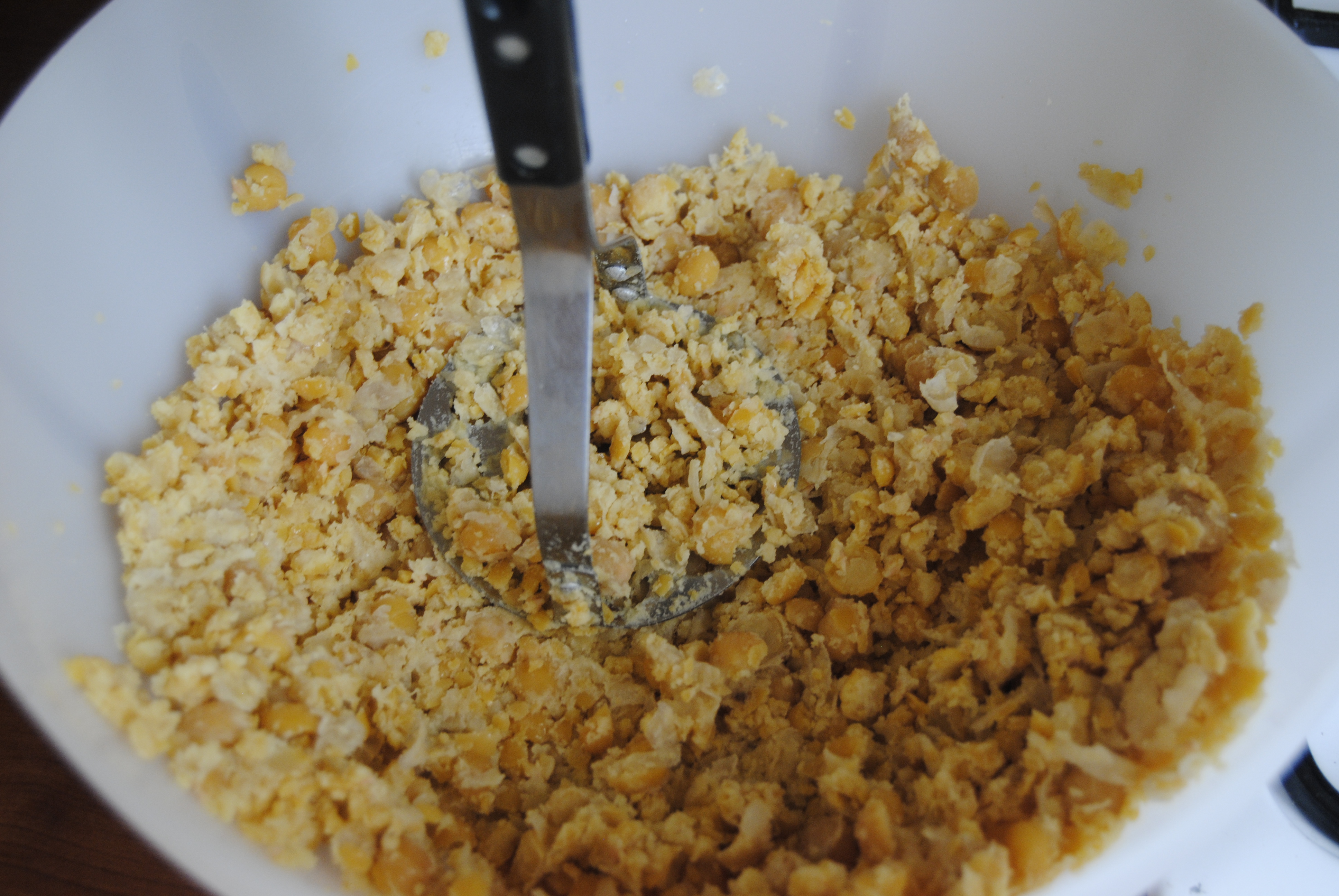
Preheat your oven to 350 F. If you have a food processor, you can use that instead of doing this by hand. Otherwise, by hand, mash up the chickpeas until they become a paste.

Add everything in the order listed above and combine well.

 Then add the tehina paste and olive oil. Last, add the egg and incorporate it well into the mixture so that it becomes wet.

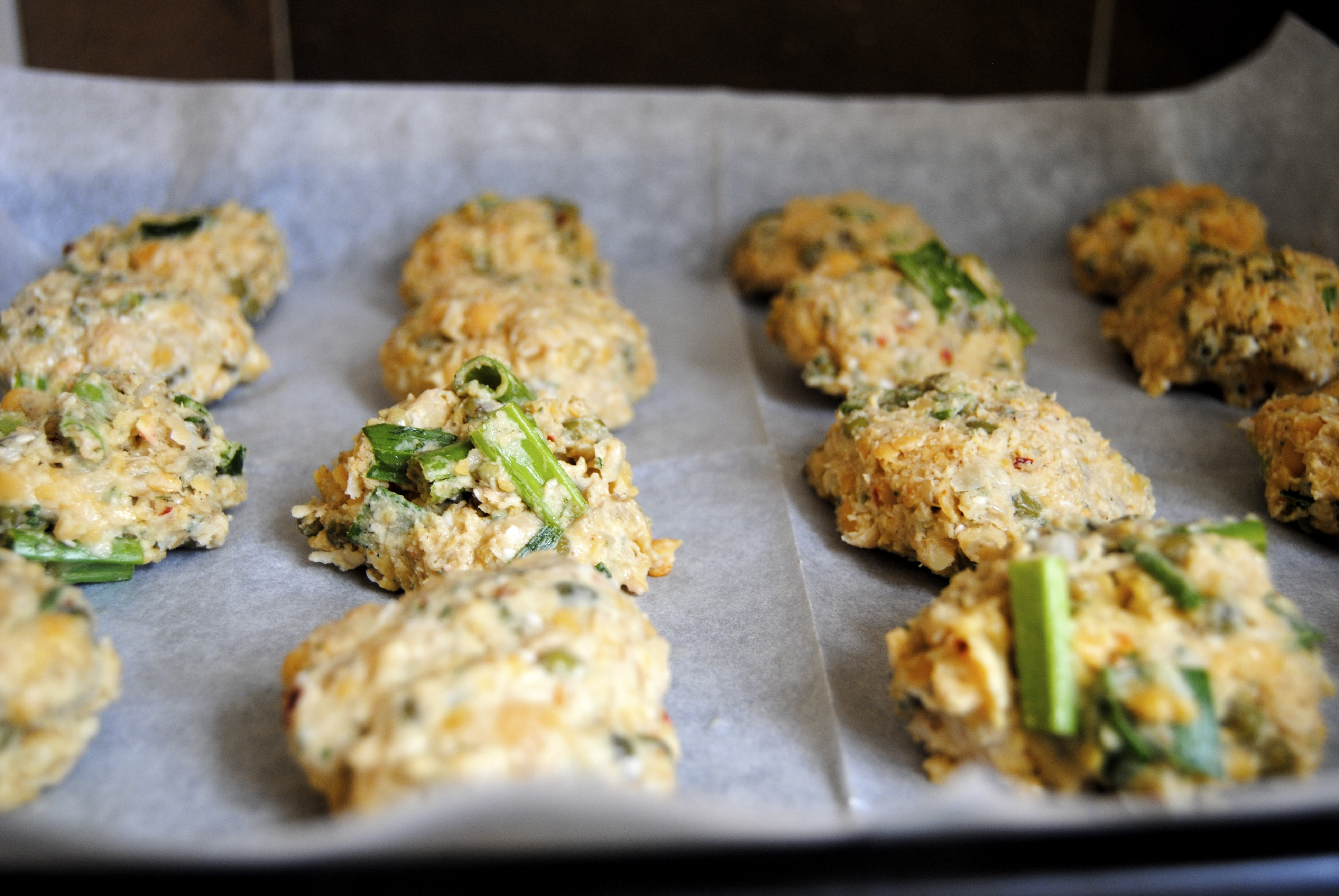
Form balls in your hand and place them on parchment paper on a tray 4 x 4 to yield 16 sliders. Bake for 12-15 minutes, or until the sliders become slightly golden. The most important thing is just that they aren’t so soft that once you remove them they fall apart. Top with tehina and enjoy inside of a cabbage leaf, a large pepper slice, inside of a bun or as a side dish with tabbouleh salad. Enjoy!

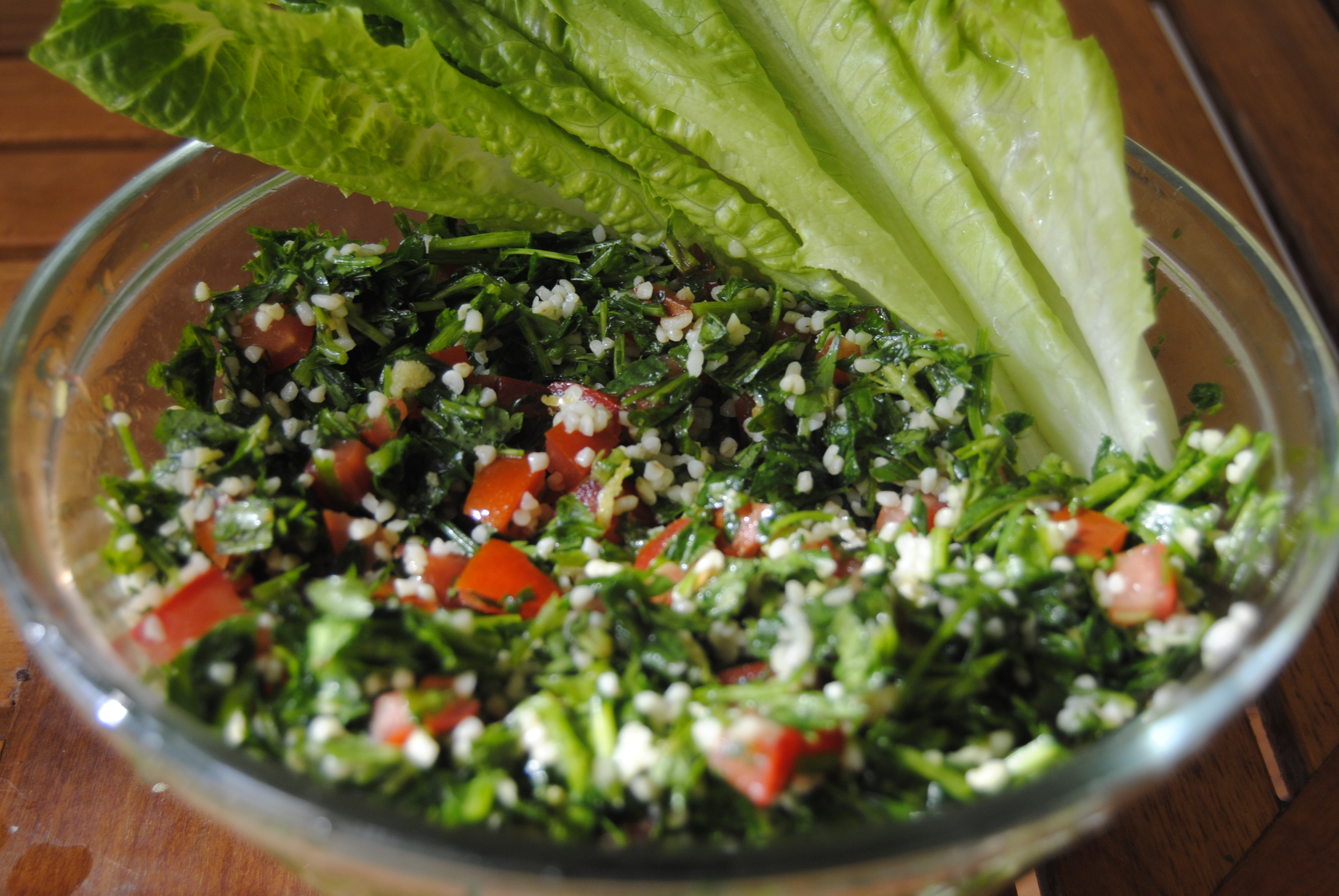
Tabbouleh, meaning “little spicy” in Arabic, is a bulgur, parsley, mint and tomato salad doused in lemon juice, olive oil and salt. It is served all over the Middle East with slight variations including more or less bulgur and the salad representing a main course or served as part of a mezze.

We’ve already made this salad twice this week. It requires very few ingredients, and ones we always have in the fridge, it’s served very cold which is refreshing in the 80 F weather we’ve been having lately, and it is perfectly lemony. We pair it with chickpea, vegie sliders topped in tehina. It’s the perfect lunch or dinner for the summer.

Quick Trivia: According to good ol’ wikipedia, the largest recorded dish of tabbouleh was created on October 24, 2009 in Beirut and weighed 3557 kg, earning it a Guinness World Record. The record had been previously held by the citizens of Majdal Shams, Israel on March 21, 2008 when they made a bowl of tabbouleh weighing 2170 kg.

Onto more digestible portions.

Serves: 4 hungry people as a side dish

What you need:

3 c parsley; finely chopped

1/2 c mint; finely chopped

1 c green onion; finely chopped

4 tblsp lemon juice

3 tsp olive oil (at least – you can be the judge)

1/2-1 tsp salt (depending on taste; I use just slightly under 1 tsp)

3 tomatoes; insides scooped out and finely diced

1.5 c cooked bulgur (about 1/2 c uncooked)

a few lettuce or cabbage leaves for garnish or for scoopin

How to do it:

Soak the bulgur in water so that the water sits two inches above the bulgur. It will take about 30 minutes until it’s soft, not crunchy at all. Quart the tomato.

Lay each piece flat and, with your knife, slice out the inside.

Lay the meaty part flat and slice it vertically three or four times and dice into small cubes.

Finely, finely, finely dice your herbs and combine with the lemon juice, olive oil, salt and bulgar. Toss several times. Serve over a bed of cabbage or lettuce or encircled by cabbage or lettuce leaves. Let sit on counter tip for 15- 20 minutes before serving. Enjoy!


To quote Jonah Hill, yes, “You want these in and around your mouth.”

No matter how much I profess my love for the markets here, nothing can substitute the convenience of Trader Joe’s. When I first moved abroad, I missed it every day. And when I went home for a short vacation, while eating our favorite Trader Joe’s cookie, my friend Henry and I discussed whether or not it would be difficult to try and make them.

I’ve poured over recipes for the last few days, dreaming about making these cookies. No joke. The other day, the pangs of neighborhood construction woke me in the middle of figuring out the perfect ratios to make a cookie with a fine lace though still chunked-full of almonds. My life is so tough, huh?

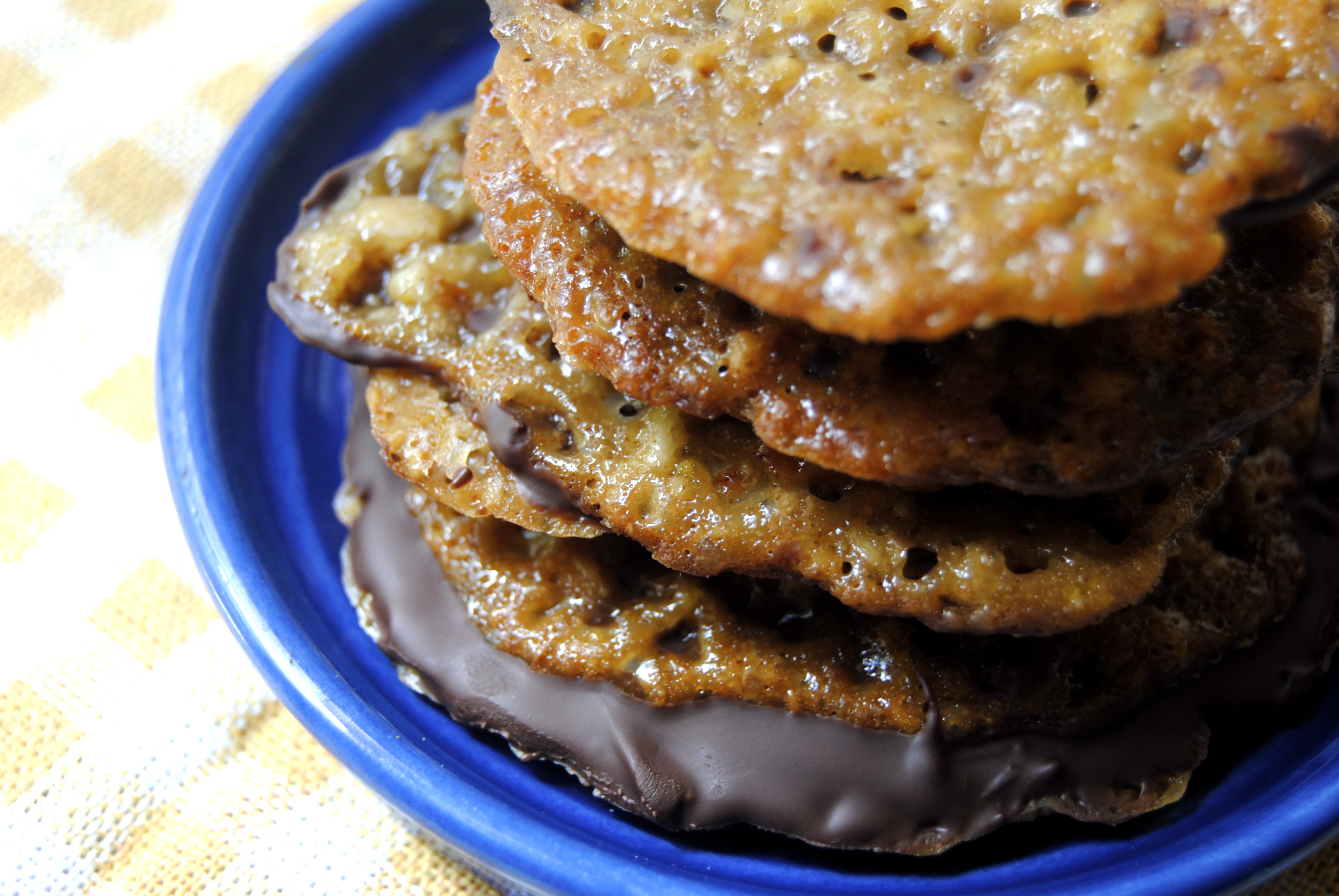
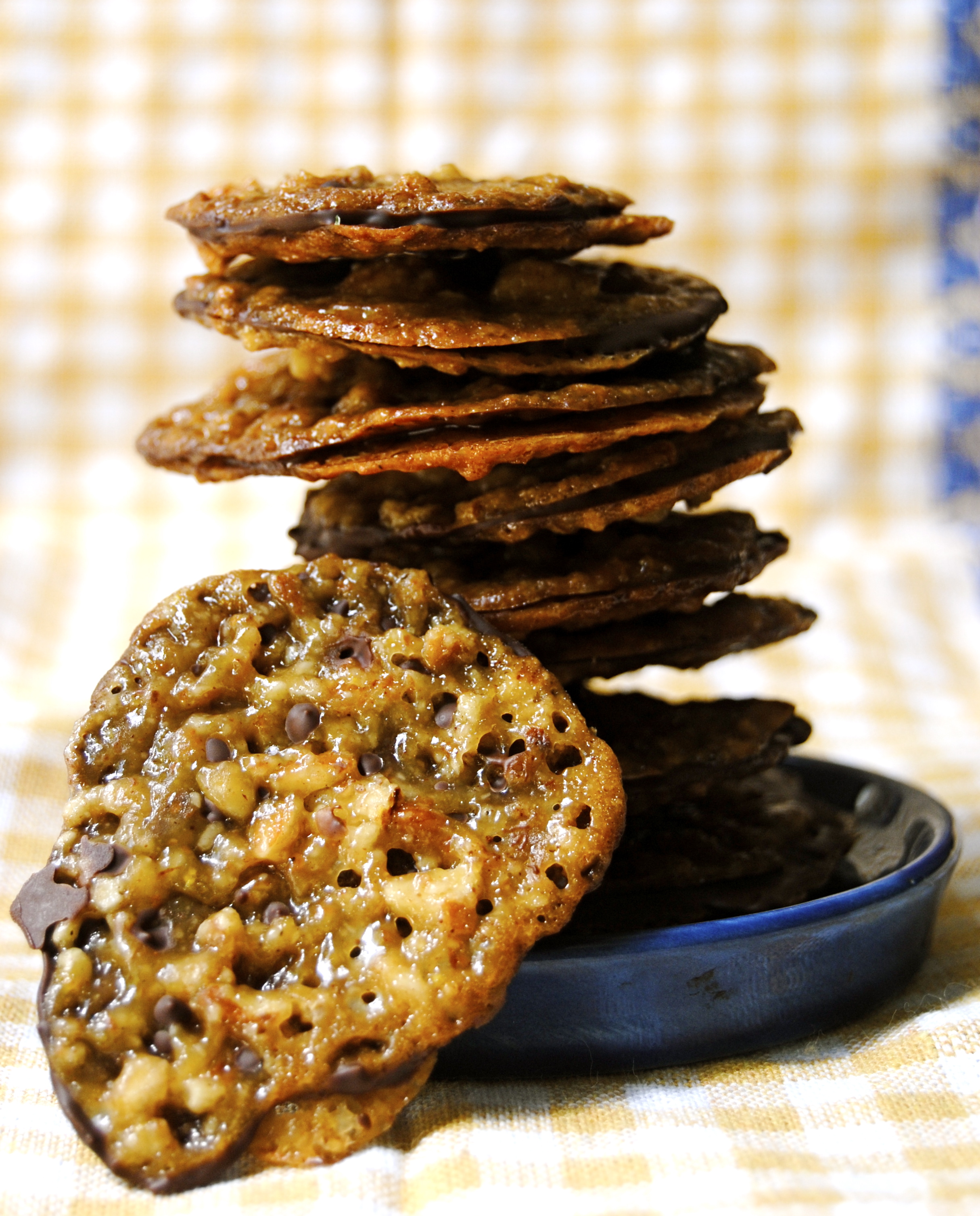
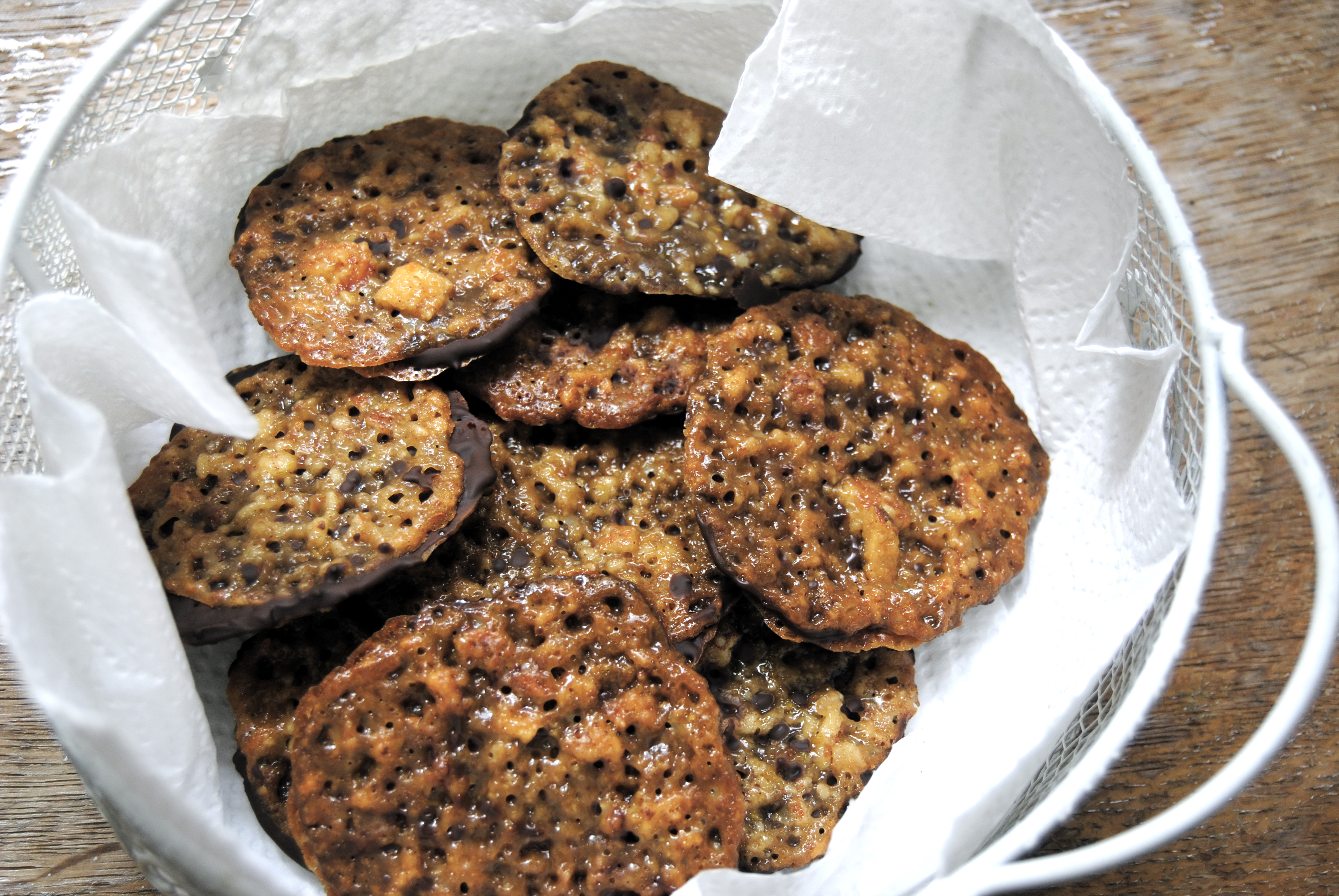
Nevertheless, I bring you THE BEST knock-off lacey cookies that you can make with minimal ingredients, impress everyone at the party and gain a few pounds in the process! Hooray…? They are perfectly chewy in the middle, crispy on the ends, toffee-scented with a hint of orange. And if you aren’t salivating yet, chocolate can be sandwiched between two layers, dipped around the edges, drizzled across or they can simply be rolled into flutes and accompany your morning, afternoon and late afternoon coffees.

Makes 32 cookies about 2.5-3″ in width

You might also want to check out these delicious Pistachio Lace Cookies smothered in a dark chocolate and tahini sauce. Enjoy!

What you need:

1/2 c brown sugar

2 tblsp butter

1 tsp vanilla extract

2 tblsp milk (I used 1 percent, but I think you could use any kind of milk you have in your fridge, including cream)

1/4 c date honey (or regular honey)

1/3 c all-purpose flour

1/2 c almonds; coarsely ground

1/2 tsp cinnamon

1 heaping tsp orange; zested

1/2 c dark chocolate (for dipping)

How to do it:

Tips: 1) You must follow the order here. I have accidentally added the almond mixture at the wrong stage and the cookies will not spread. 2) Cool your tray with water each time you remove it from the oven (it will not warp your tray) or get three trays handy because if you drop your batter onto a heated tray the cookies will start to spread instantly and will be oddly-shaped. 3) If you end up with any oddly shaped ones, just take some scissors and cut the edges before the cookies have completely cooled down.

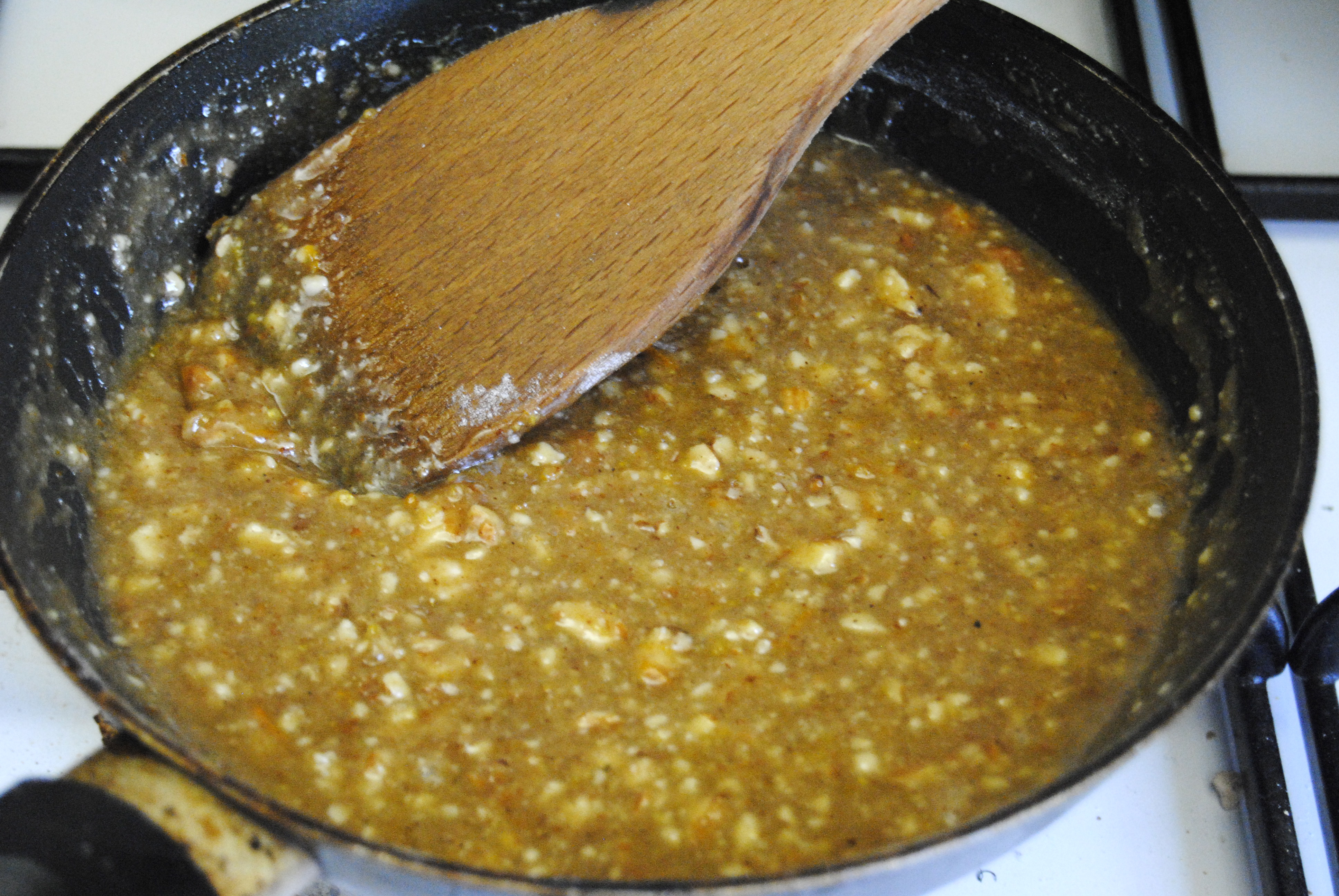
Let’s begin! Preheat your oven to 350 F and line two baking trays with parchment paper; set aside. Bring the butter, sugar, milk, vanilla, and honey to a boil, stirring continuously. Once it reaches a rolling boil, wait one minute and then remove from the heat. Now, grab a bowl and mix the flour, almonds, cinnamon and orange zest together, slowly adding them to the wet mixture and making sure everything is incorporated well. Let sit for about 20 minutes or until the mixture is cool enough to be handled, even though you won’t be handling it.

If the mixture is stiff when you return to it, warm it up over a low flame for a minute or two.

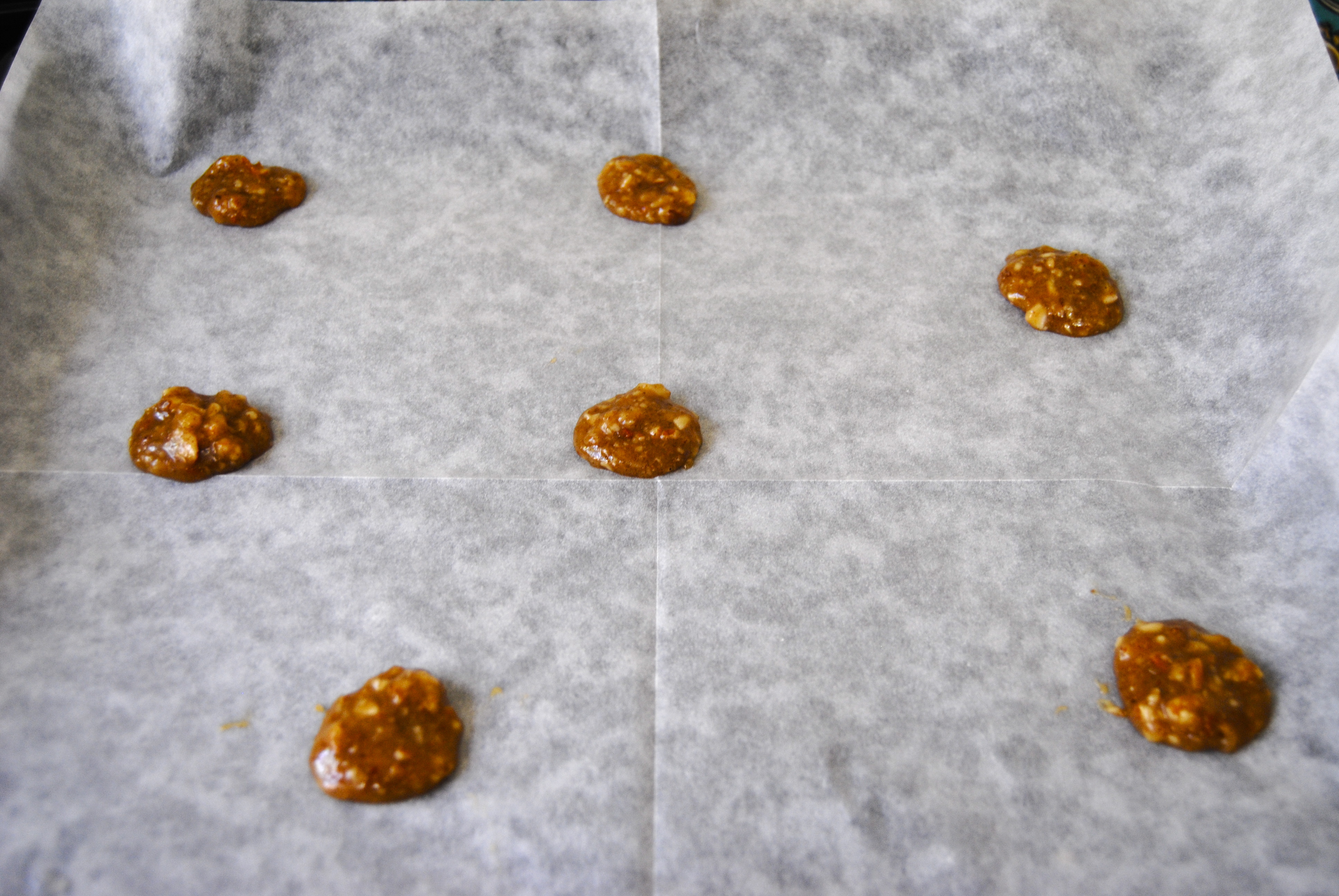
Drop teaspoon-sized balls onto your parchment paper, leaving about three inches space between each of the cookies because they will spread a lot. Create a double-boiler to melt the chocolate or melt it in the microwave.

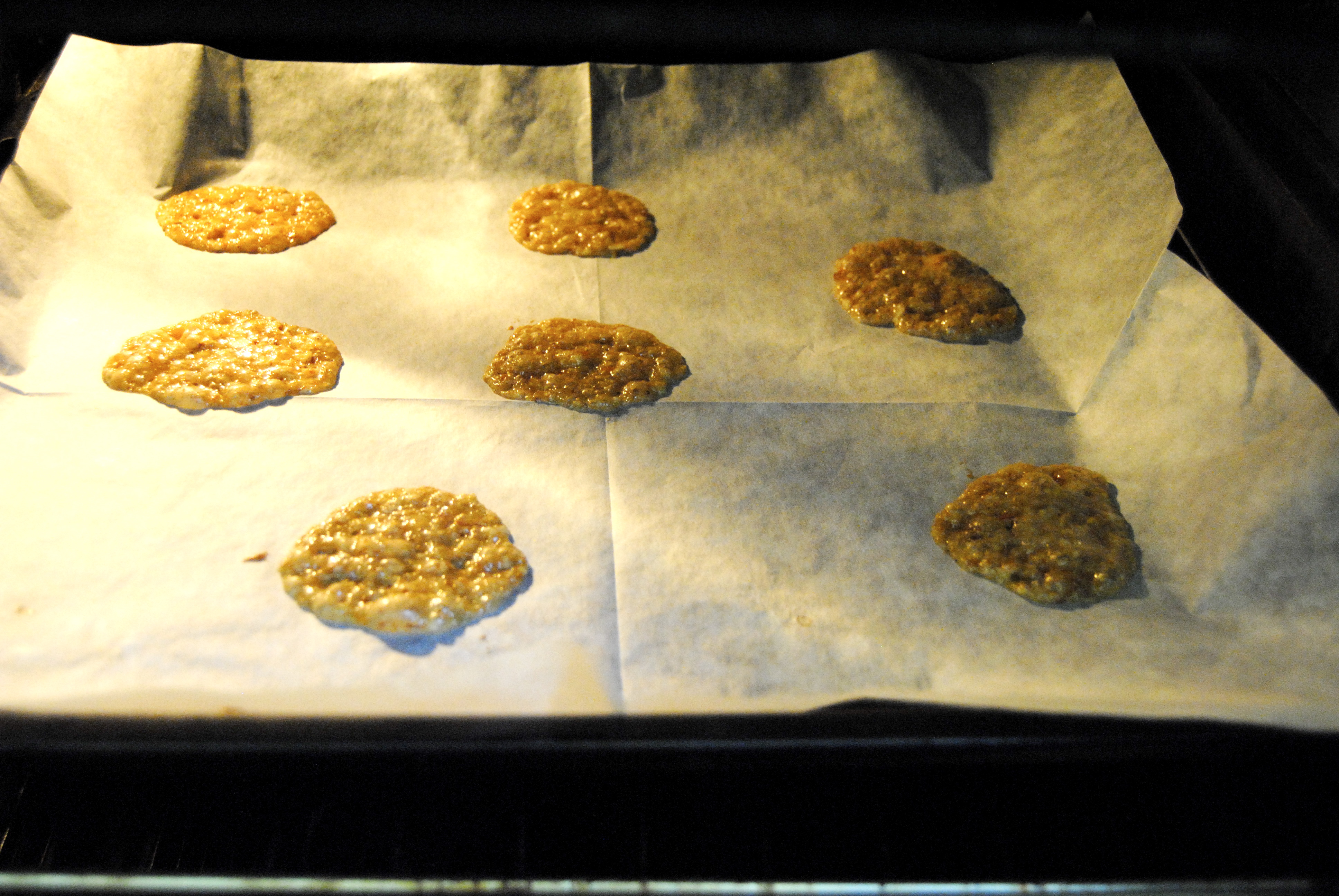
BEFORE

AFTER

Leave them to cook for 6-8 minutes. If you want them more like toffee brittle leave them in on the longer end. I like mine slightly chewy in the center and crispy on the outside. Once the centers are bubbling and they are a goldeny-brown color, remove them from the oven. Immediately remove the parchment paper from the tray and let them cool on the counter. After about three-five more minutes, you’ll be able to remove them from the parchment paper without a problem. Any sooner and they’ll still be soft and likely tear.

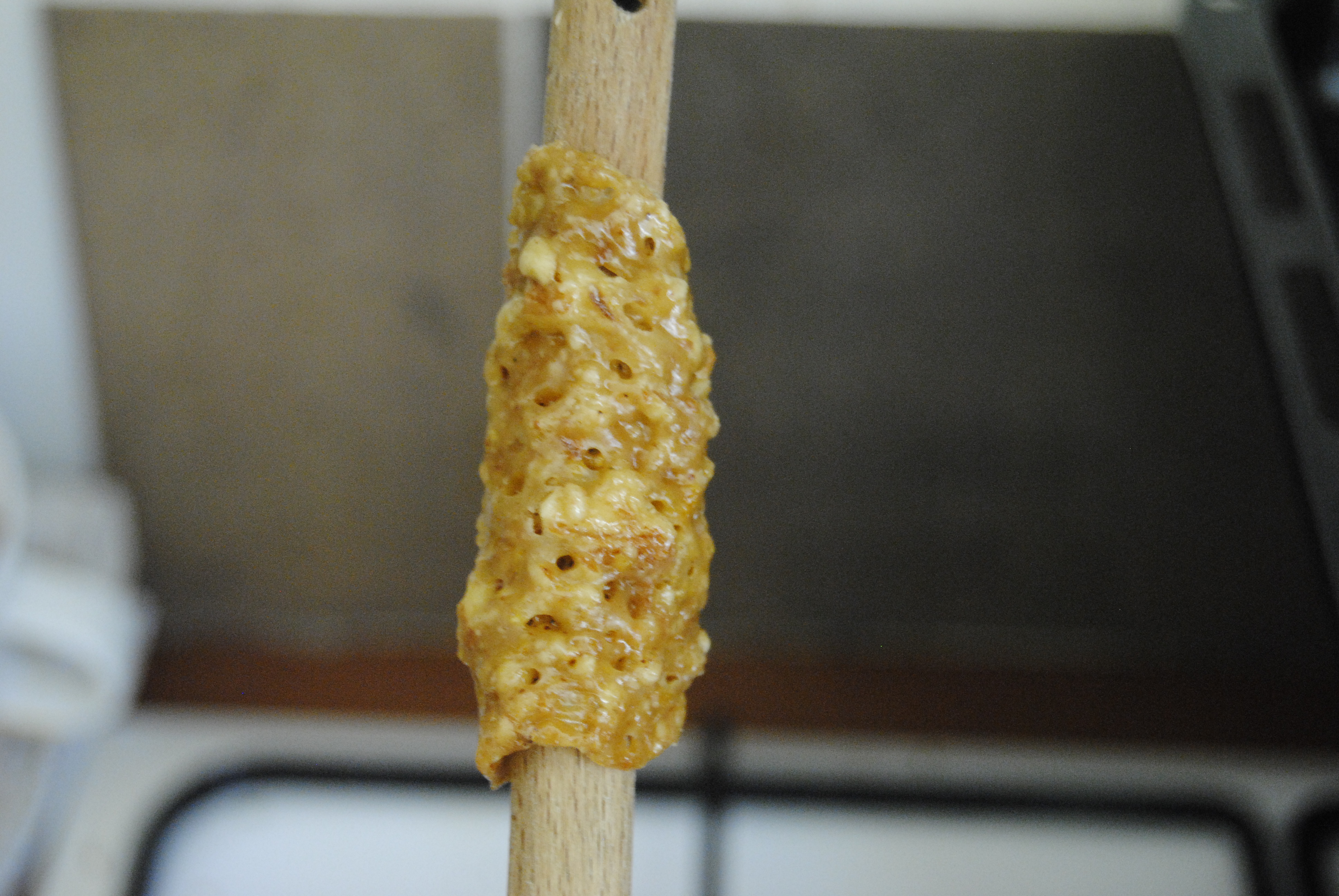
Once you’re able to remove them from the parchment, you can wrap however many you want around the stick of a wooden spoon and create a flute. You can also fold them to create a bowl for ice cream, which I would have done if I hadn’t eaten the rest of the ice cream a few days ago…OR you can teaspoon chocolate onto the flat side of a cookie and sandwich it with another, which is my preference. Place them in the fridge for about 15 minutes to get the chocolate hard. Enjoy!

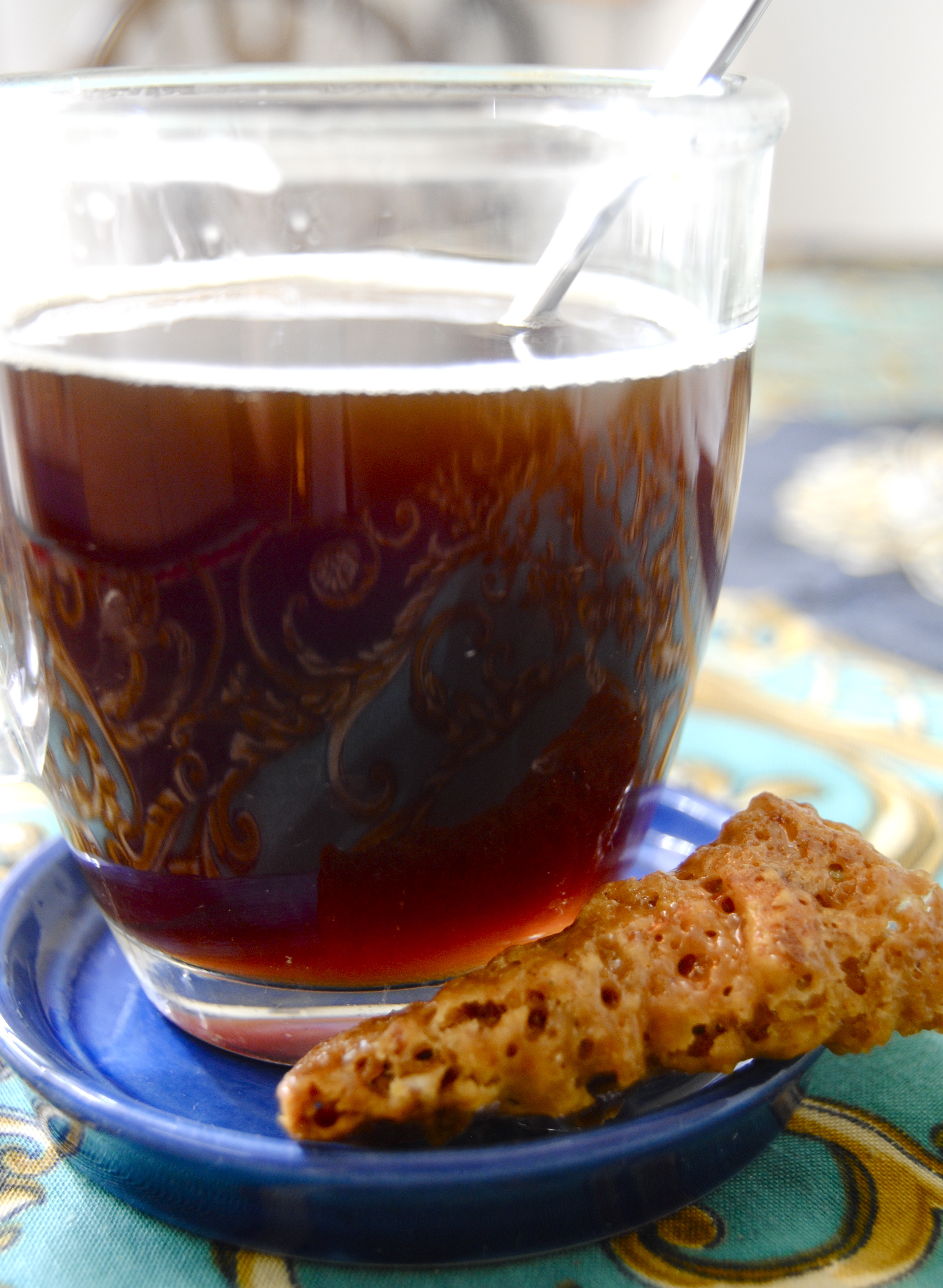
It was so good dipped in coffee.

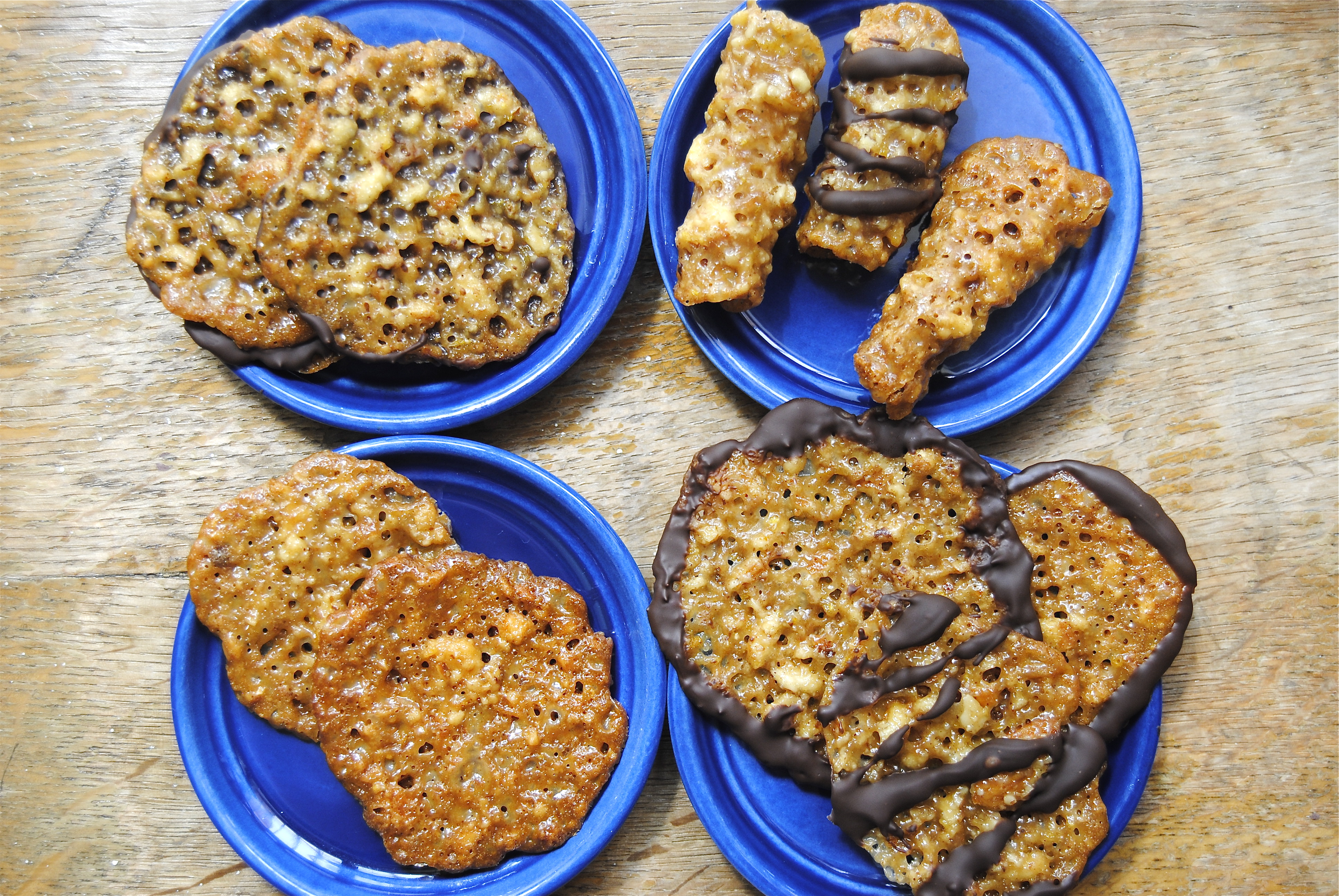
You can make sandwiches, flutes, chocolate covered flutes, leave them plain, or dip the edges in chocolate!


Okay, now, I know what you’re thinking…

But, IT TASTES SO GOOD! If pomegranates were in season in Israel right now, I would have have decorated this so it didn’t resemble…ahem!…so before I lose you completely, this is every Persian child’s favorite dinner, and you know children are hard to please. It is sweet (from the sugar), tangy (from the pomegranate syrup), nutty from the ground walnuts and the chicken melts in your mouth from cooking for a couple of hours. This is the best Persian dish out there, hands down and it’s served over rice, and with tahdig, which we will get to soon! It’s even better the next day, so make it in advance, if you can. (pronounced: khore-esht-eh fes-en-joon)

As always with Persian food, the taste is in the technique, and this incredible dish was taught to me by my cousin Banafche during a week when we stayed together and she devoted many hours to teaching me different family dishes.

Serves: 6

What you need:

1/2 c pomegranate syrup

1/2 c white cane sugar

about 2 cups of water (but you’ll add them slowly over the two hours it cooks)

2 cups walnuts; ground somewhere between a powder and still a little chunky (this measurement is after they’ve been ground; about 4 cups whole)

salt & pepper to taste

4 chicken breasts and/or thighs; you can also use ground beef and make small meatballs (this is traditionally done with duck, but that’s a little intense for me. if it’s not for you, more power to ya)

1 small onion; chopped

1 tsp turmeric

How to do it:

A quick note: this dish freezes very well. When you want to warm it, add a small amount of water and don’t be frightened by the thick green layer that emerges above the meat. It’s the oil from the walnuts and will incorporate into the dish when you reheat it.

We’re going to start by toasting the walnuts over a low flame in a pot, constantly stirring so they don’t burn.

After the walnuts toast for a few minutes, add the pomegranate syrup, sugar and 1/2 cup of water. Give it a good stir. This mixture is the key to everything (NO PRESSURE),  which is why we’re starting slow on the water. Keep your heat on low and let this cook for about 40 minutes. Keep a close on this mixture, however, because  it can burn easily and you will need to add more water when it becomes too thick.

Immediately after combining the sugar, pomegranate syrup, water and walnuts

After about 25 minutes (and the color will become even more burgundy/brown than this). 

Don’t freak out if you think your mixture isn’t thickening. It will! Patience in Persian cooking, please. During the 45-60 minutes while this mixture is doin’ its thang, you’ll need to use your judgment about adding the water because you are looking for a light-medium sauce (not a paste), something slightly thicker than cream of wheat consistency. You’ll need to add about 2 cups of water total, maybe a little more and maybe a little less during this 45-60 minute process. Whenever the mixture becomes very thick, you’ll need to add about 1/3 c of water and give it a stir. (Scroll down though, because while this is cooking and before it finishes you are going to start with the chicken.)

Bottom line: if the mixture doesn’t show yellow/green walnut oil bubbles, and it’s becoming thick, you’ll need to add a little more water until the mixture is the desired consistency.

How do you know when this mixture is finished? It will tell you. The oil from the walnuts will rise to the top creating greenish/yellow colored bubbles. It doesn’t need to be a ton of oil rising, but as long as it begins to show color, it’s ready. This is exactly what you want as it will give your stew that perfectly rich, nutty flavor. If this hasn’t happened by 45 minutes, keep waiting.

look at all that walnut oil!

Once the walnut oil has emerged, add a about 1/4 cup water and give the mixture a stir. Don’t be frightened when it turns into a thin yellowish liquid. It will thicken back up and darken in minutes. Also, this is a good moment to stick your finger in and taste it. If it’s too sour, add a little more sugar, and if it’s too sweet, then add a little more pomegranate syrup.

While the sauce is cooking though, heat up oil (a couple tablespoons) over medium heat in a large pan or pot for a couple of minutes. Add the onions and saute until it becomes dark (you don’t want them to show through the stew) and then add the turmeric. Stir a few times and spread the turmeric around. Then add your chicken pieces. Add a little salt and pepper to season, but if you’re using kosher meat, don’t add too much salt since kosher meat is already salted.

Cook for a few minutes and then turn the pieces over.

Turn the heat to as low as your stove goes add about 1/3 a cup of water, and cover the meat. This will cook for another 10 minutes or so.

Pour the pomegranate & walnut sauce over your chicken and onion.

Cover the stew and leave the lid slightly ajar. Let this simmer on low for about 30-40 more minutes, checking back every so often to make sure nothing is burning. When the chicken softens, break it into small, almost shredded pieces with your spatula. This can cook on low heat until your guests arrive, as long as you are checking it and adding water small amounts of water at this point when it thickens too much. Or, turn it off, leave covered and warm up slightly when your guests arrive. Try as best you can not to add too much water though. As listed, about 2 cups only.
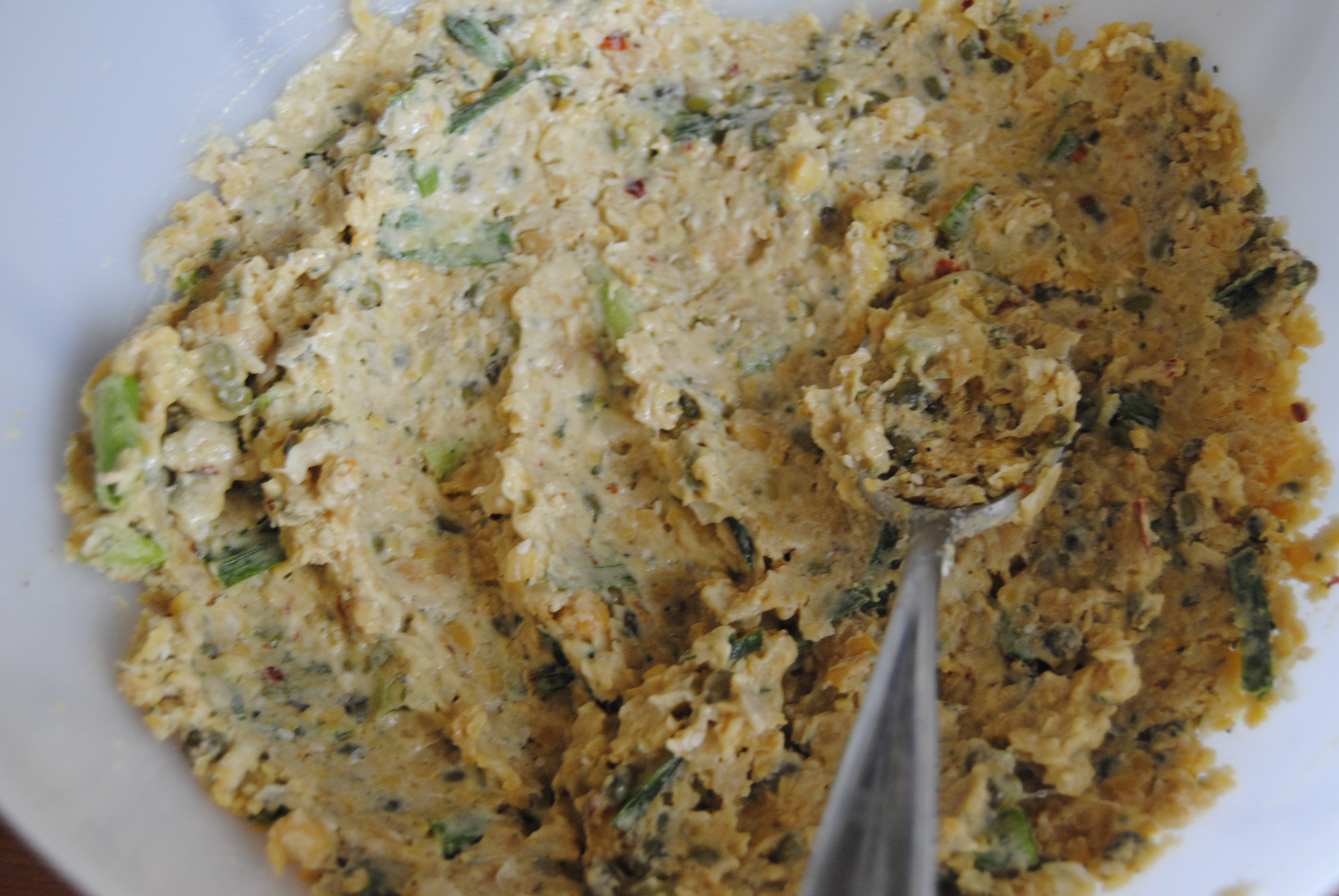
Serve over rice and enjoy!

Anyone who has ever bought strawberries in Israel can attest to the sad, short-lived fate of this fruit here. I don’t know what they put on them, or how long it takes them to get from the ground to the market, but something has gone very, very wrong. And maybe I’m just a sucker, but despite knowing that I can’t eat a kilo of strawberries in one day, they always make it onto the grocery list. And at the market I always carry them in a separate bag hanging delicately over my shoulder at the market so they don’t get squashed. I cover them in plastic bags, tupperware, I wash only the amount I want at a given time, and each time I check the fridge in trepidation: HAVE THEY GONE BAD YET?!

But all is not lost. In this process, I’ve perfected how to make strawberry jam, since it really does pain me to think of tossing that many strawberries after one day. So, before you toss yours, consider making a delicious, not-too-sweet rose water scented strawberry jam.

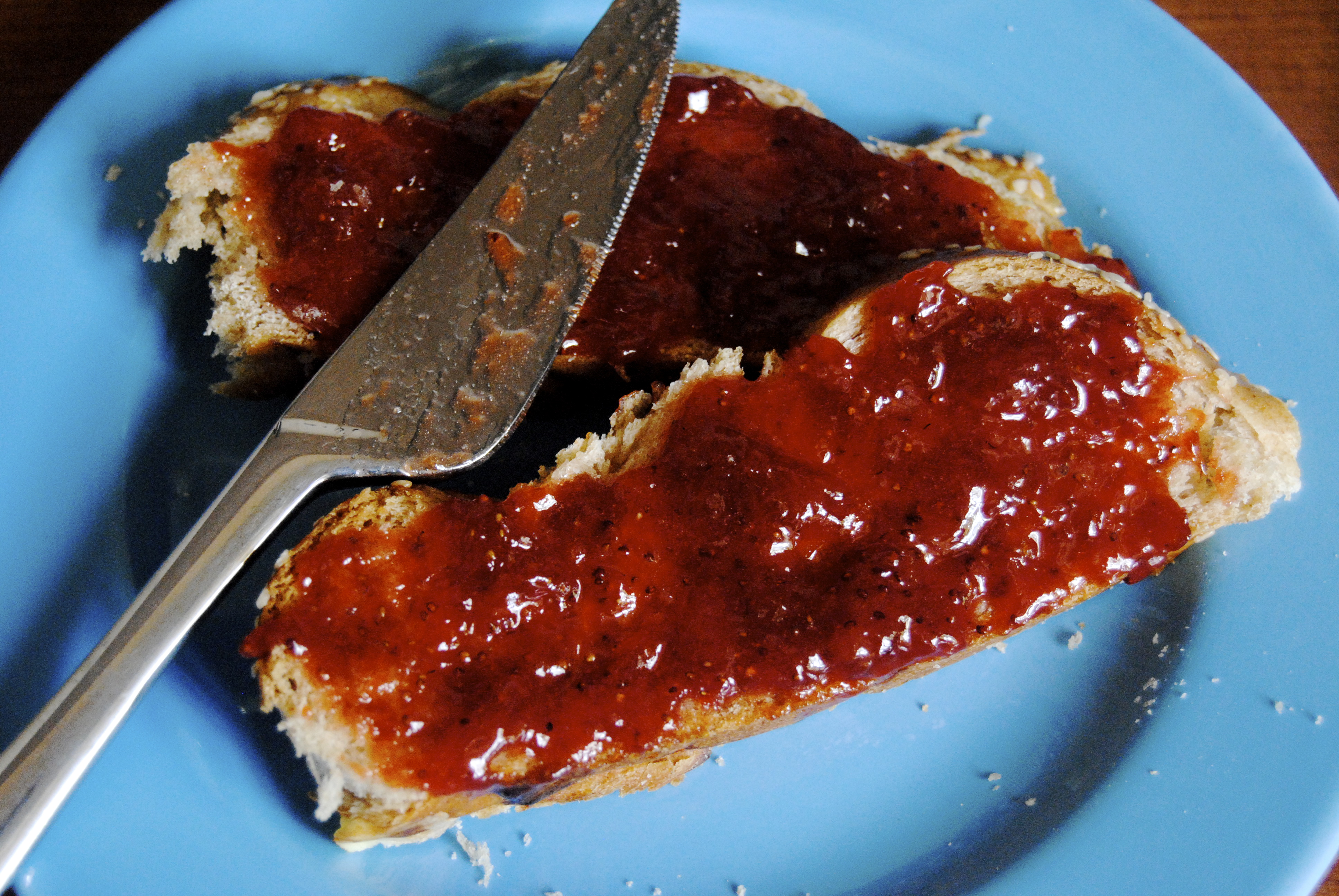
You can omit the rose water and just go for strawberries and candied ginger, omit the ginger and just go for strawberries and rose water or omit both rose water and candied ginger and have just a classical strawberry jam. It’s up to you! This recipe can be halved easily. I use this jam in salad dressings, on top of vanilla ice cream and toast!

What you need:

4 cups of strawberries; stemmed and diced

1 c sugar

2 tblsp lemon juice

1-3 drops of pure rose water (or 1 tblsp of the store bought kind that is mixed with water); optional, as noted above

1 tblsp candied ginger; finely diced (optional)

How to do it:

First place a small plate into the freezer. We will be using it in about 5-8 minutes to test if the jam is ready.

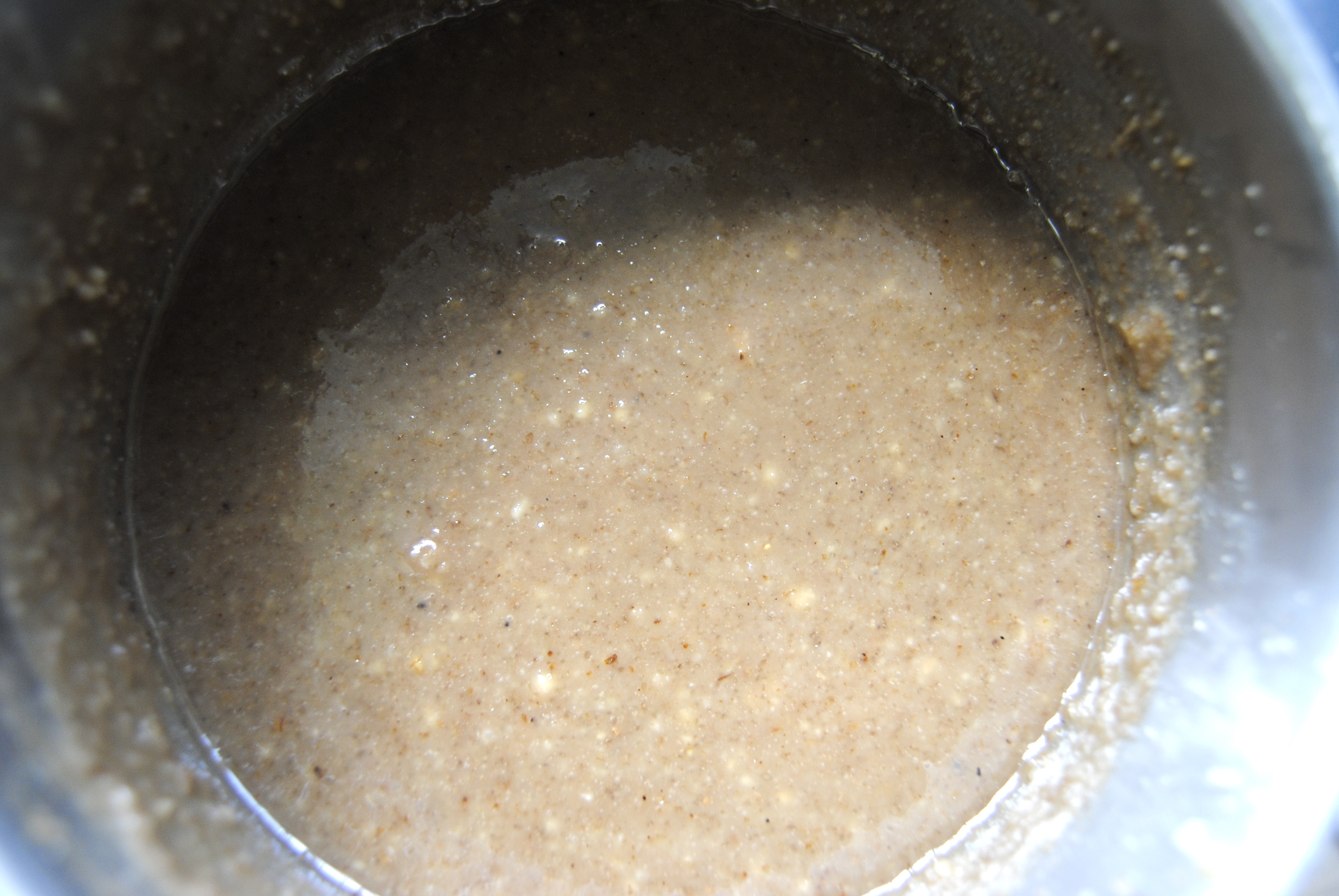
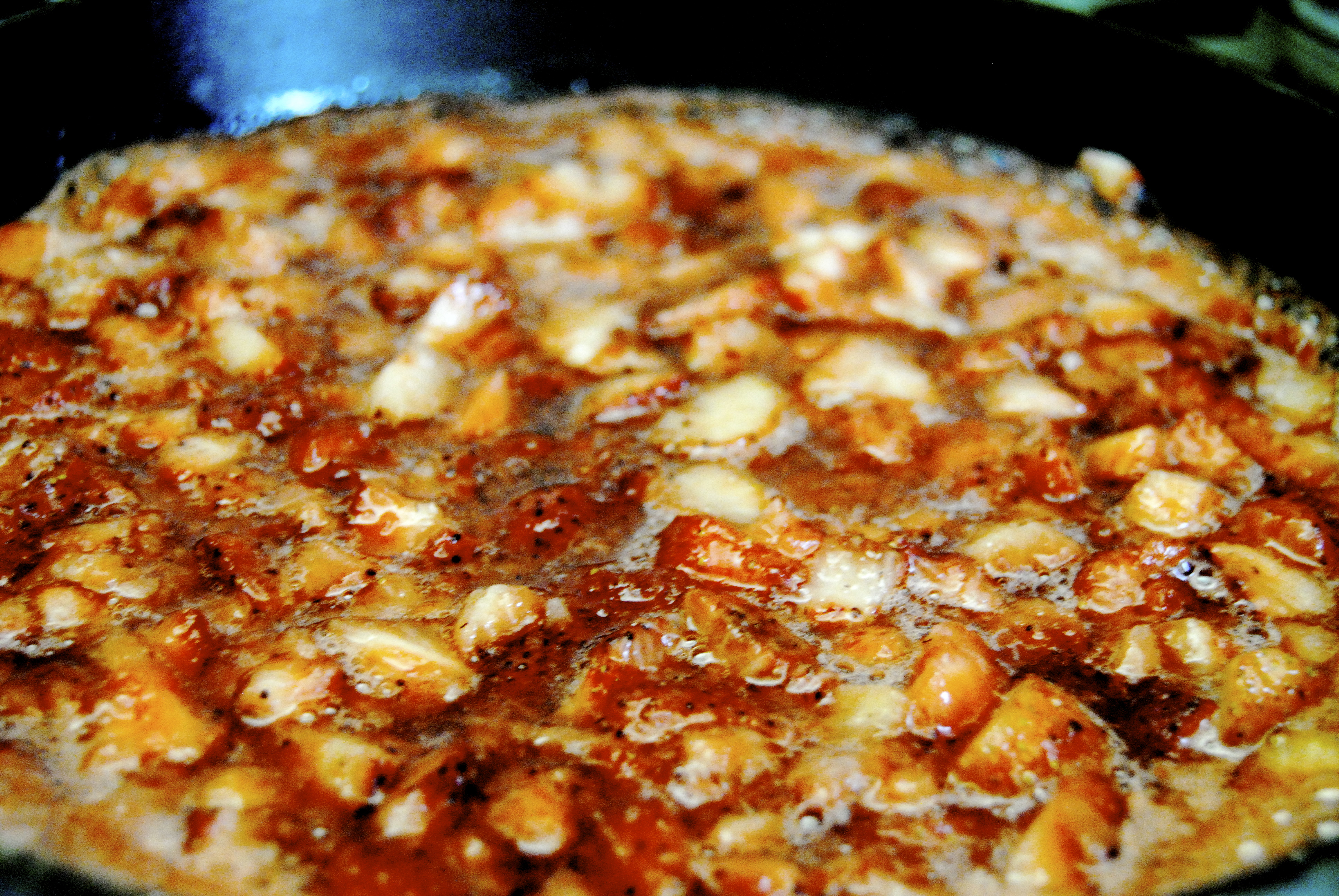
Place all the ingredients into a large frying pan or pot, continuously stirring. Your mixture will look like this for the first five minutes or so.
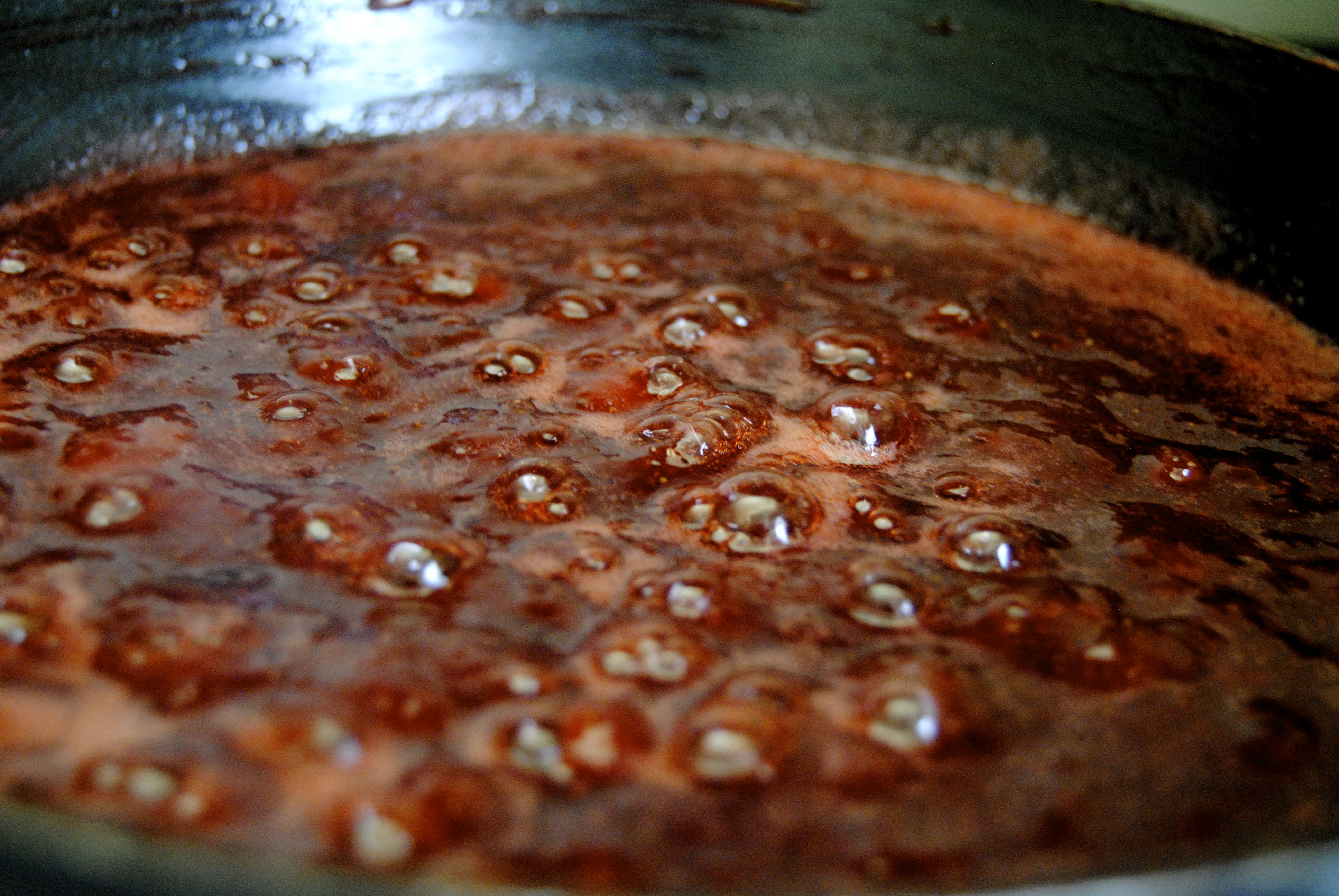
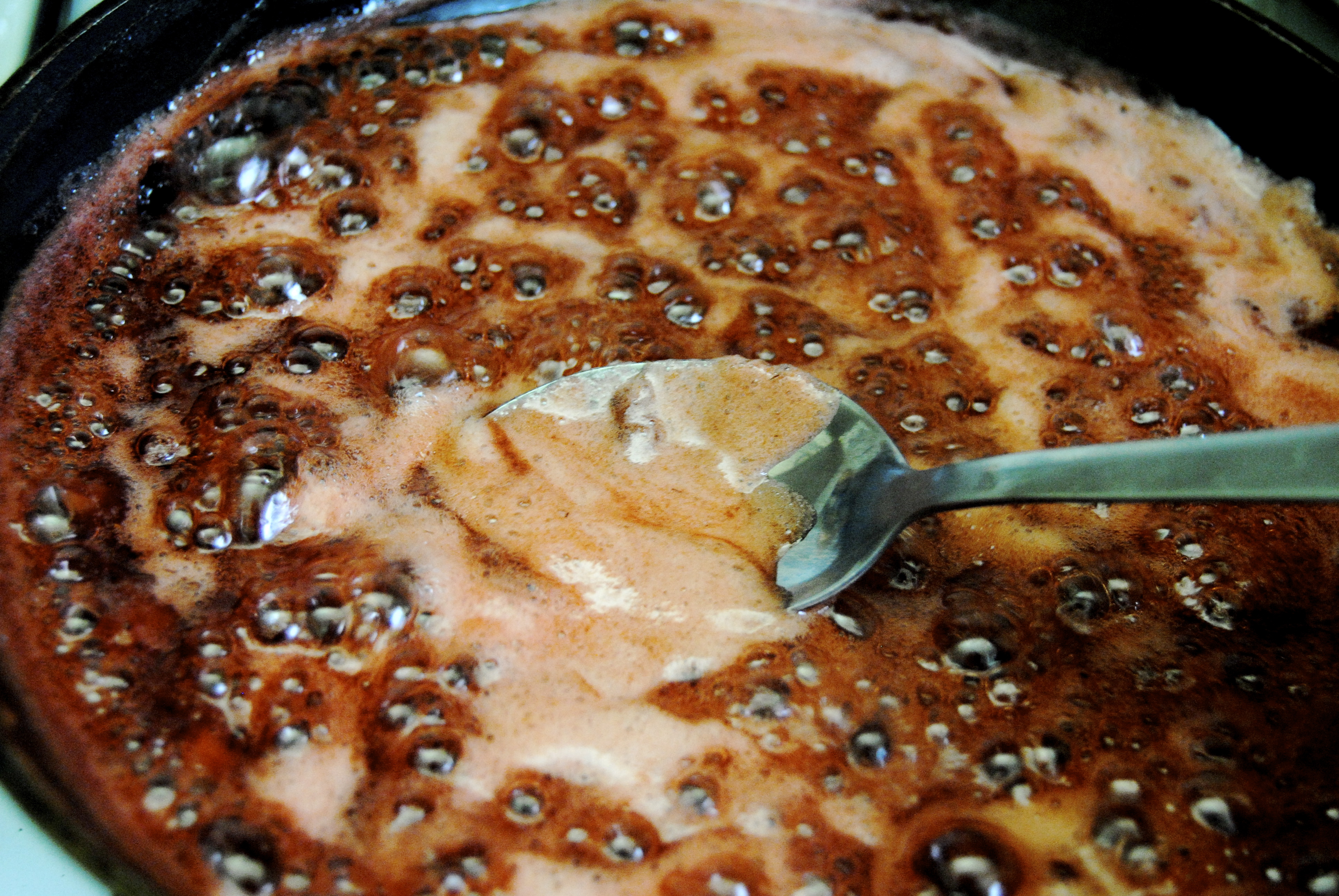
After five minutes or so, the mixture should begin to thicken a little and foam will begin to form at the top. Spoon out the foam as best you can, still continuously stirring. Don’t panic if you can’t remove all the foam out.

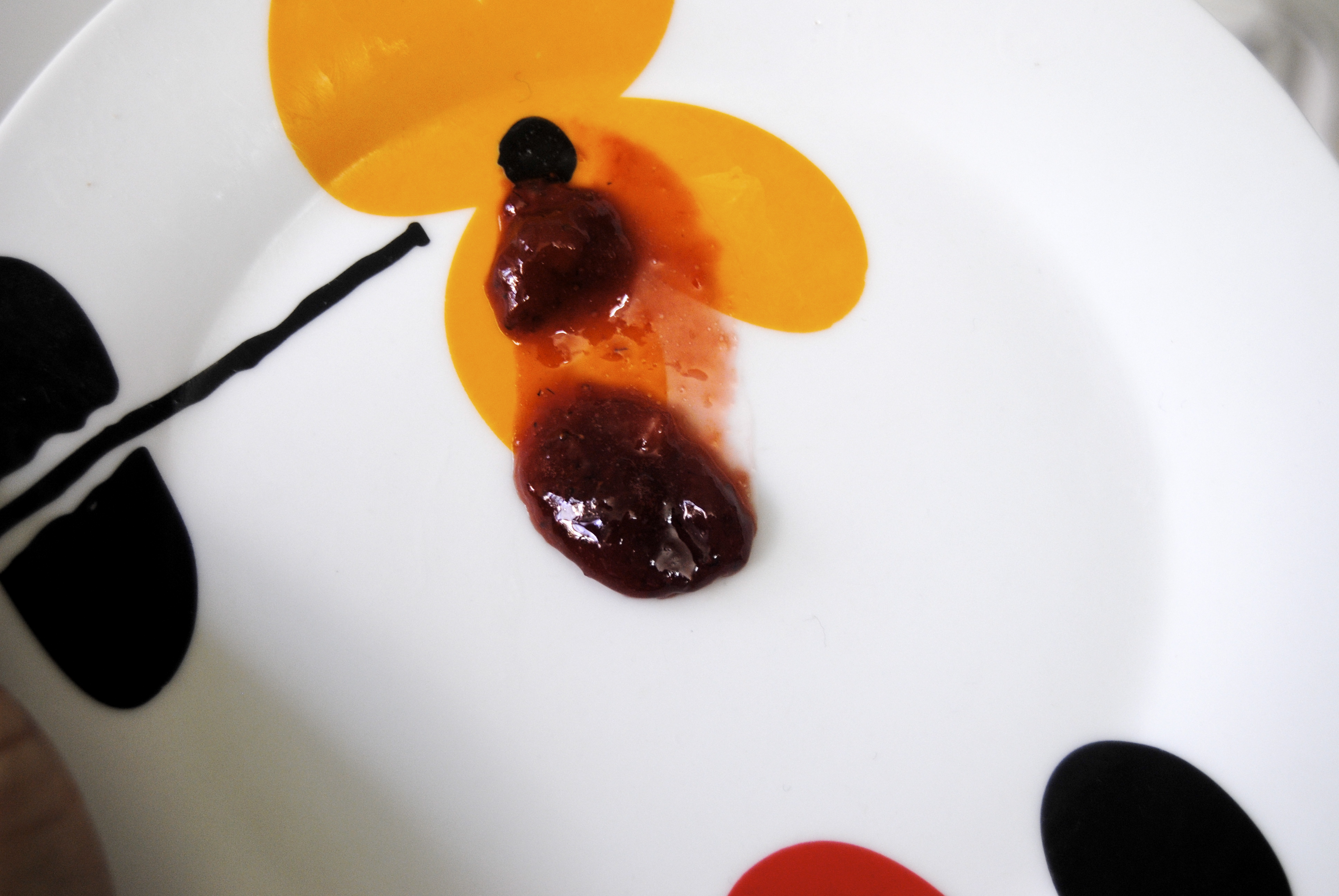
After about eight minutes or when the jam begins to look like it has thickened, remove the plate from the freezer and spoon some of the jam onto the plate. If it is runny and separates like this, the jam is not ready yet.

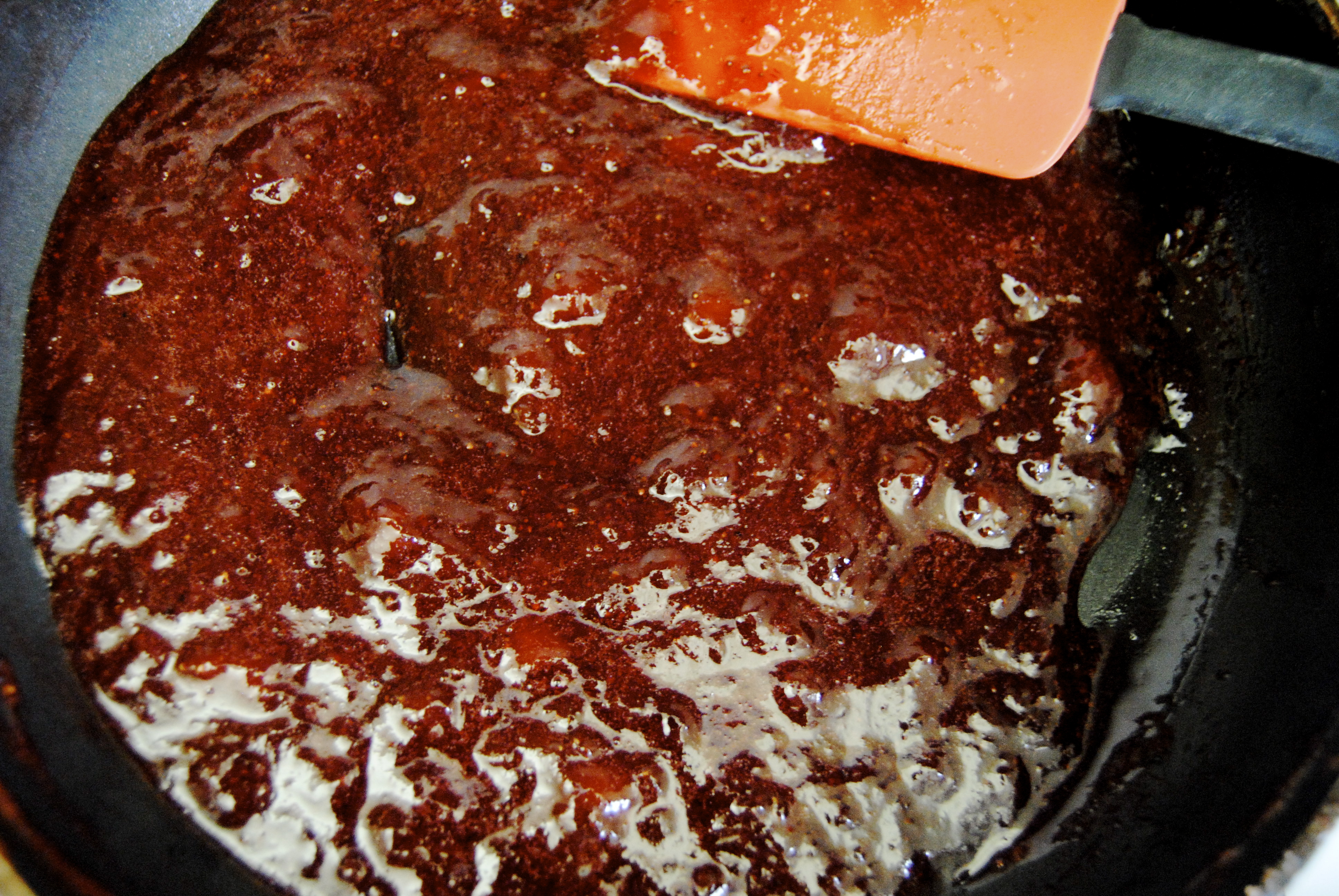
After ten minutes or so, your jam should be like a thick sauce like this.

The jam shouldn’t be runny and should want to stick to itself as it slides down the plate. It’s ready! Remove from the heat and let the jam sit for about 20 minutes.

It will thicken even more after 20 minutes of sitting.
Enjoy!

I really didn’t know what to think of this dish when I first saw it. I love chickpeas and I like dates so-so (they’re a little too sweet for me, if I’m being honest), but more than that, I wasn’t sure if this was a side dish, what to dip in it or generally how to go about putting any of this in my mouth.
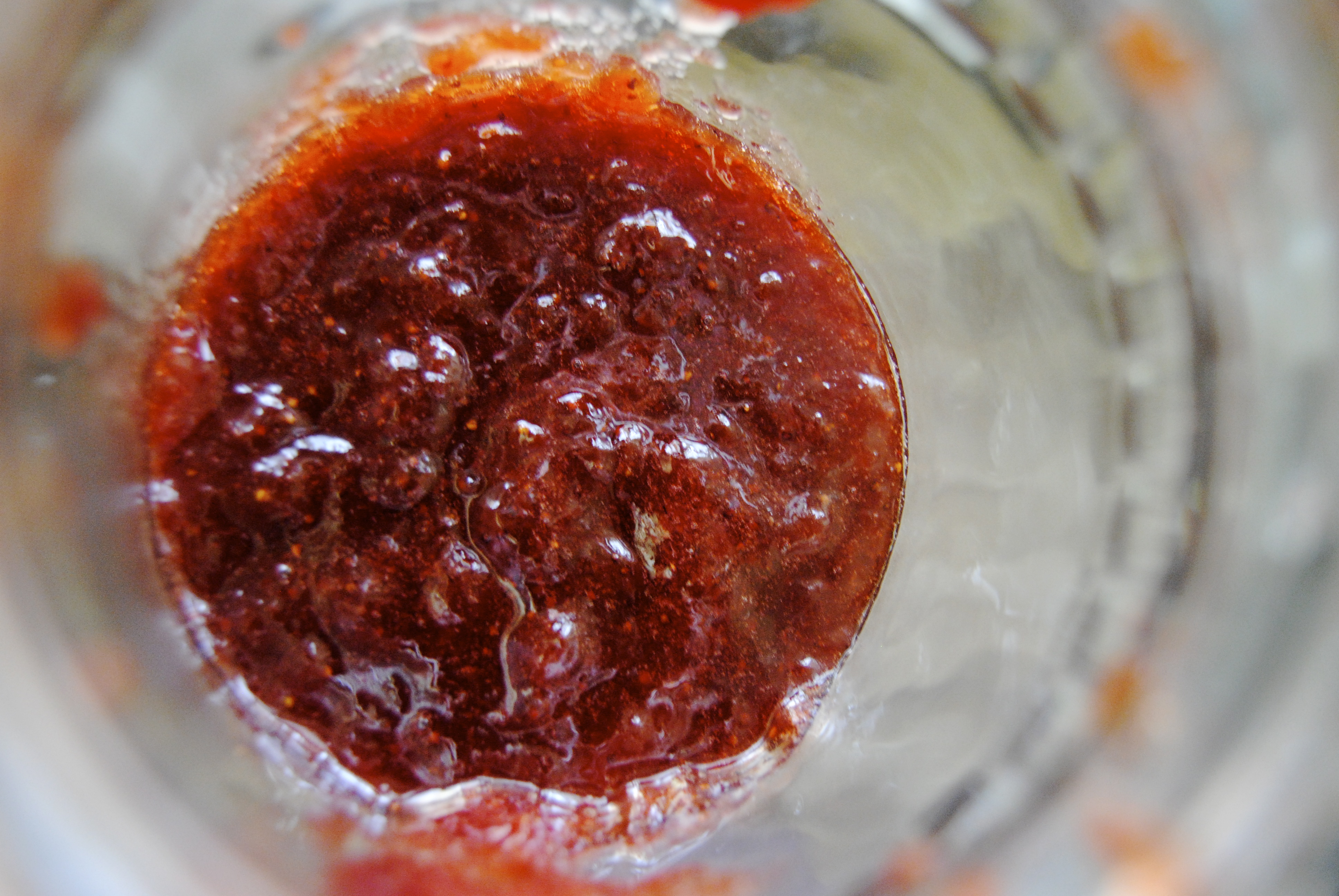
BUT, this was gone in minutes. Literally, five of them. The sweetness of the dates is really subtle and the combination of spices gives the chickpeas an interesting flavor. And I think I understand it now. Put a spoon in a large bowl filled with this, and people will figure out a way to shovel it into their mouths. This is a great side dish because it’s subtle and can accompany meats or vegetarian style meals without interrupting the flow; I would also totally make this for lunch or even toss it into a pita or a tortilla and wrap it up, on-the-go style, and take it for breaky in the AM. Or if you’re Atkins-ing to look totally amazing in your bathing suit soon, wrap it in a cabbage leaf and you’re that much closer to not feeling super awkward in a one-piece. We’ve all been there.

This recipe can be doubled or tripled, etc. Taste as you go and adjust flavors to your liking.

Adapted from here

Serves: let’s say 2 (hungry people)-6 (people who might be hungry but have lots of food options on the table)

What you need:

1 1/2 cups chickpeas (soak them overnight or use one large can)

1/2 small onion; finely chopped

1-2 tblsp oil of your choosing

4-5 dates; chopped

1/2 tsp ground cardamon

1/2 tsp salt

1 tsp cumin

1 pinch cayenne pepper

1 pinch ground ginger

1 star anise

How to do it:

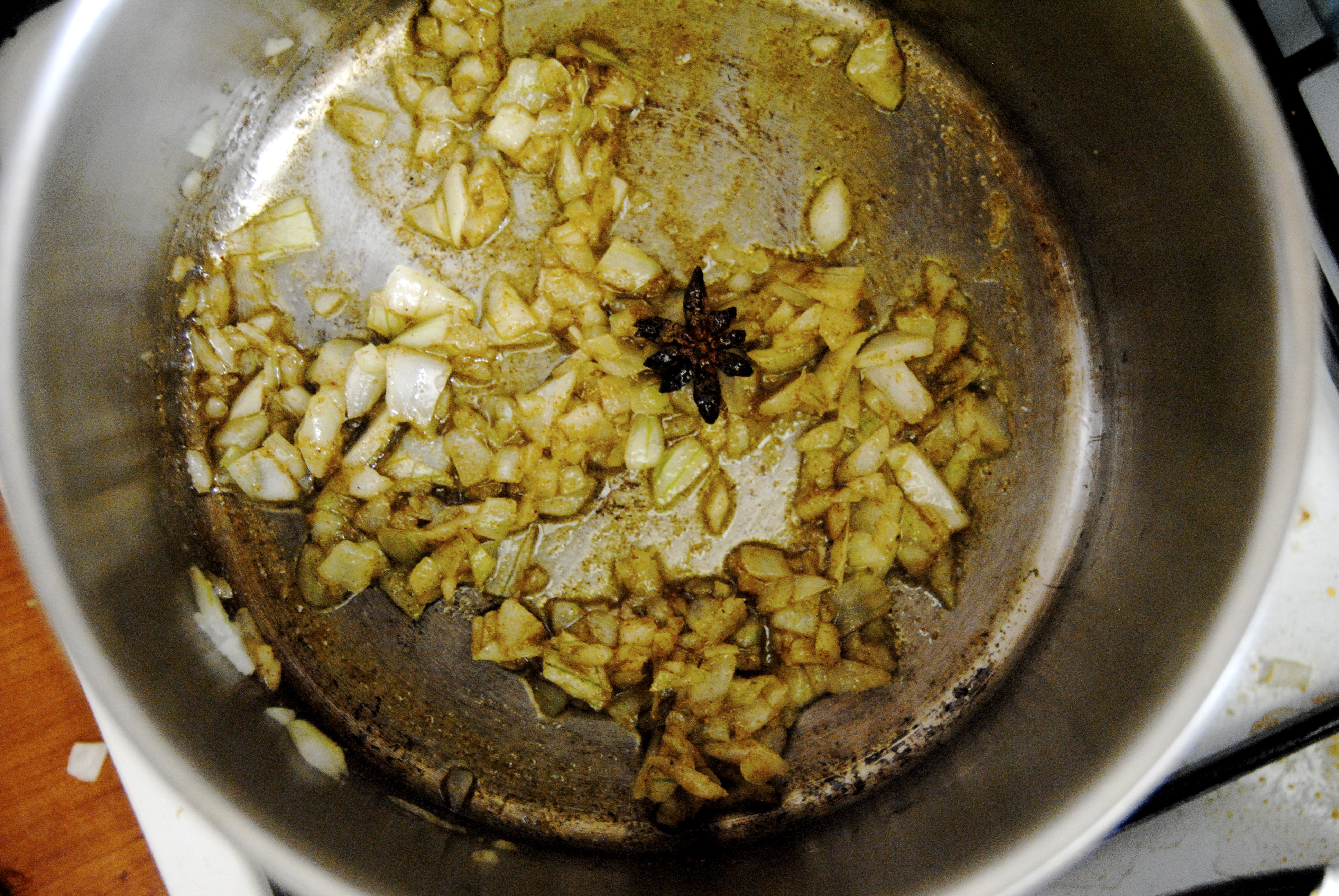
Drain the chickpeas (obviously), and mix all those spices together. Heat the oil in a pan, and when it begins to simmer add the onions and saute until they begin to brown. Add the spice mixture (and if it begins to get clumpy and you’re getting nervous it is a-o-k to add some more o-i-l) and toast like this for a few minutes. Add the dates, chickpeas and 1/4 c water or enough to make them less than dry. Stir the mixture to incorporate all the ingredients but stop once the chickpeas begin to look a little smushy and kinda sad. No one wants sad food. Serve warm! Enjoy!

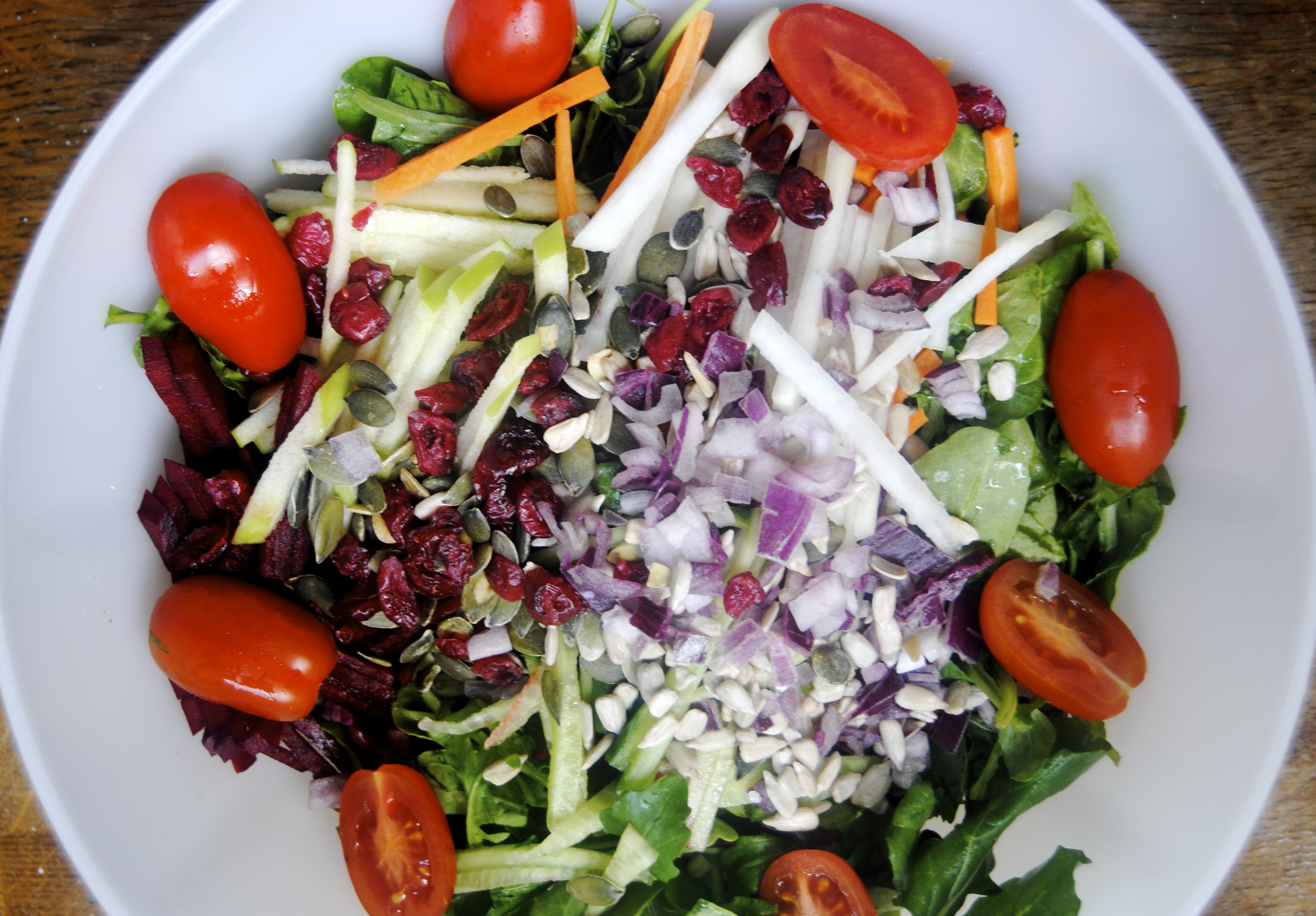
This salad comes from Cafe Mizrahi in the shuk and is known as the “Ya-Ya Salad.” I haven’t adapted anything in it because it’s simply perfect the way it is, and I can’t wait to share it with you. After I ordered it one day, I bought all the ingredients, went home and tried my hand at recreating it. It’s a healthy blend of crunchy beet and kohlrabi, combined with sweet dried cranberries, tomato and apple, and made slightly nutty by the pumpkin and sunflower seeds. Each bite comes together with the creaminess from the yogurt & tehina dressing. I hope you enjoy this small taste of Jerusalem!

Serves: 1-2

What you need:

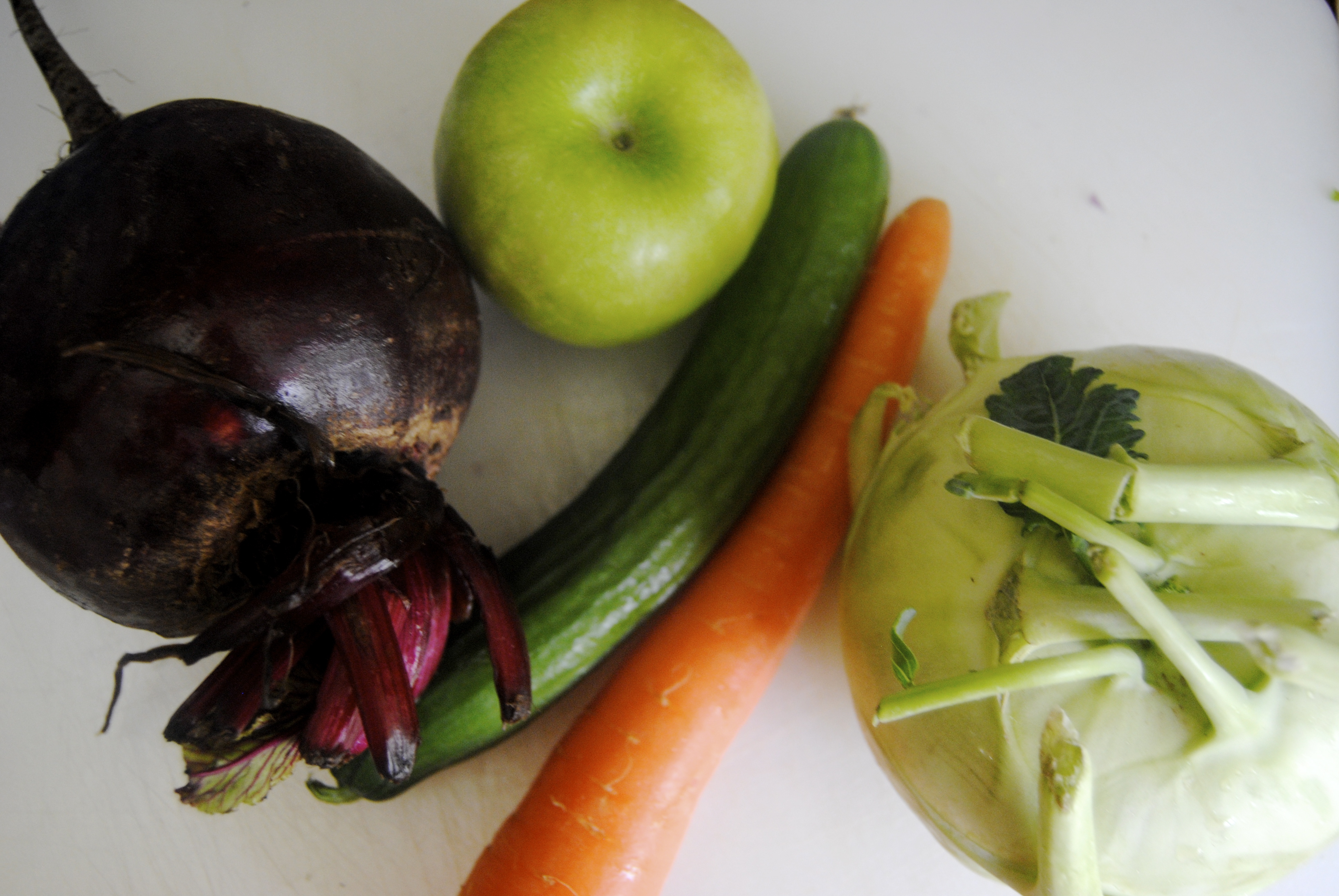
1 beet root; peeled and chopped

1 kohlrabi; peeled and chopped

1 cucumber, 1 carrot, 1 apple; julienned

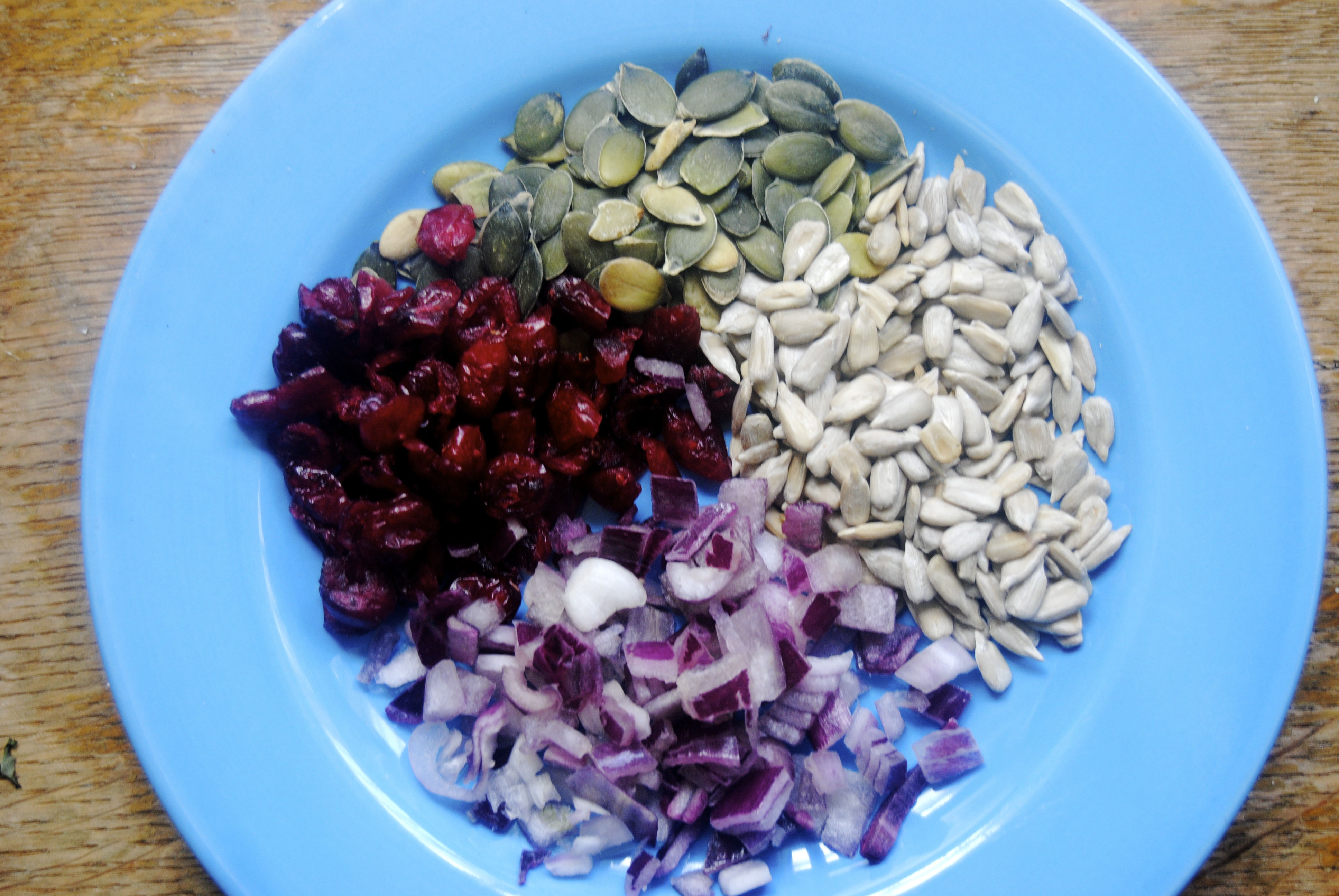
1/2 red onion; finely chopped

2 tblsp sunflower seeds

2 tblsp cranberries; dried

2 tblsp pumpkin seeds

5 cherry tomatoes

2 1/2 cups arugula, rocket leaves and baby leaf greens (you could use spinach)

1/2 juice from one lemon

oil for drizzling

salt & pepper to taste

4 tblsp plain yogurt & 2-3 tblsp tehina; combined

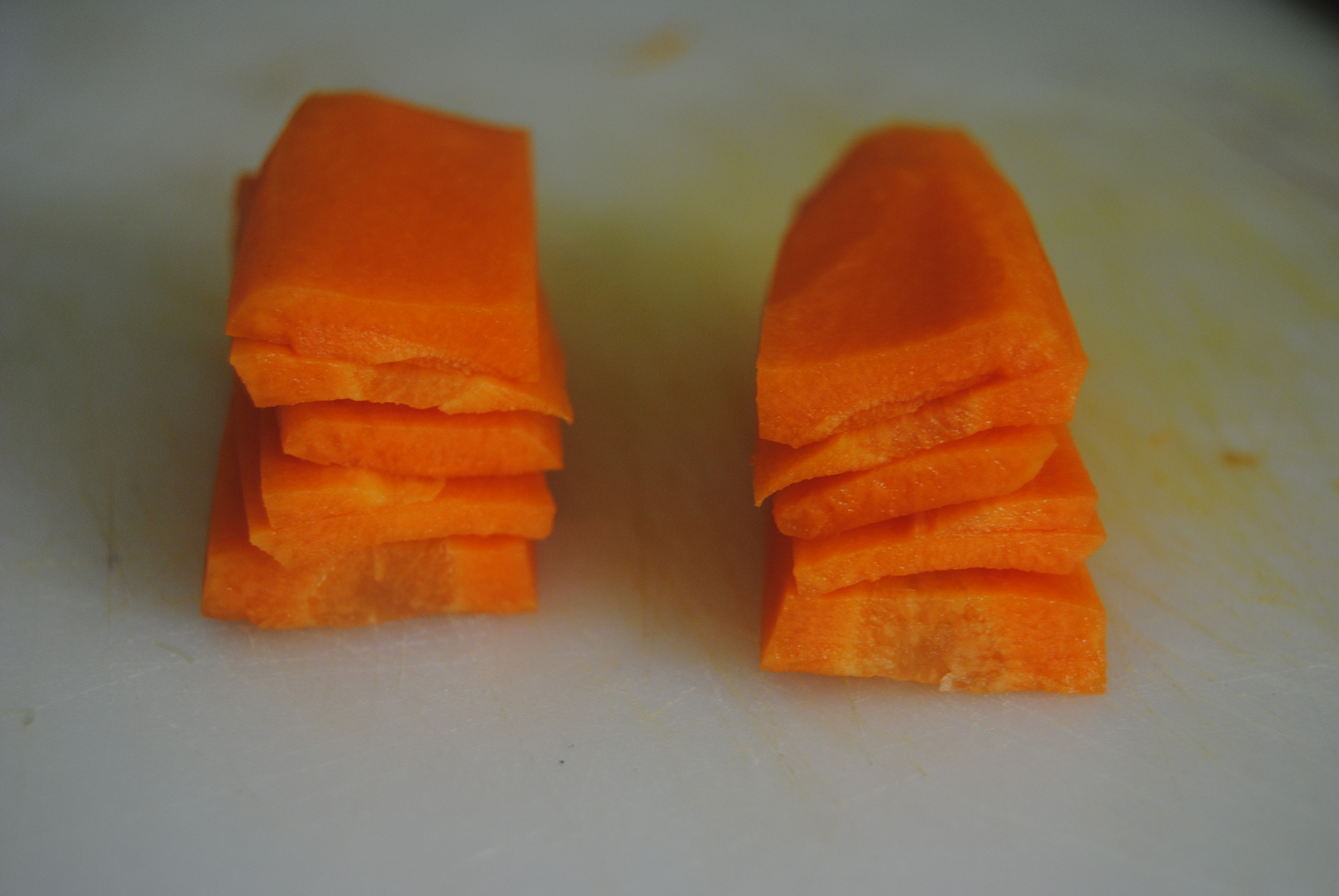
How to julienne in pictures (for those of us who didn’t go to culinary school):

If you’re not really a visual learner: take a carrot and cut it straight on two sides. Then place it on one side for a flat surface and begin cutting thin flaps from the top down. Stack them into a pile or cut in half and make two piles. Finely slice each piece lengthwise. Do the same thing to the beet, apple and kohlrabi.

Combine all the ingredients, add the lettuce, give it a toss with some oil, lemon, salt & pepper and then add the yogurt & tehina mixture.

Though it’s a meal on its own, I ate mine for lunch with zucchini kuku. Enjoy!