Yeah, right. Like I EVER go out anymore. BUT, even for those of us who don’t, some B vitamins and sugar are always well-loved. For those of us who do, there is nothing like this smoothie to clear out that dehydration. On super hot days in Jerusalem, this was my favorite smoothie to sip on while I walked around the shuk. And in the sweltering Tel Aviv heat, with nothing but the sound of feverish matcot (paddle ball) games and children playing, there was nothing quite as refreshing as this thick, perfectly sweetened, refreshing smoothie made from nothing more than fresh dates, bananas, ice and water (or you can use yogurt).

Finals are happening, so please accept my apologies for the brief post, but what I may lack in words this week I make up for in FLAVA’! I hope you give this a try!

Serves: 3-4

What you need:

6 bananas

10 dates

1/3 c plain yogurt (optional)

a handful of ice cubes

start with 1/2 c of water and continue adding until your desired consistency – it should be thick

How to do it:

Combine all the ingredients in blender. Shocking, I know. Enjoy!

Chag Sameach! Happy Passover! If you’re Ashkenazi, I’m sorry that this recipe will likely make you sad. Cheer up, you can always enjoy it next week when Passover ends. If you’re Sephardic, WAHOO! You’ll LOVE this recipe while you’re missing all your leavened goodies this week.

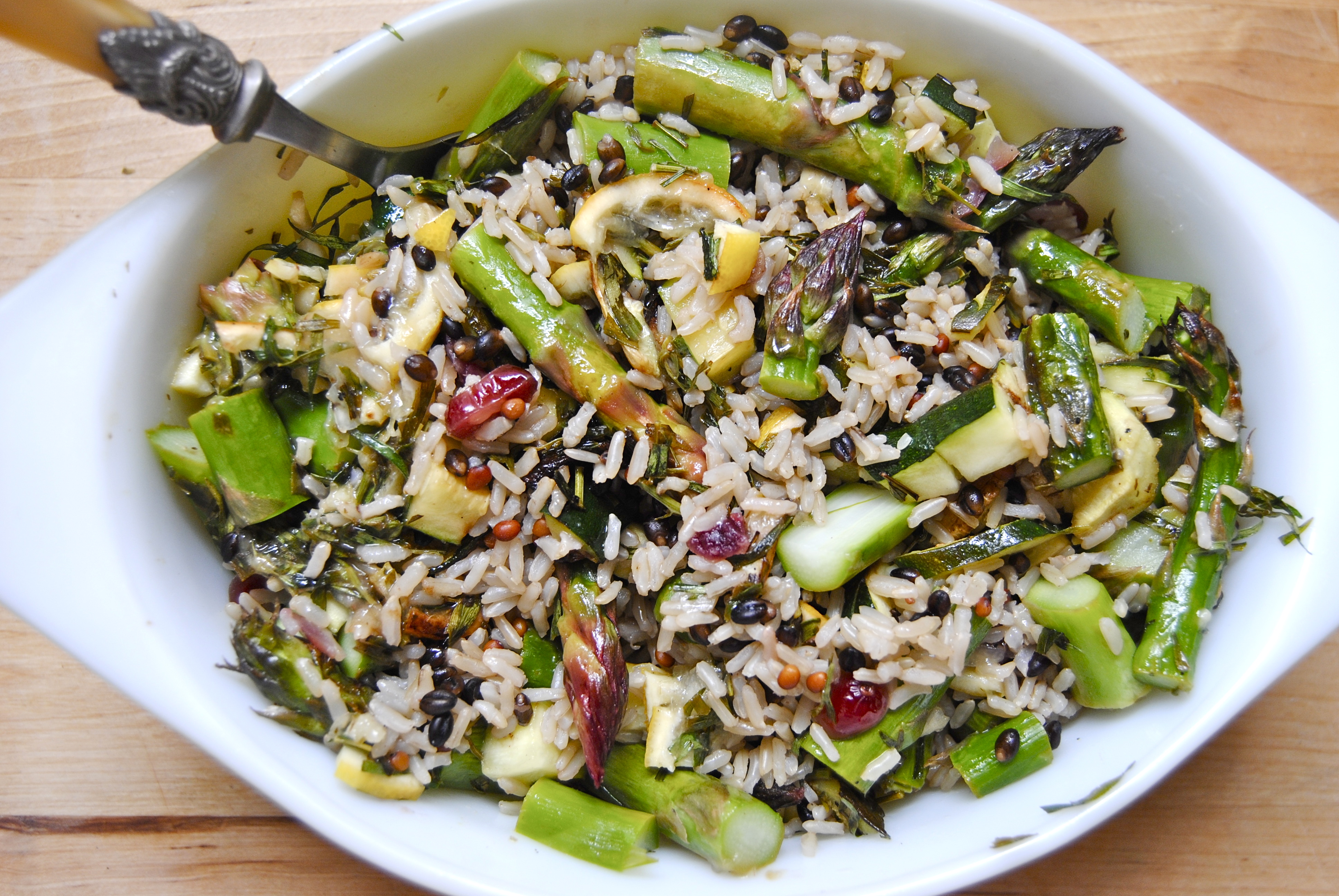
This is kind of like a two-in-one deal. The lemon + asparagus + tarragon makes a fantastic vegetarian side dish, but you can also chop it up to throw into this delicious, colorful rice dish. The lemons are infused with the licorice-ish essence, you toss in the whole rind (but it’s incredibly sweet!) and the asparagus are perfectly salty-tart. So delicious. I make this at least once a week now, in huge batches, and eat it cold like a salad for lunch or re-warm it up for dinner. I really hope you try this out because it’s super easy and delicious!

What you need:

1 1/2 meyer lemons; thinly sliced

1 bunch of asparagus; edges trimmed

2 heaping tablespoons of fresh tarragon; chopped

plenty of salt

1 tblsp olive oil

1 large or 2-3 small zucchinis; chopped (tossed with 1 tblsp oil, several shakes of salt & pepper) *optional

1/3 c dried, unsweetened cranberries

1 1/2 c wild rice (my wild rice had barley in it, but if you’re making this for Passover, just get a normal wild rice w/o the barley)

3 c water

A few shakes of garlic powder (*optional)

1 tsp salt

_DSC0631

How to do it:

Preheat the oven to 450 F. Cook your rice with your garlic powder (optional). While your rice is cooking, roast the lemon, asparagus and tarragon. At this time, you can also add the zucchini if you’re using it – I don’t always. If you are, just toss them with oil, salt and pepper and when you remove them from the oven, chop them up and toss with everything else. (Sorry, no picture of the zucchini!)

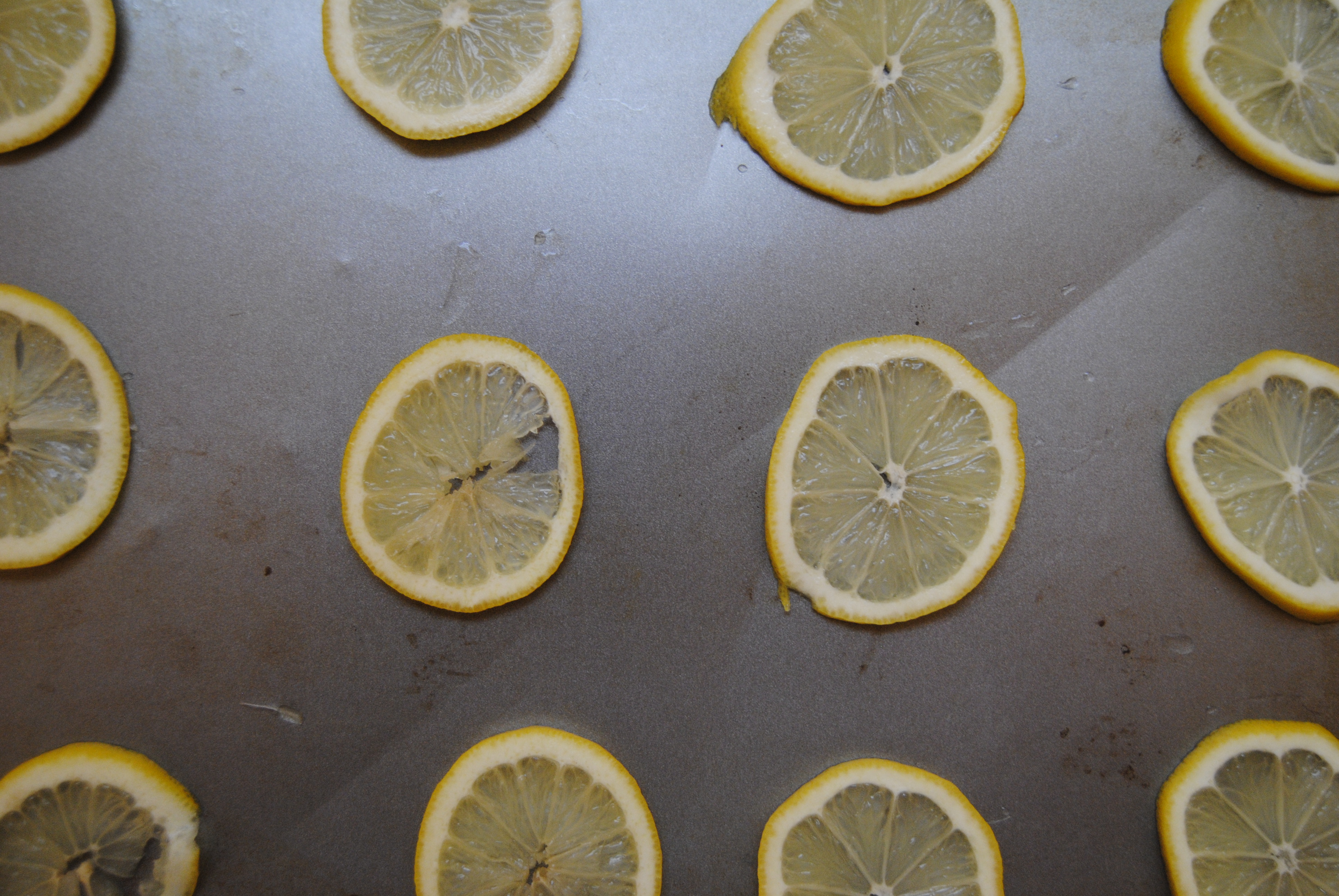
 For the asparagus, spray a pan with PAM and arrange your sliced lemons across the pan.

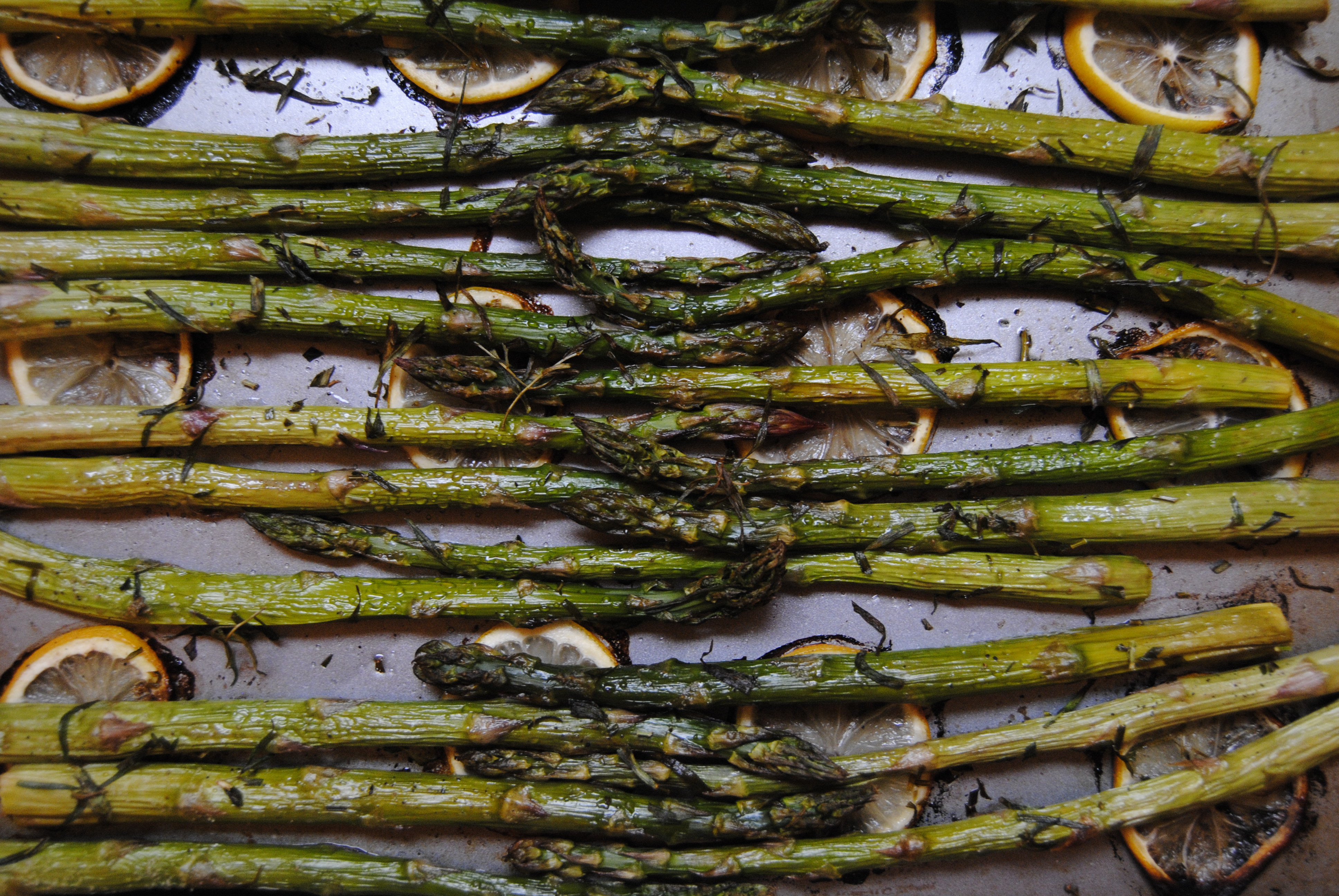
 Toss asparagus with olive oil and salt.  Arrange asparagus over the lemons and sprinkle the tarragon all over the top. Place in oven for about 15 minutes or until the lemons begin to brown.

I know it’s messy, but when you remove them from the oven, slice the asparagus into 1-2 inch pieces and chop up the lemon. I suppose you could cut the asparagus first, but you can’t with the lemon. 

_DSC0659
 Combine with the rice, asparagus, lemon and toss in the cranberries. Best warm but you can eat it cold. Enjoy!

If you’ve been following my blog, you know that I hate breakfast. I like brunch, and I suppose I like breakfast on the weekend (which truthfully ends up being more like brunch) but getting my act together in the morning is HARD. I’m one of those people that can eat the same thing for breakfast every day for three months and not get broed because that is how UNIMPORTANT breakfast is to me, despite believing that actually eating a breakfast is incredibly important.

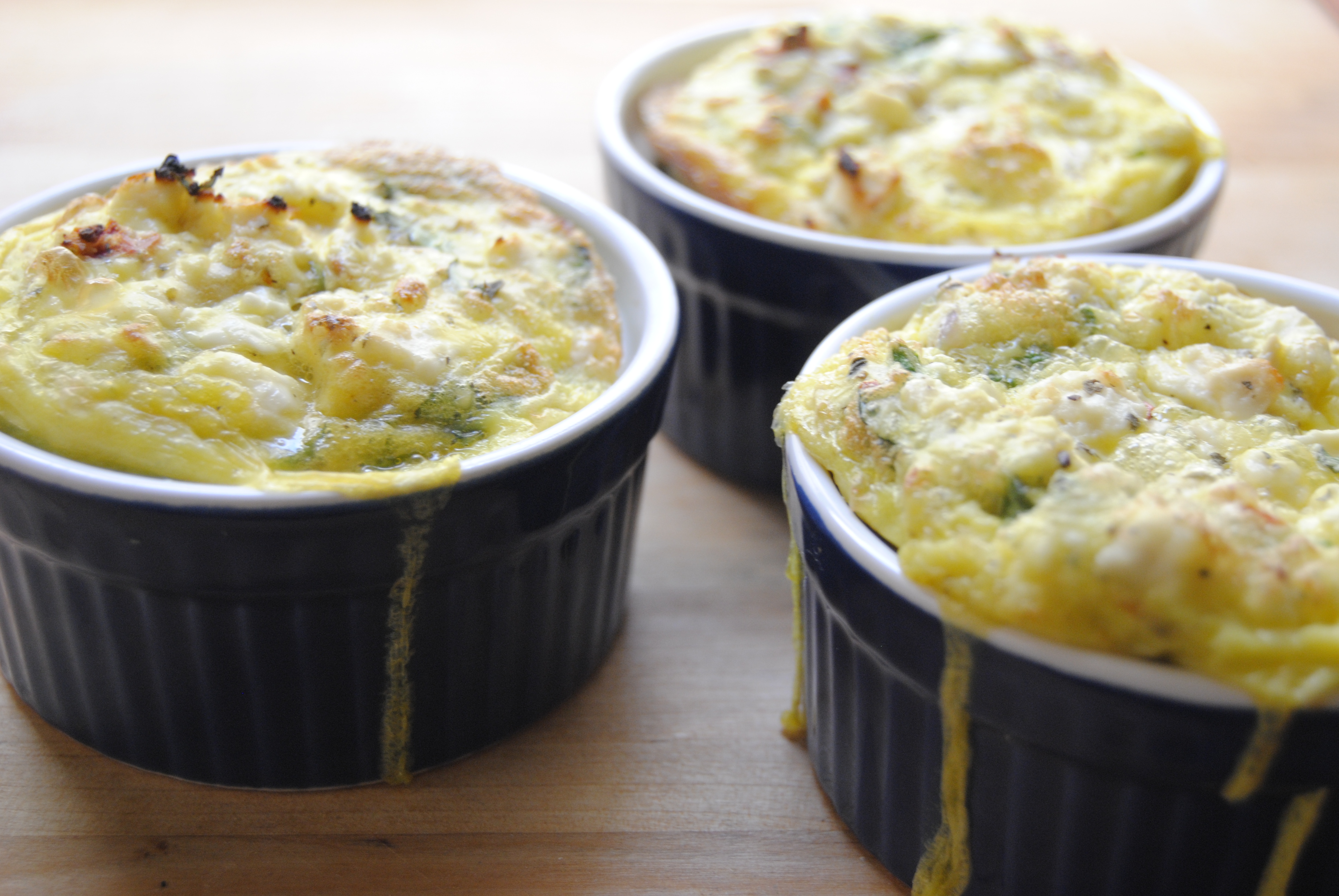
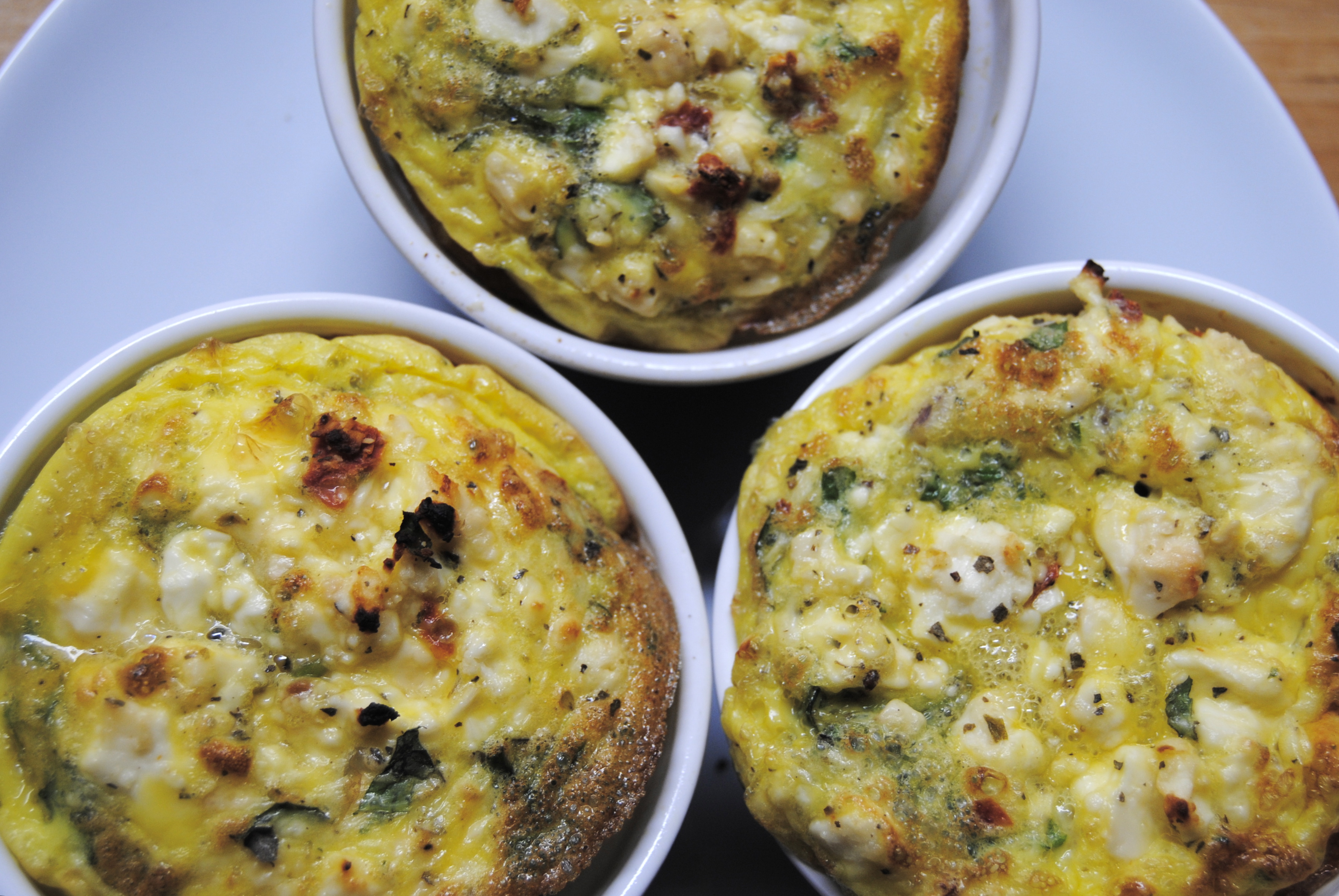
But alas, I’m on a bridal diet now, so the peanut butter and jelly sandwiches that I’ve been eating for breakfast all semester are no more. In addition to that, finals are fast-approaching, everyone is panicking (including myself) and I wish I could say I go through stretches of time forgetting to eat. That would certainly make my bridal diet easier… I need breakfasts that are fast, that wait for me in the fridge, peaking out through the fridge door saying, “Good morning, beautiful! I’ve been waiting for you!” And that’s exactly what these mediterranean omelette souffles are all about. You can make them in advance and just warm them up right before you eat them or just eat ’em cold. I certainly don’t mind them that way.

What you need:

4 ramekins (you could probably use muffin/cupcake tins, too)

5 eggs

1/2 c crumbled feta cheese (you could use goat, too)

1/3 c chopped sun dried tomatoes

plenty of salt and pepper

2 tblsp red onion; finely chopped

1 c of fresh mint; finely chopped

How to do it:

Preheat your oven to 400. Whisk the eggs together and then combine all the ingredients except the cheese. Spray your ramekins with some PAM and then pour your mixture evenly in four ramekins. Fill your ramekins about 3/4 of the way, otherwise they’ll overflow, like mine did in the picture (I was only making enough for three people, but I forgot to adjust my recipe. Duh.) Top with the cheese! Cook for about 12-15 minutes or until the eggs puff up like a muffin. They’ll shrink a bit once you take them out of the oven. Enjoy!


Quick Trivia: Snatching the record from Israel, Lebanon holds the world record for the largest bowl of hummus. Check out the article and photo here. According to the article, the Lebanese chefs used 8 tons of boiled hummus, 2 tons of tahini, 2 tons of lemon juice and 154 lbs. of olive oil for their dish

“Khoo-moos”… “hum-iss” … “hom-us” … – meaning “chickpeas” in Hebrew – this word takes some getting used to. I never felt quite comfortable saying “khoo-moos” in Israel and now that I’m back in California, I don’t feel quite comfortable calling it boring old “hum-iss.”

I think it can be hard for Americans to understand why anyone would wage war over hummus. Particularly if you’ve been buying store-bought hummus for most of your life. However, I guarantee you that more than one friendship has ended, relationship dissolved and family feud begun over hummus. Do you “wipe up” the hummus when you eat it? Or do you use a fork? Do you like the creamy yet fluffy Jerusalem hummus? Or the more chunky Galilean hummus? Is it Israeli? Palestinian? Syrian?

Every city you go to in Israel makes a different type of hummus, only more complicated by the ever-increasing number of restaurants within each city boasting its own. The two best hummus restaurants I’ve been to Israel are: Ben Sira hummus in Jerusalem and Abu Hassan in Jaffa. This recipe comes inspired by and loosely instructed from a Ben Sira chef.

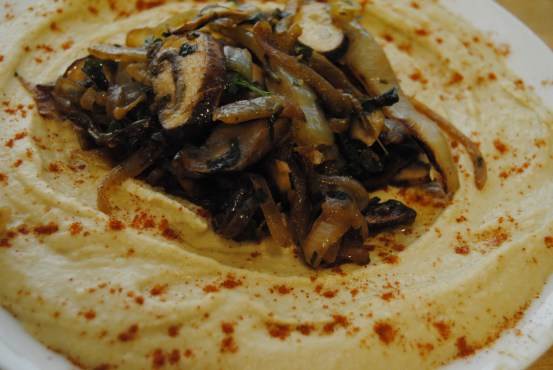
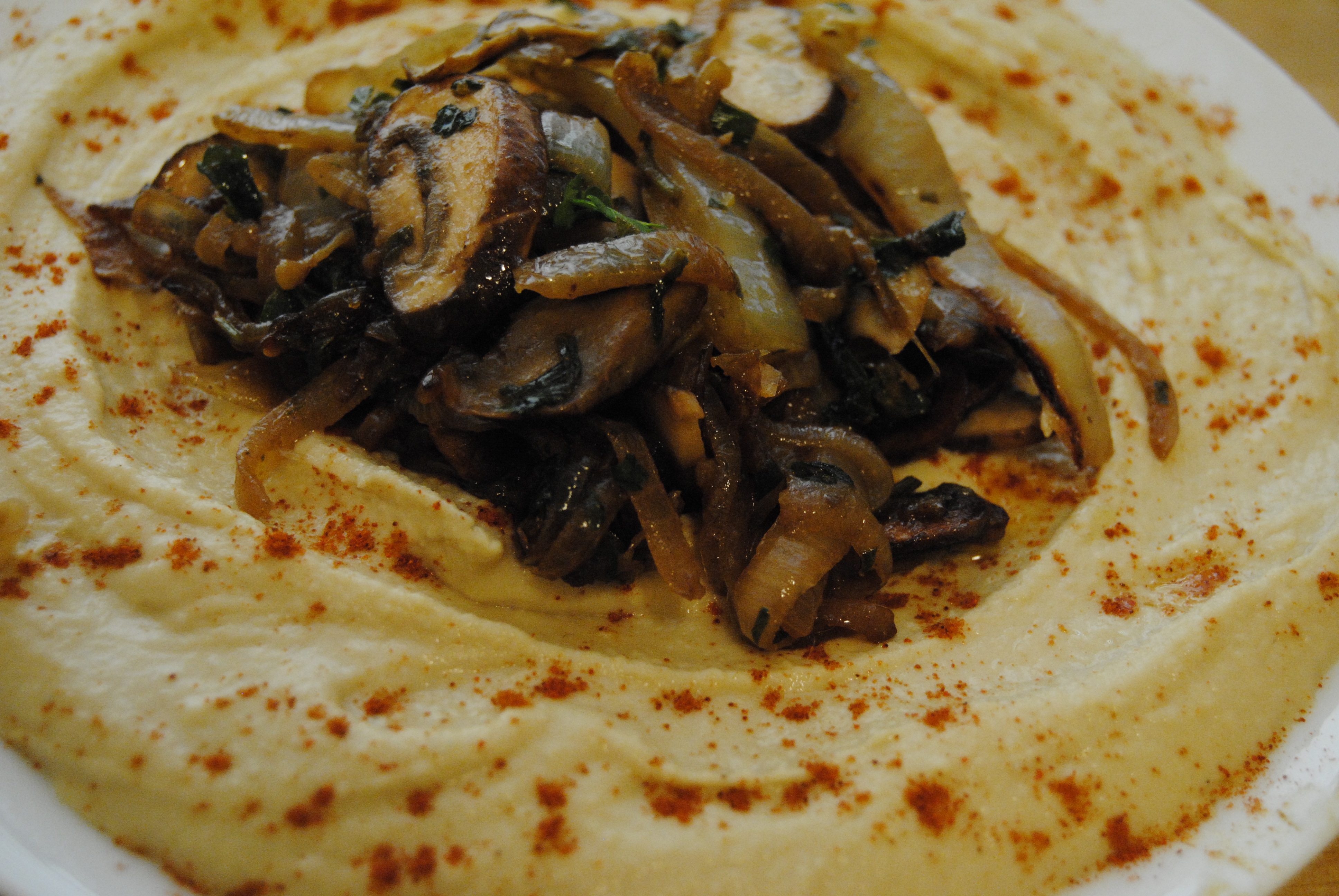
Hummus is served in a variety of ways in Israel: with meat, with mushrooms, with fava beans, with fried cauliflower, you name it, it’s there. It’s always served with a small dish of pickles and raw onion, and most people eat it alongside an “Israeli” salad. I put Israeli in quotes because you will see this salad also referred to as an Arab salad, Shirazi Salad, Syrian salad… you get the drift. My favorite hummus is with mushrooms, so that’s what I’ve got for you this week. The topping also happens to be delicious mixed in with some quinoa and asparagus.

As an aside, in Palo Alto, there is a new Israeli eatery opened called Oren’s Hummus Shop. This is the closest I have come to tasting authentic Israeli food in the Bay Area. I went with a friend recently and and, amidst Hebrew speaking customers and Israeli waiters, it was not only delicious food but an authentic experience. The menu was comprised of shakshuka, hummus, Moroccan carrot salad, their own version of complimentary hamutzim (they brought pickled cabbage), pita, varieties of Middle Eastern desserts and much more –  all names which I am sure are familiar with by now. If you’re near Palo Alto, you should definitely stop in. Check out their facebook page here or some Yelp reviews here.

Hummus will serve about 6 hungry people; topping serves 3 people; salad serves 2-3 people (hummus will stay good in the fridge for about 2 days only)

What you need:

Hummus:

plenty of olive oil

3 c dry chickpeas

1 tsp baking soda

lots of water

juice of 3 lemons

1 garlic clove (optional)

1 tsp salt

1/2 c raw tehina

fresh parsley; chopped (to garnish

paprika/cayenne pepper to garnish

a couple of pickles on the side; just for fun

Mushroom and Onion Topping

1 tsp cumin

2 tblsp oil

1 c fresh parsley; chopped

2.5 c mushrooms; coarsely chopped and sliced

2 tblsp lemon juice

2 pinches of sumac

2 small garlic cloves; minced

Israeli Salad

3 persian cucumbers; finely chopped

2 medium sized tomatoes; finely chopped

1/4 c red onion; finely chopped

juice of 1-2 lemons

a drizzle of olive oil

salt & pepper to taste

How to do it:

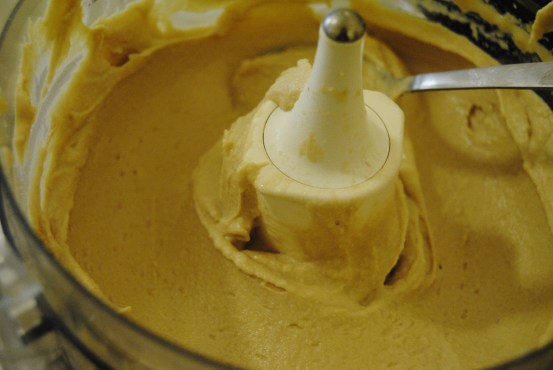
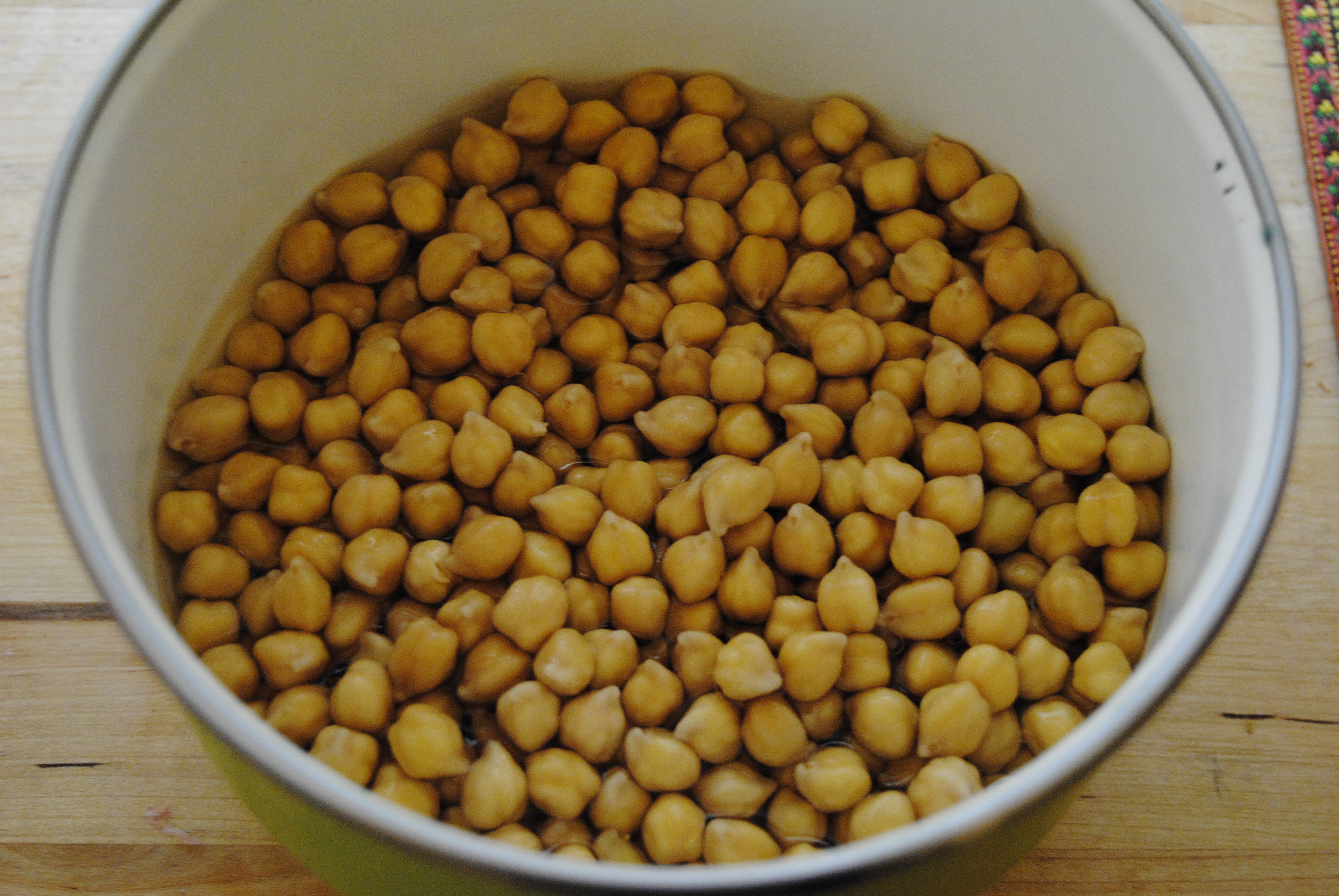
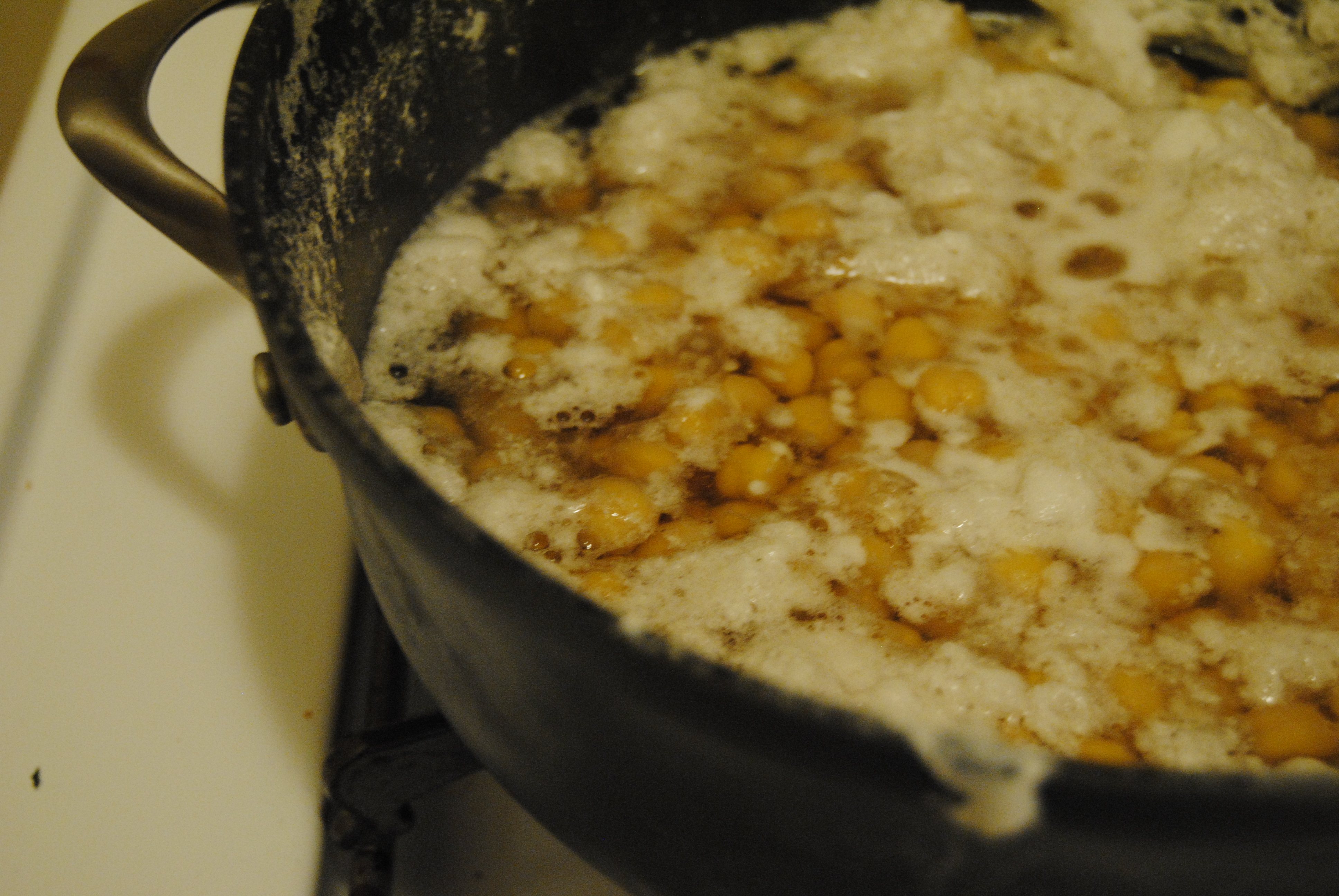
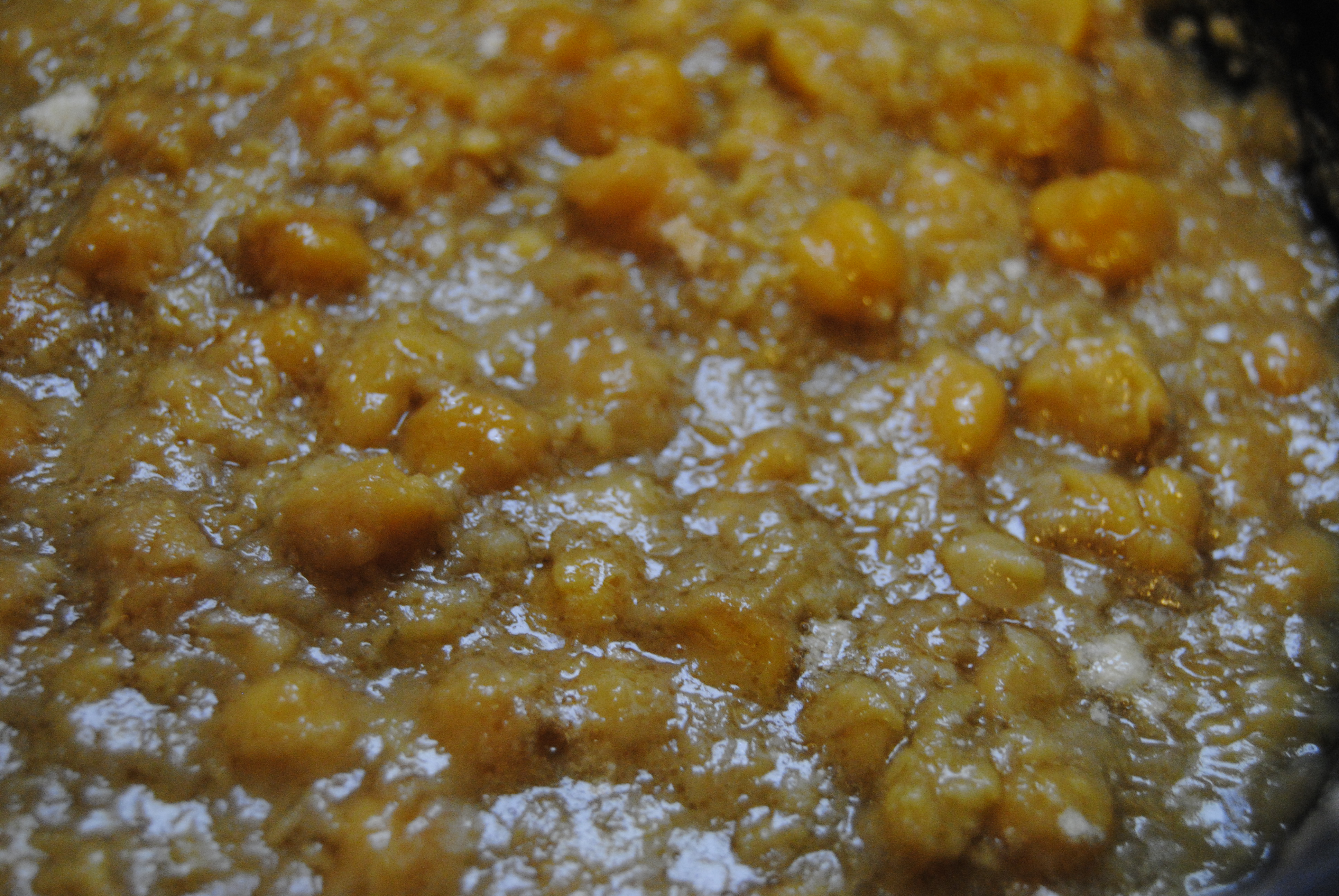
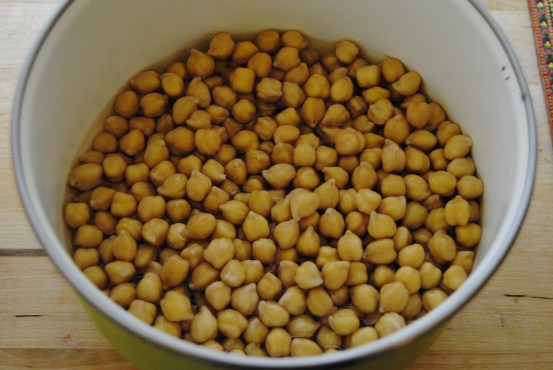
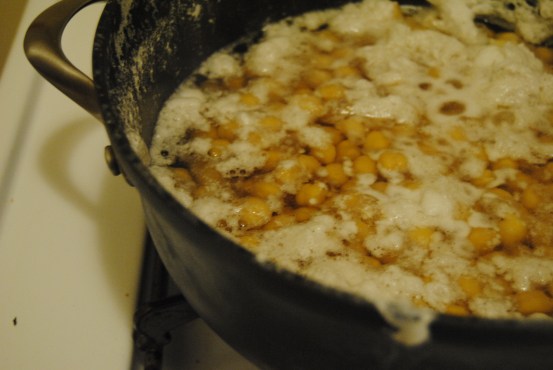
Soak your chickpeas overnight in enough water to cover the chickpeas by an inch or so. Change the water twice. The next day, place all chickpeas in a large pot with the baking soda and just enough water to cover the chickpeas, but not more. Turn heat on high and bring to a boil. Add another cup of water and after the second boil, lower the heat and allow to simmer for at least 2 hours. Keep adding water all the while so that the chickpeas are submerged under water the whole time. The chickpeas should become a dark, caramel color, totally soft, the shell peeling off, and easily smushable between your fingers. Place that pot in the fridge with the cooking water over night. The chickpeas will form a gel (so key!) because of the starch content of the chickpeas. At this point, you can put the pot back on the burner to warm them up a bit, though this is totally an optional step.  Throw all the ingredients into a food processor – add the oil last to create a soft and creamy texture. Serve shortly after so hummus is still kind of warm. ish. Top the hummus with the mushroom & onion recipe below and serve a salad and some pickles on the side! Enjoy!

For the topping, heat 1 tblsp oil over high heat.  Cut your onion into thin rounds and then cut those rounds into half moons. When the oil is sizzling, add your onions and give them one quick swish around the pan. When they’ve begun to brown, add the mushrooms and another tblsp of oil. Give a few shakes of salt (you can add more later) and pepper, your cumin, lemon juice, garlic, sumac and parsley. Cook for about 10 minutes, moving everything around every couple of minutes so it doesn’t burn.


Chop all your wonderful ingredients, drizzle oil and squeeze some lemon juice over the salad. A touch of salt and pepper and a few shakes of sumac over the top and you’re on your way to a really happy lunch. You can also common to top this with tehina.

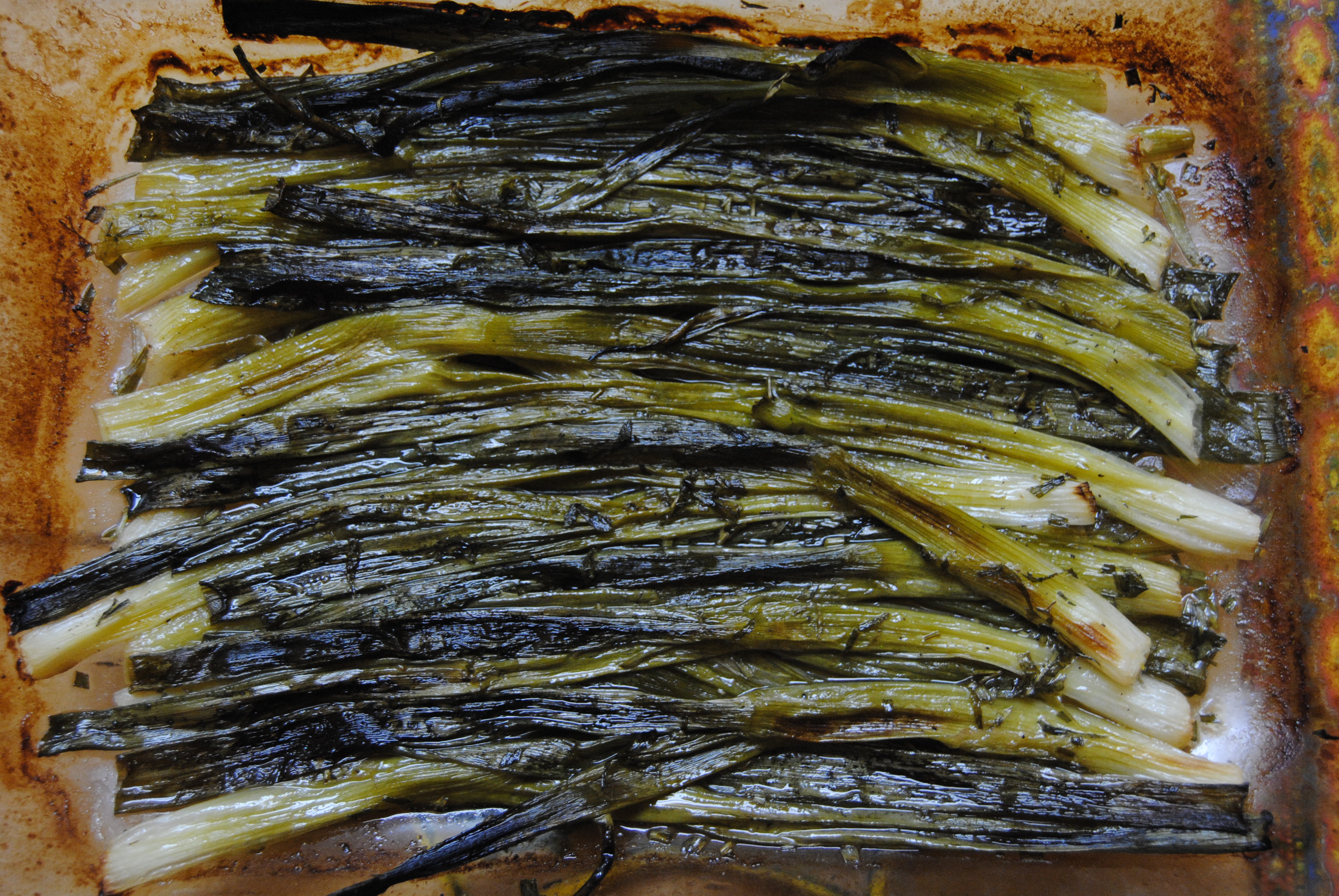
So, this is basically amazing. If you’re bored of your typical vegetable side dishes, this is a really delicious dish to shake things up. You definitely won’t have any leftovers, and if you find yourself standing above the dish at 10 p.m., picking at the crisp edges stuck to the pan, your fingers dripping in buttery juices, you are in good company. Serve this with meat and potatoes (and you can use margarine instead of butter) or alongside potato pancakes or leek fritters (posting soon!). Truly, this is a great side and the tarragon infuses the green onions with just a hint or anise-like aroma and flavor. Simply superb. Can’t wait to try this with leeks!

Hardly adapted from here

Serves 3 as a side

What you need:

3 bunches of green onions

3 tblsp butter (I used light butter)

1 heaping tblsp fresh tarragon; finely chopped

salt and pepper to taste

1/2 c water

juice from 1/2 lemon

How to do it:

Preheat the oven to 350 F. Trim just the hairy edges off the green onions. Spread half the butter around the bottom of a pyrex dish. Arrange the green onions so half are bulb-side against the left side the pyrex and half are bulb-side against the right side of the pyrex, essentially with the greens overlapping each other in two layers. Add the remaining butter in dollops all over, add the salt and pepper and sprinkle the fresh tarragon all around. Then add the water. Cover dish in foil and cook for 30-40 minutes. Remove the foil, increase the heat to 450 and cook for another 10-15 minutes or until the edges have browned and almost all of the liquid is gone. Remove from oven, squeeze the lemon juice all over, and serve warm. Enjoy!

Note to self: Cooking with butter is WAY better than cooking without butter.

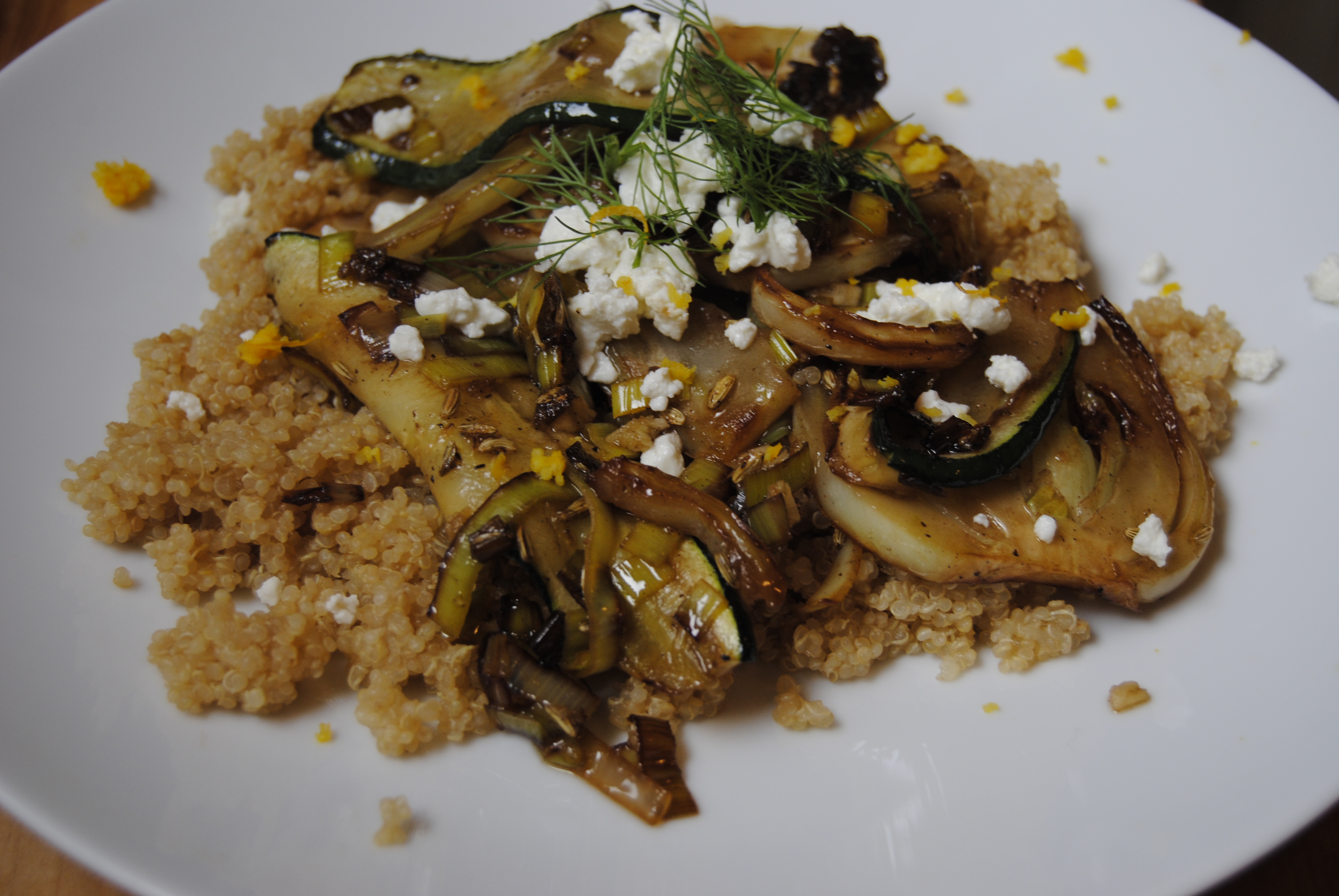
This is probably the best thing I have ever made. And this is one of the most delicious vegetarian dishes I have ever eaten. Anywhere. Make this THIS week. Or NOW. And it’s remarkably easy to put together for how good it tastes. No description will do this dish justice.

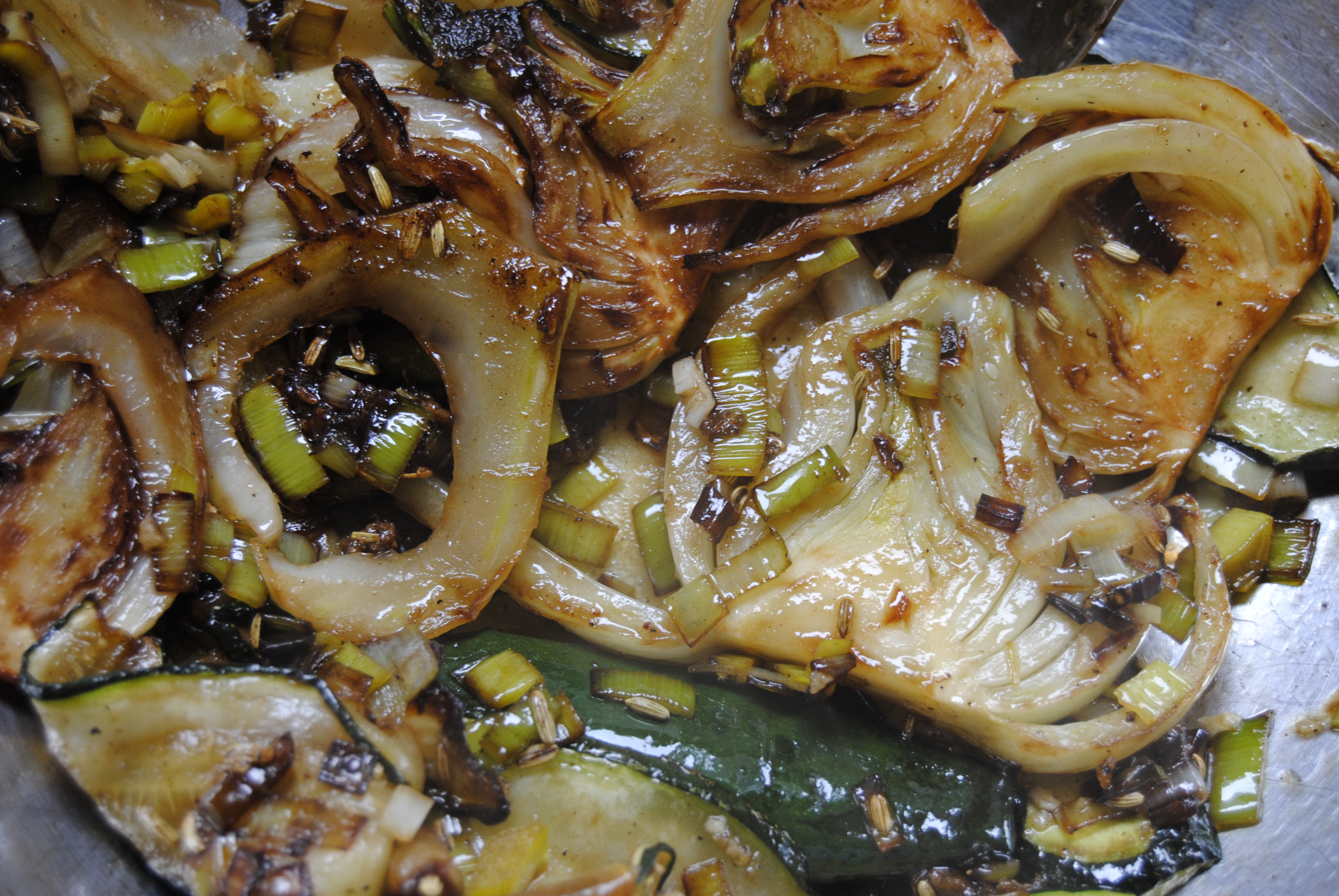
Who wouldn’t love soft, sweet, vegetables over a pillowy bed of quinoa slightly melting the goat’s cheese into a smooth, milky wonderfulness? This is all complimented by the crunch of the fried leeks and fennel seeds with subtle bursts of tartness from the lemon zest, and, of course, the dill adds an unmatchable fragrance.

Although I think this is best over quinoa, you could cook these vegetables on the side and serve it as a side dish, or you could put it over rice, instead of quinoa, or you could choose different vegetables (I want to try this with asparagus), although I wouldn’t stray from the fennel. This is just one of those dishes that is completely adaptable.

Adapted from Plenty, by Yotam Ottolenghi

Serves: 3-4 hungry people

What you need:

3-4 tblsp unsalted butter

4-5 tblsp oil

2 garlic cloves; minced

1 large fennel bulb

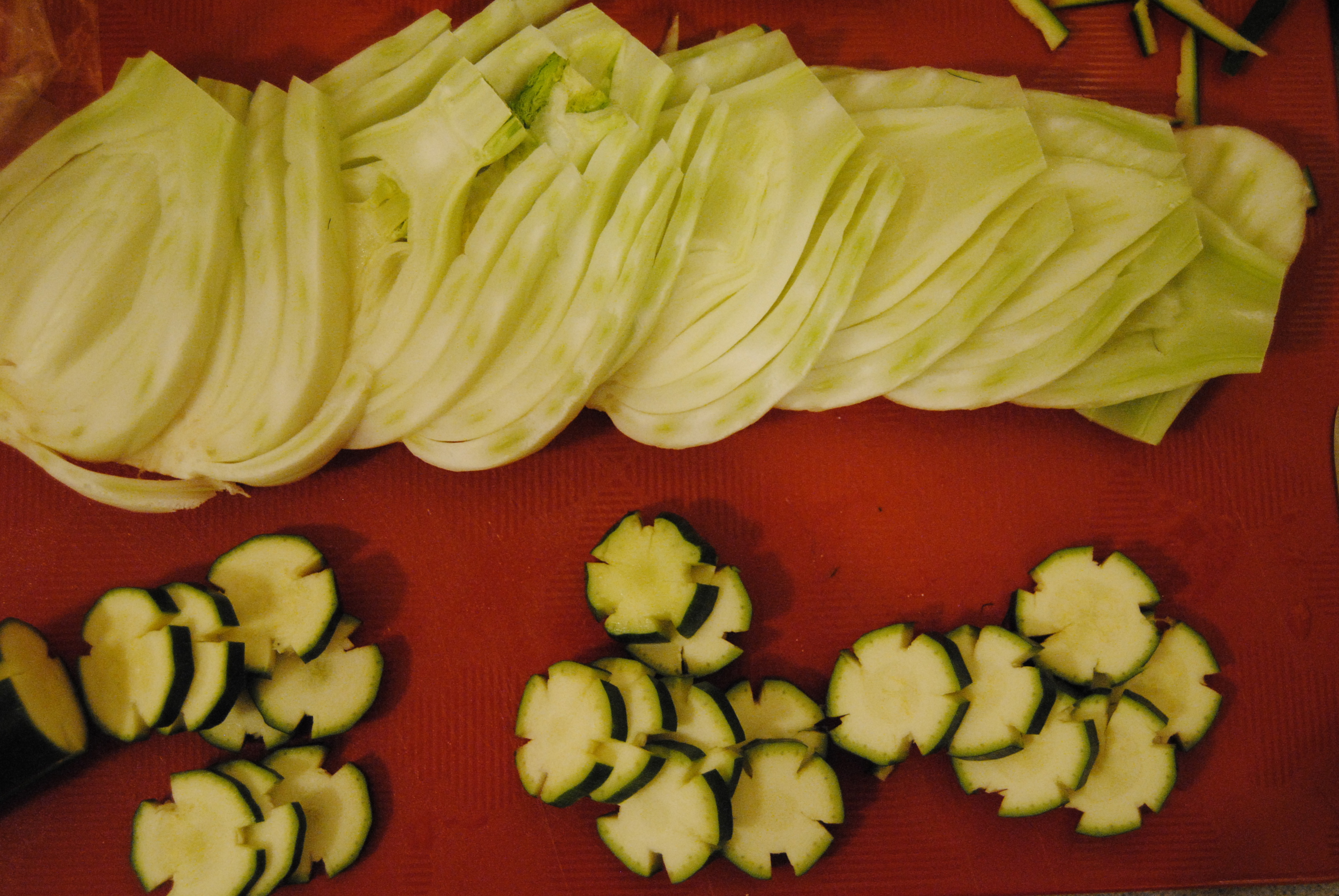
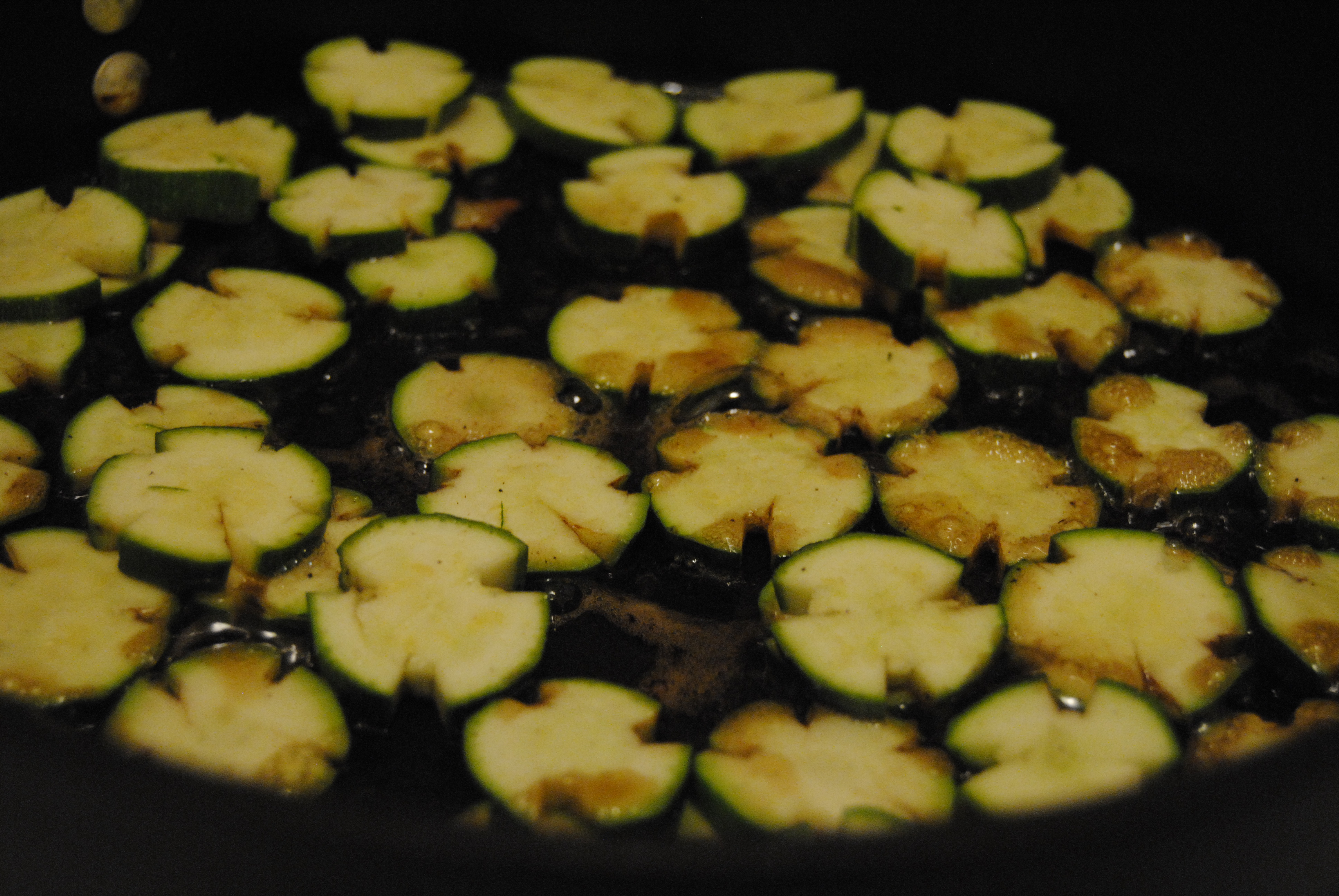
3 zucchinis; cut into fun shapes (see picture below) or thin slices

1 large leek; cut into coins

2.5 c quinoa

goats cheese for garnishing (*optional)

1 lemon; zested

3 tblsp brown sugar

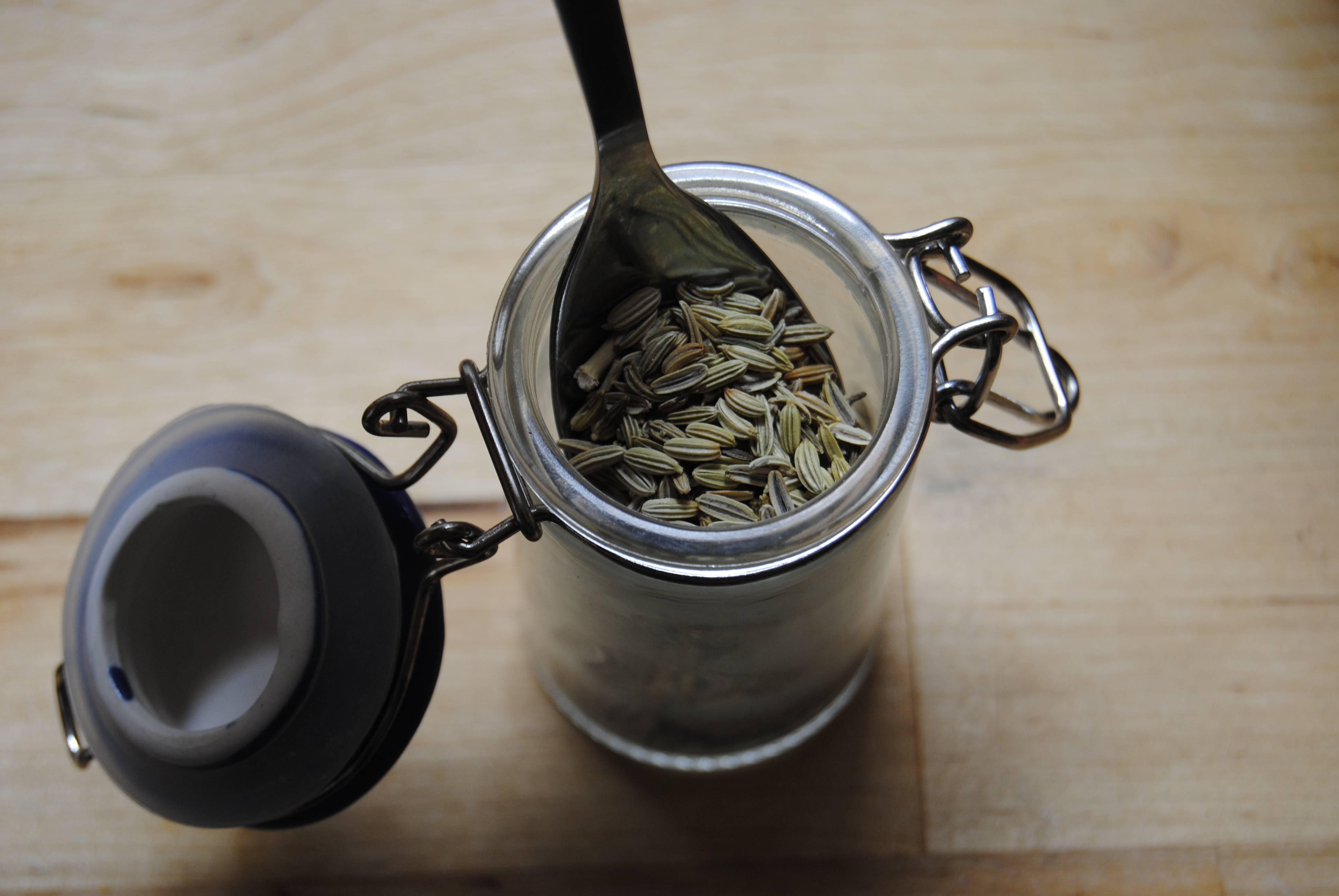
2 tblsp fennel seeds

1 tblsp salt

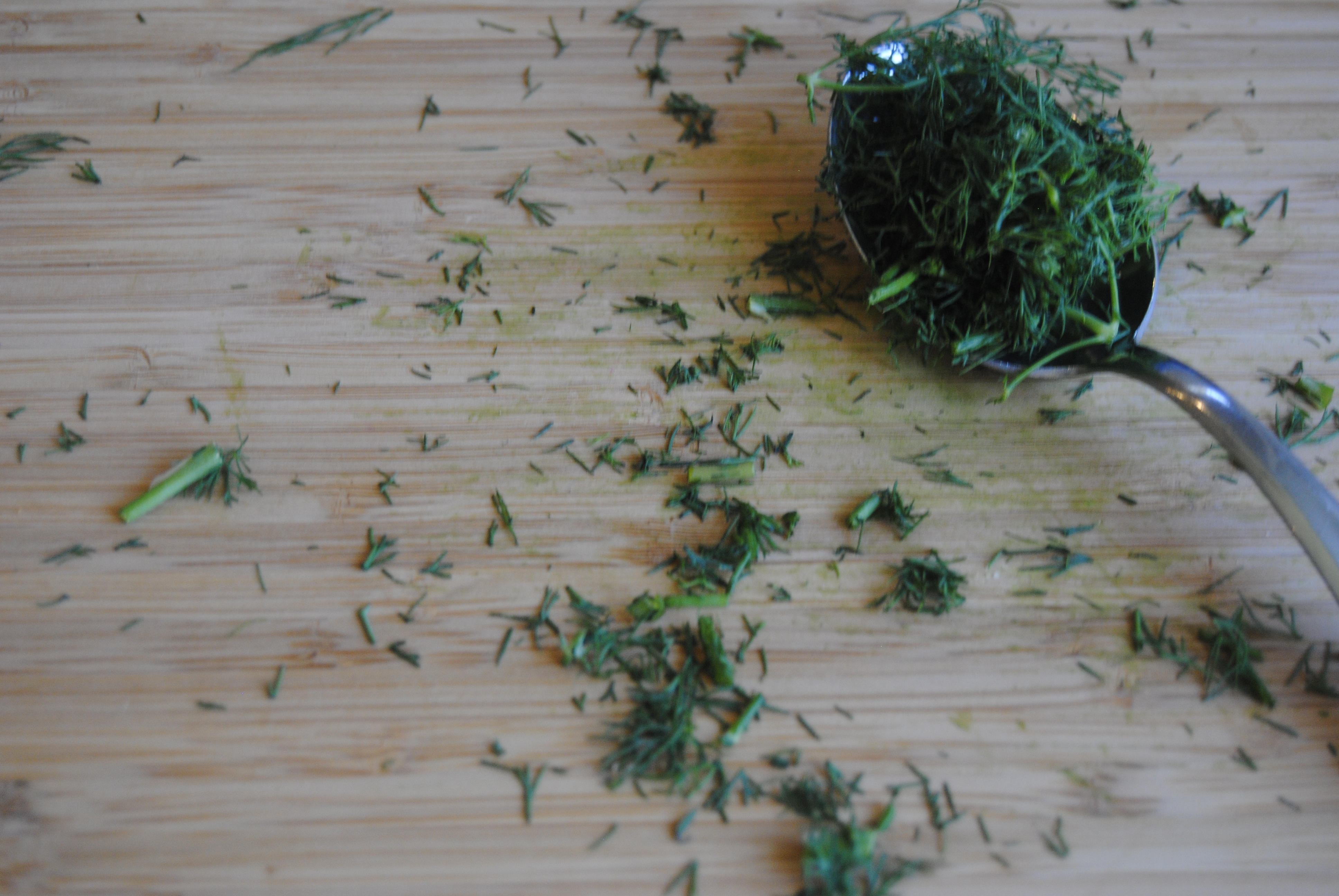
3/4 c dill; coarsely chopped (I didn’t have dill when I took these photos, but the second time I made it – no photos! – with the dill, it was WAY better)

How to do it:

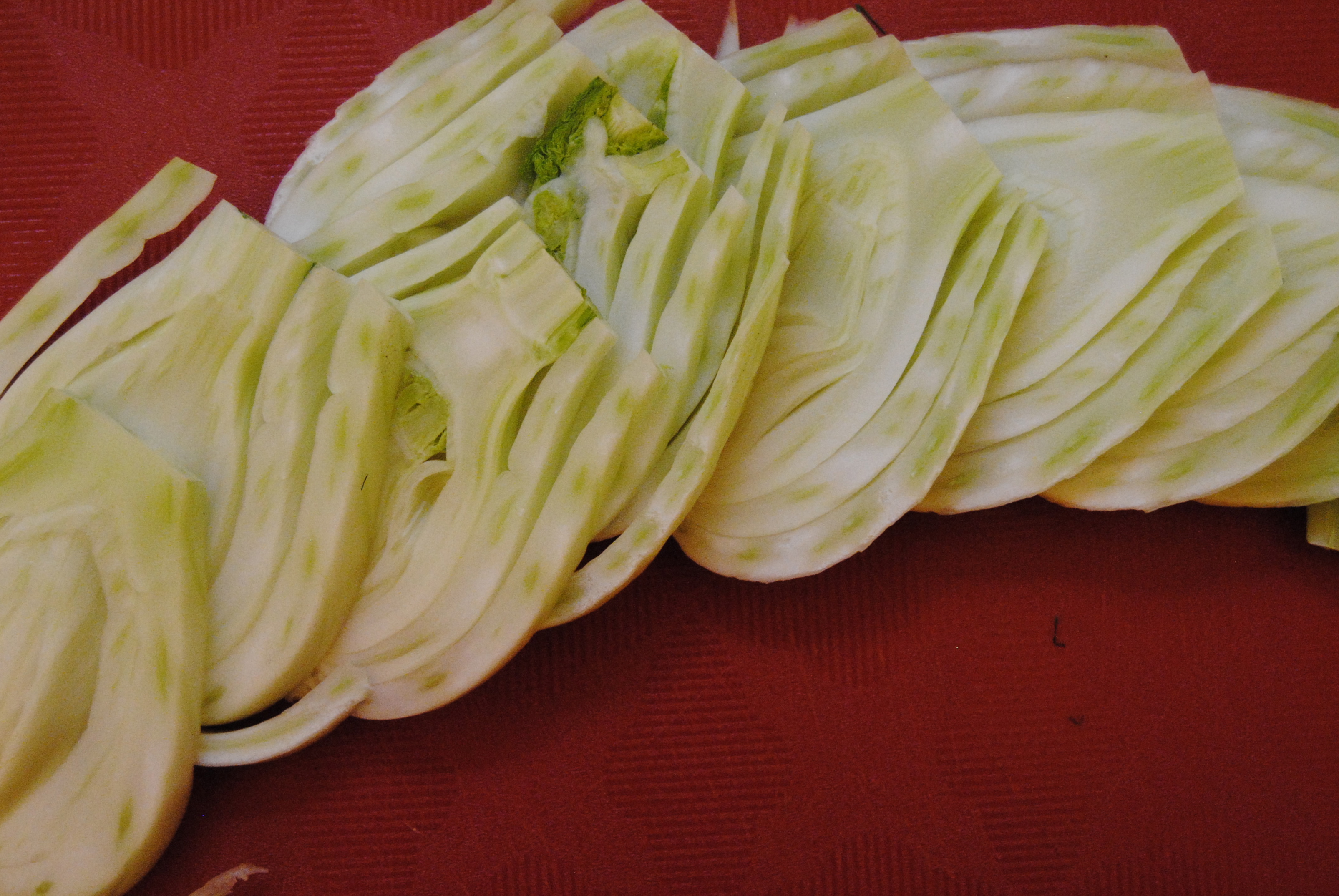
First, we’ll cook each vegie separately, so don’t combine them. Trim off the leafy fronds of the fennel and cut the base off as well. Slice the fennel vertically into 1/2 inch thick slices, but leave the bulb intact.

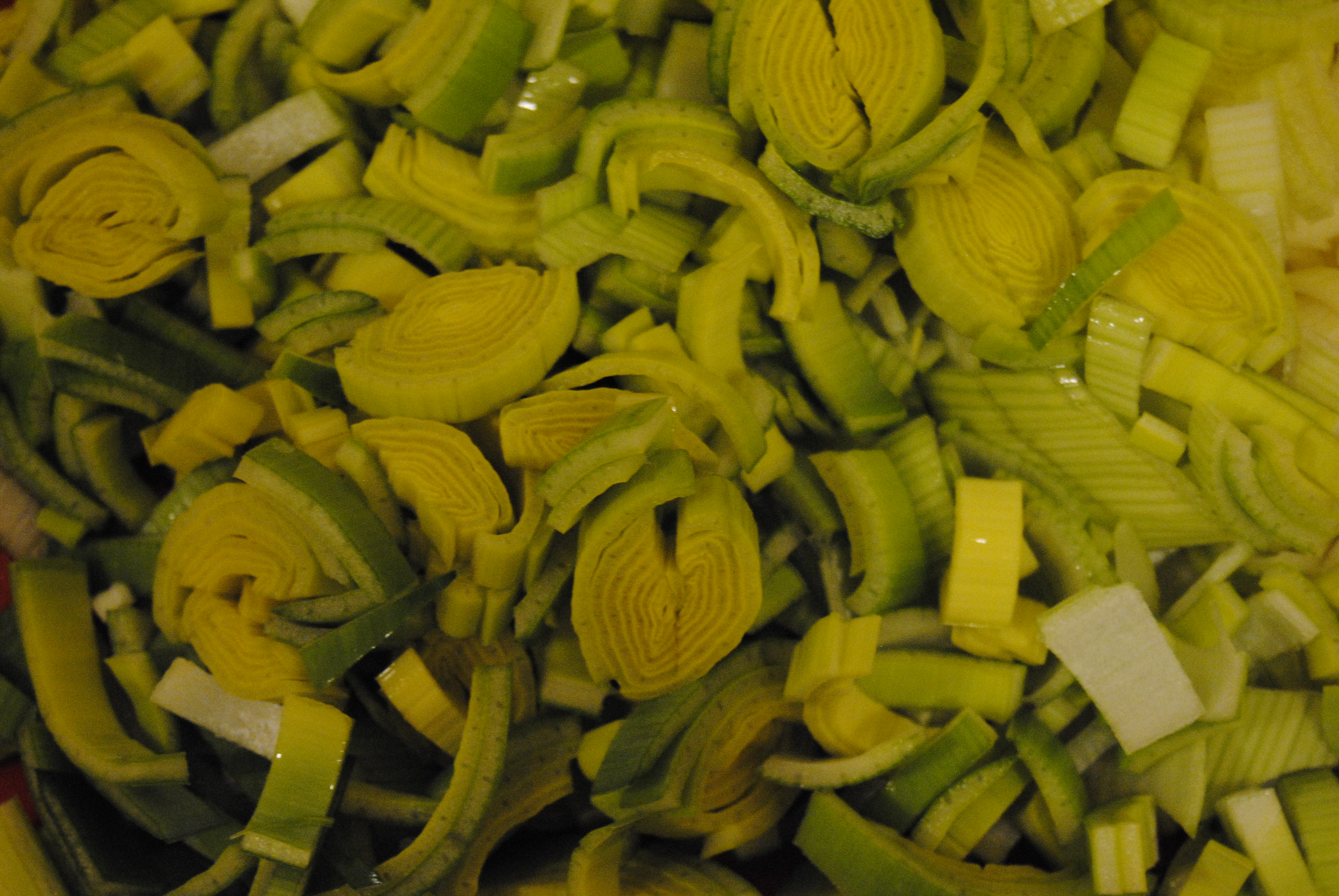
Next, cut the leeks into coins. For instructions how to wash, clean and prepare your leeks, check here.

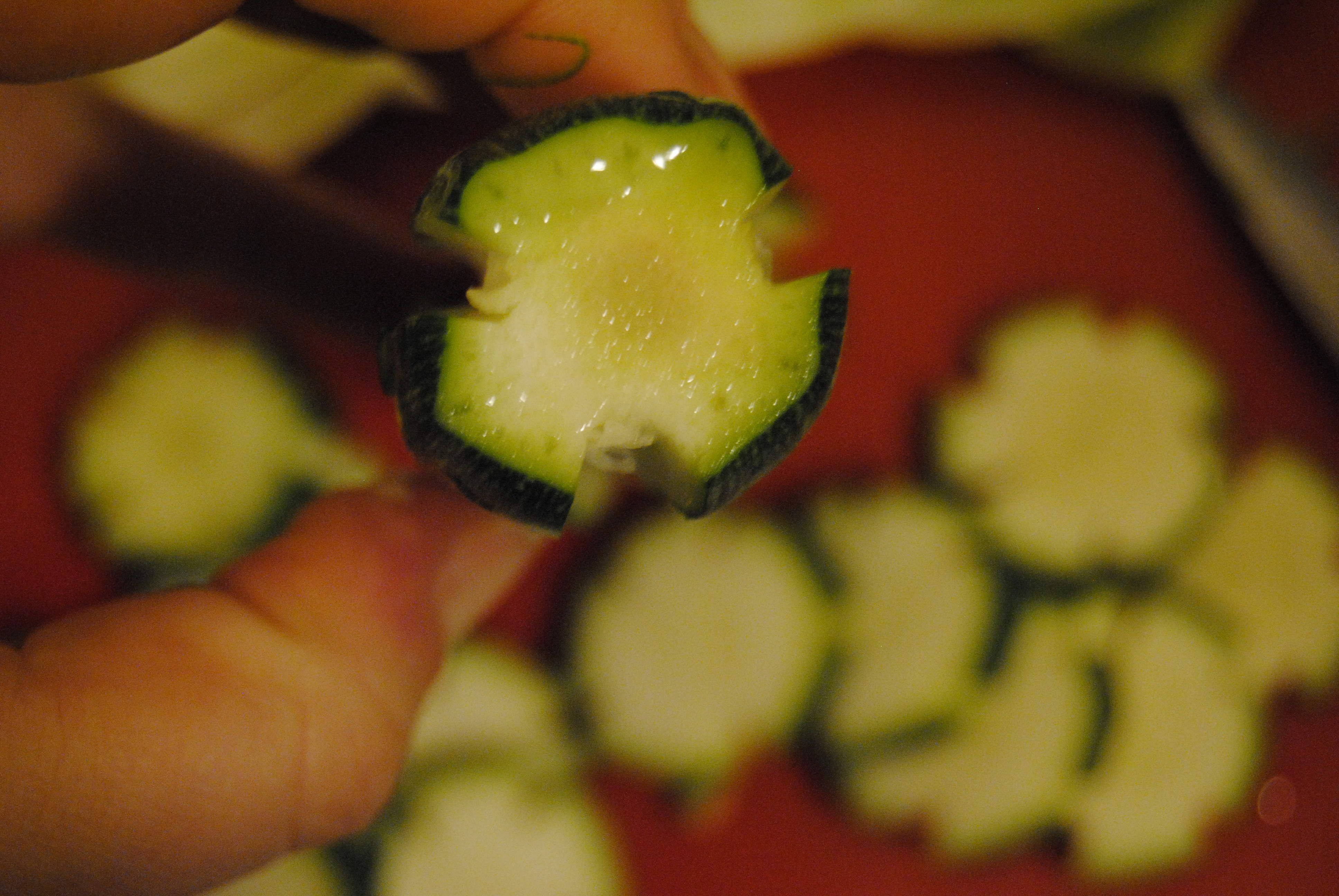
For the zucchini, trim off the ends, and do one or both of the following: thinly slice the zucchini lengthwise into flat strips. Or, with a paring knife, slice down the length of the zucchini at a slight angle, only going 1/4 of an inch deep. Make a similar incision opposite that one so that they make a slight triangle shape. Then slice into coins. * see photo below for clarification. Set all vegies aside.

In a pot, follow instructions for cooking the quinoa on the box. Let this cook while you do the vegetables.

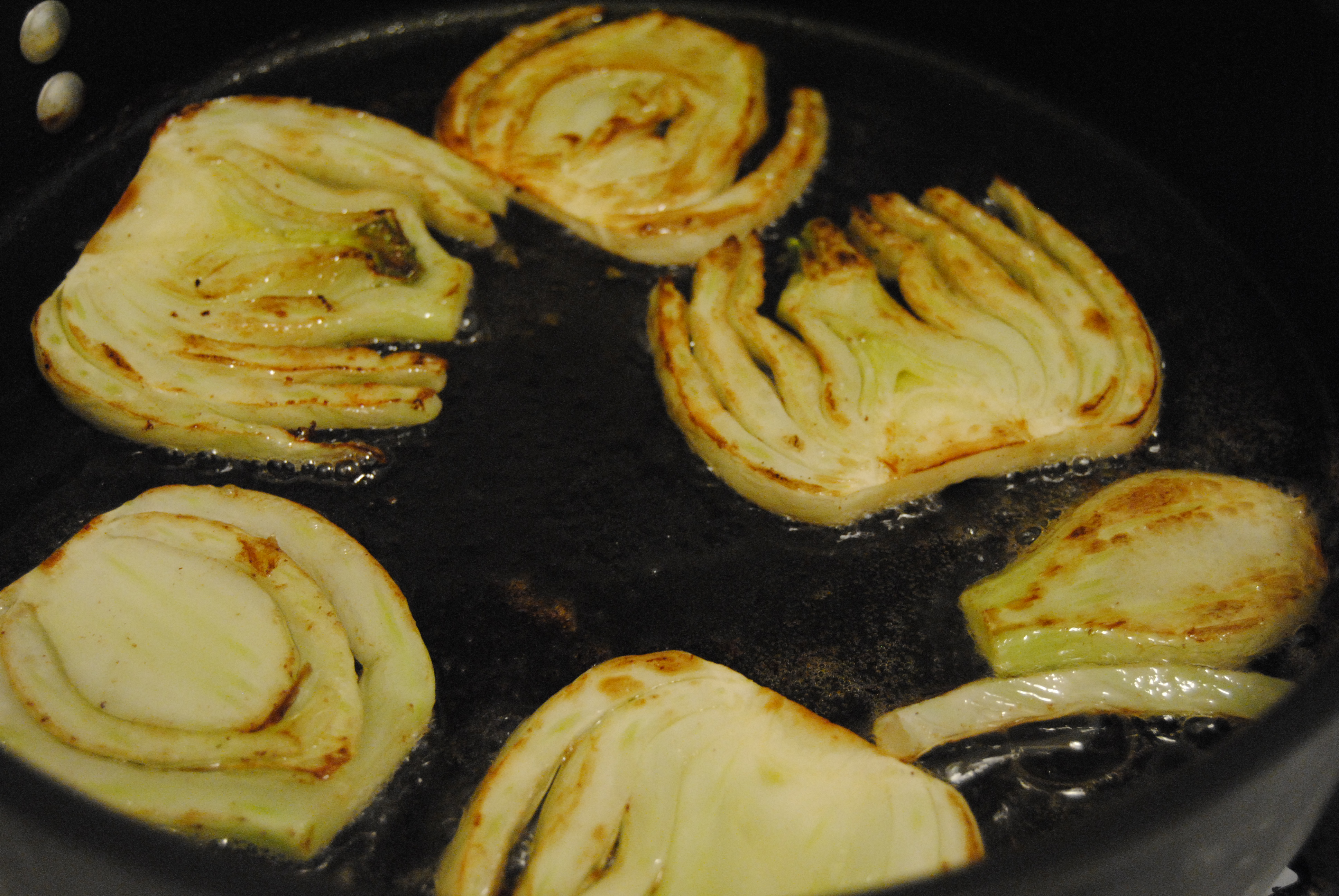
In a large frying pan over high heat, heat up  about 1 tblsp of butter with 1 tblsp oil. Move your pan around so it all spreads out. When the butter begins to foam, lay the fennel down without crowding the pan. Fry for about 2 minutes or until the side has become lightly golden. Flip, and do the same on the other side for about 1-2 minutes. Remove, and set aside on a plate.

Do this with the remaining fennel, since they probably won’t all fit in your pan at once, and add a little more butter and oil. When you’ve removed the fennel, add more butter and oil to the pan and do the same for the zucchini, and when the zucchini are done, do the same for the leeks.

Once you’ve used up the remaining butter and oil, and you are done frying your vegies, throw the brown sugar, salt, and fennel seeds onto the pan and fry for 30 seconds, moving it around so the sugar doesn’t turn into clumps. Add all the vegies to the pan and fry for another minute, gently mixing it around and caramelizing the vegetables (you want the fennel to remain firm, so just let the sugar coat it). Turn off stove. 

In a large bowl, add the minced garlic and chopped dill and toss all the vegetables with them. Taste and adjust your seasoning. Serve over a bed of quinoa, scatter some goat cheese around the top and garnish with sprinkles of lemon zest. Serve at room temperature. Enjoy!

This week I have something unusual for you though very close to the heart of why I started this blog. My friend Sorayya is a video genius. And fortunately for us, she has begun video taping her grandmother cooking traditional Persian recipes. This blog really began as a way for me to connect food, traditional and family, and that is precisely what Sorayya is doing with her video project. The videos are short, accompanied by English translations and set to fantastic music. I hope you enjoy this particular video, give the recipe a try, and check out Sorayya’s stunning photography and videos on her website: sorayyaaminian.wordpress.com. Enjoy!

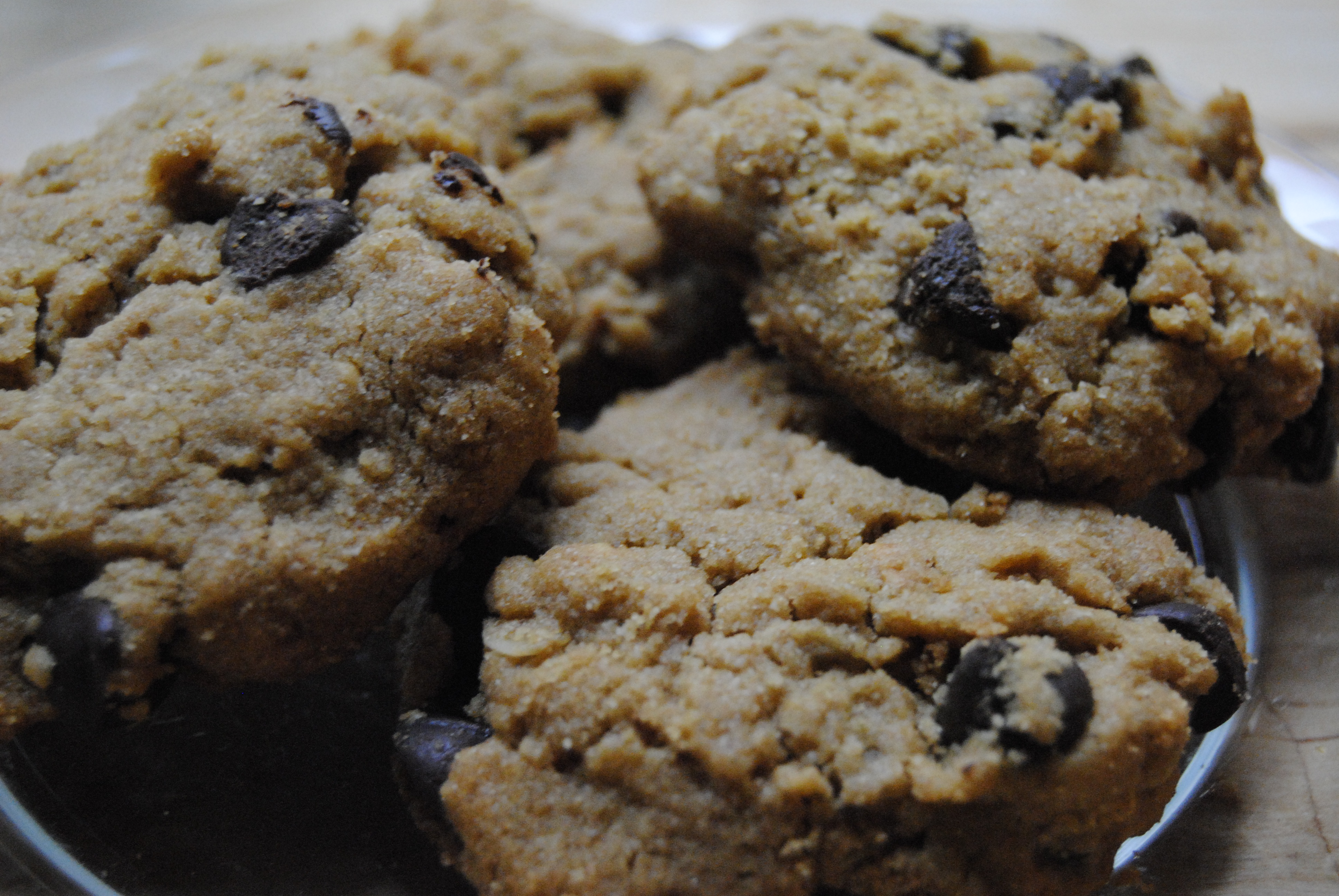
People are WEIRD about cookies.

Some people like chewy ones. (numnumnum) Some people like crispy ones. (edges only, please) Some people like plain ones sprinkled with sugar. (snooze fest). Some people like…(ew)…raisins in theirs. But nobody hates chocolate chip cookies. That’s like hating puppies. Nobody likes dry cookies either, but some people like whole wheat flour. Other people can’t hang with flour so they use …xanthum gum? (what the heck is that anyway?) Once I saw a recipe with hard boiled eggs. That just makes me depressed.

But every female I know who bakes thinks her chocolate chip cookie recipe does everything your chocolate chip cookie recipe does but better. And I am no exception. I make a mean chocolate chip cookie. And by mean, I mean like, 7th grade girl mean. But I wanted to make a special cookie for my friend’s birthday (read: I ran out of all-purpose flour), so I decided to try using semolina flour. The experience kind of reminds me of that William Carlos Williams poem, “This is Just to Say,” that my 5th grade teacher, Mr. Gavin, gave us:

I have eaten
the plums
that were in
the icebox

and which
you were probably
saving
for breakfast

Forgive me
they were delicious
so sweet
and so cold

I ate the cookies that were in my backpack and which I was definitely supposed to give to Ameet for her birthday. I couldn’t find her at school, but they were so soft and so comforting – a poem by Lauren Wilner Lauren.

Anyway, in cookie form, semolina flour does some interesting gymnastics.  Maybe you recognize it from this recipe? or from this one? I think it’s in this one, too. Although the cookie remains somewhat dense despite the change in flour, it’s very delicate, so each bite slowly gives way against your laboring tongue as the peanut butter and chocolate thicken together and slowly dissolve. The oatmeal must be what gives the cookie some shape. Semolina is really fun to bake with and people use it a lot in Middle Eastern cooking. If you have never tried to before, try one of these three recipes. You might just love it.

Makes: 16 cookies

What you need:

1/2 c rolled oats

1 c chocolate chips

1 c semolina flour

3/4 c brown sugar

1 egg

3/4 c crunchy peanut butter (I used the “natural” kind)

1/2 tsp vanilla extract

1/2 tsp baking soda

1/4 tsp salt

1/2 c butter (1 stick)

How to do it:

Preheat your oven to 350 F. Line a large baking sheet with parchment paper and set it aside. In a small bowl, whisk together the flour, baking soda and salt; set aside. In a large bowl, cream together the butter, peanut butter, brown sugar and vanilla. Add the egg and beat to combine. Gradually add in the semolina flour until it’s all just combined. Then stir in the oats and the chocolate chips. Organize your cookies on the sheet and bake for about 13-18 minutes (depends on your oven). Normally, I would never cook cookies that long, but I needed to for this recipe. Just check on them around 10 or 12 minutes and assess your situation! You should take them out when the edges begin to brown. Enjoy!
Pronounced: Khore-esht-eh Gore-meh Sab-ZEE

Sometimes there is just nothing in the fridge. Sometimes there is no money (in the fridge either). But really, sometimes there is just no TIME, and the best you can do is pull out a box of Mac ‘n cheese from the cupboard, pour that neon orange powder over those noodles and call it dinner. Let’s be honest, you’ll probably call it dinner two nights in a row because that stuff gets in your blood and you just gotta …. (pant)….have ….more.

But this is a perfectly legitimate factor to insert into the no money, no time equation. All it calls for is meat, 1/4 a c of kidney beans,  a few bundles of herbs – parsley, cilantro and leek – an onion, turmeric and one probably unfamiliar ingredient: dried lemons. Now, I realize this raises questions for the “no time” element. So plan ahead! It’s worth it because once you do about 15 minutes of “actual cooking” you just let this cook on the stove for a couple hours by itself. I bought the dried lemons at a Middle Eastern store, but I’ve also seen them at several Chinese markets in SF, and they are really fun to experiment with in your cooking. You cannot make this meal without them though – they are what lend the distinctive Ghormeh Sabzi flavor. But go out and buy them! Try something new! If you’re especially pressed for time, you can use dry herbs. Many Middle Eastern stores sell a package of dried herbs for this dish, but you can also just buy them separately.

Ghormeh sabzi is probably “the” Persian dish to know. Just a quick google search will pull up dozens up recipes, videos and images. If you are nervous about trying Persian food, this is definitely the recipe to start with because it’s practically impossible to screw up and requires no attention whatsoever. My only caution is that the vegetarian version out there does leave something to be desired. I haven’t yet found out the right way to make this vegie-style, but I have added chunks of celery cooked down, as well as cauliflower. Let me know if you try a spice combo that is amazing. The other things is, it’s totally worth trying this with whatever greens you have at home – spinach, green onion, kale… let me know how it goes!

What you need:

3-4 dried lemons; if you have a food processor or coffee grinder, blitz one of those into powder

1 yellow onion; diced

1/4 c oil

1/2 -1 tsp salt, your preference

1 tsp turmeric

1 lb stewing meat

1/4 c kidney beans

4 c fresh parsley; chopped

2 c fresh cilantro; chopped

1 c fresh leeks; chopped

1 c fresh fenugreek (optional); chopped – you can also just get about a tblsp of dried fenugreek, alternately)

How to do it:

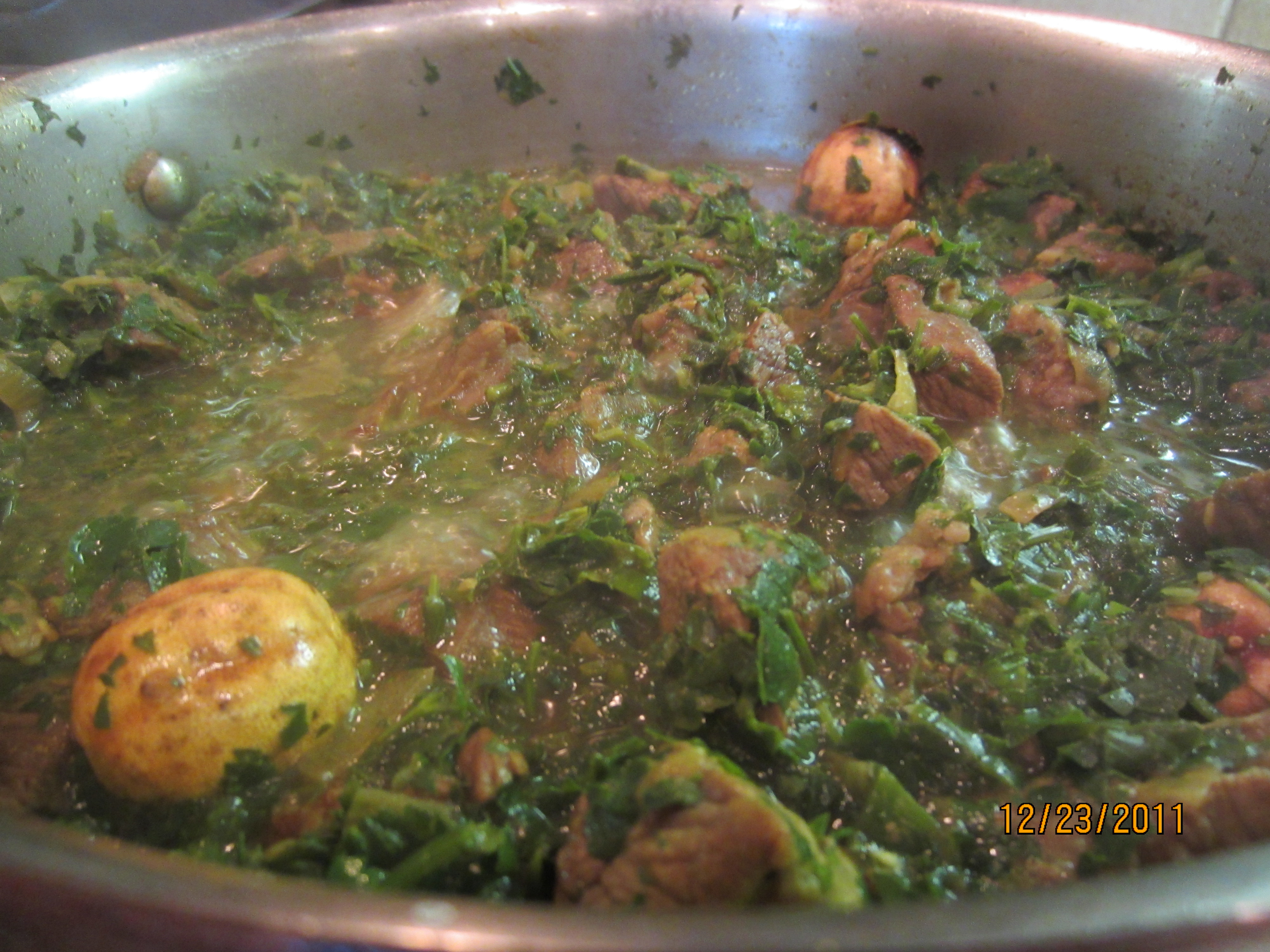
Just one note to begin: this is a stew, so it should be somewhat liquidy, like, probably a little more liquidy than the top picture. But add the water slowly. If you check on it after an hour and it’s dried out, pour in 1/4 at a time. Based on the water, you may have to readjust the salt level. Happy cooking!

First, chop all those herbs. It can be a messy chop or you can just whir them around in the food processor. Next, heat up oil in a pan over medium-high heat. While that’s heating up, chop your onion. Drop a few onion pieces on the pan to see if it sizzles. Once it does, toss all the onions in and add your salt. You want them to brown, so just let them sit there without too much stirring. The darker they are, the less visible they will be through the stew. Once they’ve begun to brown, add the turmeric and mix it up well. Add your meat and let it brown on either side.

While the meat’s browning, put a small amount of oil in another pan and just quickly fry all the chopped herbs until you begin to smell their aroma. If you’re using dried herbs, soak them in water, strain and then place directly into the meat dish. Once you smell the aroma of the fresh herbs frying and your meat is browned on both sides, add the herbs to the meat mixture and give a quick toss. Add about 1/4 cup of water. Take each of your lemons and slam them onto the counter to get them slightly cracked – this way the aroma will come through. Some people soak them first. I don’t. If you aren’t successful in your slamming, VERY carefully use a knife to puncture the sides. You can try slamming them again after or you could slap a pot on them. You don’t want to pulverize them; just get them slightly cracked. Add them to your pan and add the powder, too. Add 3/4 c water, reduce heat to low and simmer, covered, for at least one hour and at most 2-2 1/2. About 15 minutes before you’re done cooking, add the beans. Serve over white rice!  Be careful not to eat the lemons, unless you love a VERY tart flavor (I personally do). Enjoy!

That's not a crack on the far right - I bumped the cake with a spatula by accident...

My “take that, Martha!” cheese cake – breaking all the rules. Low-fat, no water bath, kinda high baking temp. It will all work out. Just don’t over mix and don’t over bake. The end! But this IS a soft (note cakey!), mildly indulgent, sweet and tangy cheese cake.

Ohhh, cheese cake. How can I even dream of tasting you when just a flash of your likeness sends pounds to my inner thighs? For my grandpa’s – Baba – birthday, he gently held my hand, removed his glasses and with a youthful bat of his lashes, requested a cheese cake for his 88th birthday. Cheese cake is so personal though. Some people like it dense and indulgent. Others feel that always ends up too dry and prefer a lighter, softer cheese cake. Although some enjoy a sour tang in theirs, others desire a gentle sweetness smoothing over their tongue.  So,  I began pouring over articles about water baths, over baking, and the dreaded cheese cake cracking.  I bought a spring form cake tin. I read low fat recipes, yogurt recipes, cottage cheese recipes. I purchased over 1,000 grams of cheese products. Look, I love cheese cake – in any texture, density or consistency. But I simply cannot deal with the guilt of eating a slice. Plus, it just irritates me that so many recipes out there have hundreds of extra calories worth of sugar and fat that just take up space! If you’re not contributing to the flavor, then get out!

So, I called Adam’s mom. With some guidance and small changes, this cake turned out fantastic, and I felt guilt-free afterward. Astute readers will observe that there is no raspberry drizzle in the above photo. I got a little carried away with it, to be honest, and my mom and I had to quickly shave some chocolate to hide the puddled raspberry globs all over the perimeter. Though it tasted FANTASTIC, it looked slightly less than the dancing swirls of chocolate and raspberry that I envisioned. So, drizzle with discipline.

Within moments, the cake was almost gone. The kids ate it, the old folks ate it, and all the women ate it. How could they resist? Pulverized oreo cookies for the crust dusted with cardamon, blends of low fat cream cheese, mascarpone and sour cream with a squeeze of fresh lemon juice and topped in raspberry and chocolate… this is definitely a cake I will make again.

Just a warning though. This is not your usual cheese cake recipe because in almost everything I read, the cake shouldn’t be exposed to sudden changes in temperature. Kind of like me. But, after 20 minutes, this cake is removed from the oven, a second layer of a cheese mixture is added and then placed back into a slightly hotter temperature for another 20-25 minutes. Unusual? Yes. But it works!

You can always add chocolate shavings to try to cover a mess up...until it all just begins to look like a mess up. Well, I'm only human. It still tasted fantastic!

Just one beginning note about the crust. I used Trader Joe’s Regular Oreo cookies, but you can use regular Oreo cookies, chocolate wafers, graham crackers with cocoa powder, or ANY other cookie you like. Feel free to take liberties, although I think Oreo goes best here.

What you need:

In one bowl:

3 1/2 c pulverized Trader Joe’s regular oreo’s; wipe out the insides (this is about 1/2 of the box)

6 tblsp melted butter

1/2 tsp cardamon powder

1/2 c sugar

2 tblsp regular white flour

juice from 1/2 a lemon

500 g low fat cream cheese (the softest kind you can find)

300 g low fat sour cream

1 tsp vanilla extract

2 eggs

In another bowl:

1 tsp vanilla extract

250 g mascarpone cheese

2 tblsp sugar

Raspberry Chocolate Sauce:

1 c frozen raspberries

1/2 c sugar

2 oz dark chocolate; shaved (about two squares)

Another 2 oz or so of chocolate to melt for drizzling

How to do it:

Bring all ingredients to room temperature and preheat your oven to 375 degrees. Drop all your cookies into a food processor. Transfer them into a bowl and pour the melted butter over it so it gets all wet and sorta sticky. Press the cookies into the bottom of a cake tin and press as much as you would like up the sides of the tin. Then sprinkle the cardamon on top. Combine all the ingredients of “bowl one” together, BUT mix the eggs separately and then add them. Do not over mix – just enough so there aren’t too many lumps. Pour this over the crust. Bake for 20 minutes. Very gently remove from the oven, up the heat to 380 and pour/spread (very gently!) “bowl two” over the cake. Return to the oven for another 25 minutes or so, or until the cake begins to brown. Remove from the oven, gently take a knife and run it around the edges of the cake, not going all the way down. Let sit for 15 minutes and place in the fridge until serving for best results.

For the raspberry chocolate drizzle sauce:

You want to do this right before you decorate the cake, otherwise you will run into the same disaster I had which was the result of waiting too long and then putting the sauce in the fridge. It thickened and was a bad idea. So, if the time is right, melt all the ingredients over medium-low heat, constantly stirring for the first few minutes. When they’ve formed a drippy sauce, it’s ready! In another bowl, melt another few ounces of dark chocolate and drizzle it with a spoon back and forth over your cake. Then drizzle the raspberry to create a contrasting design over the dark chocolate. Enjoy!