Maybe in ten years you’ll be able to lick your computer screen and taste these guys. But I wish you could now. These carrots are lemony, slightly spicy and oh-so-soft. When I went to Morocco, this was served as part of a mezze with lots of other intriguing salad combinations, including soft carrot sticks that had been soaked in sugar and orange blossom juice. To die for.
This salad is very different though. It’s bold, flavorful and perfect for the summer when you want something light but fresh and tangy. It’s not even 10 AM here yet and it’s already 80 degrees. So on hot days like these, this is really refreshing and will help you cope with the heat. You can pair it with meat, serve it as an appetizer or just eat it straight as a salad. Definitely worth giving a go if you’ve never had this before.
pinch of salt (careful with this though if you’ve added lemon salt. taste before adding this)
How to do it:
Throw the carrots into a pot with boiling water and let boil for 10 minutes or until soft. Remove from the pot, strain and run the carrots under cold water. Return to a cutting board and slice the carrots at an angle into thin coins. Add the spices, season with salt, and stir until all the seasonings are well combined. Let stand on the counter or place in the fridge for at least one hour before serving so all the flavors soak into the carrots. Serve cold or at room temperature. This will be good for up to two days in the fridge. Enjoy!
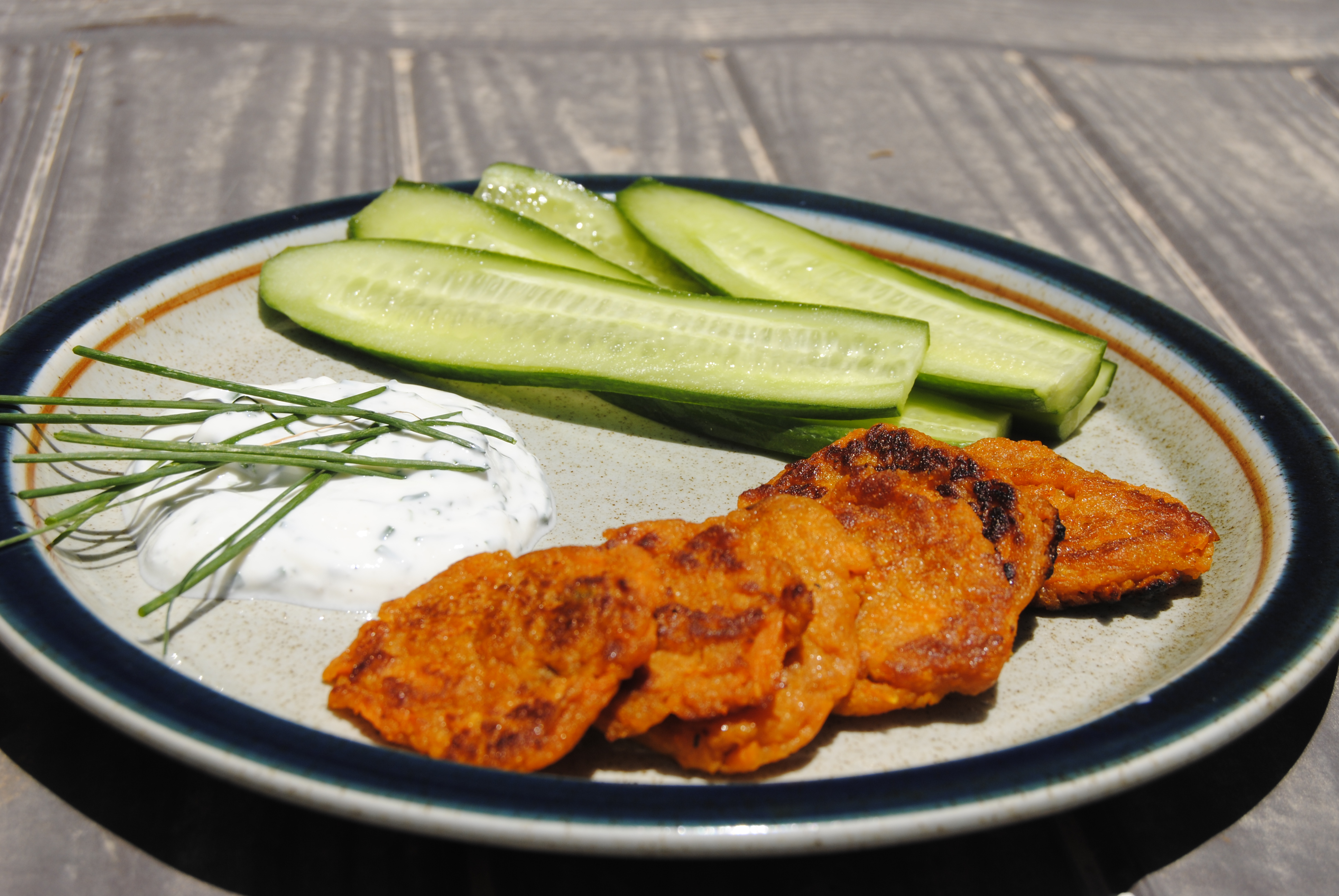
Ohhhh yeah, that’s right, these are the Orna & Ella’s sweet potato pancakes, yogurt-chive dip and cucumber slices. Orna & Ella’s is a fantastic restaurant on the hip Sheinken St. in Tel Aviv, and if you’ve ever seen the Israeli film “HaBuah (The Bubble)” then you’ll recognize this dish as one that was mentioned and the restaurant as well.
The best thing about Orna & Ella’s is that it’s totally unpretentious, despite having out-of-control delicious food and being in a wonderfully young and hip location. The waiters will often sit at the table with you while you order and crack a few jokes.
These sweet potato pancakes are their star dish, and this recipe is only somewhat adapted from the Orna & Ella cookbook. I’ve made things a little bit healthier, subbing Greek yogurt for sour cream, ditching the mayo completely, and using whole wheat flour instead of all-purpose. The best part is that you wouldn’t even know the difference!
This is a fantastic summer lunch or appetizer paired with a finely chopped salad (you could even toss in some of those quick preserved lemons into the salad, which Orna & Ella’s does). The potatoes are incredibly soft and slightly sweet and the chive dip is phenomenally creamy and salty on top. But really, this is quintessential Israeli food in my mind because everyone knows Orna & Ella’s on Sheinken. And if for some very sad reason you don’t, no need to make the trek because now you can have them in your own kitchen.
Makes 25-30 pancakes; serves 4 people as an appetizer
What you need:
2 large sweet potatoes; mashed
1 tblsp soy sauce
3/4 c whole wheat flour
1 tsp salt
1 tsp sugar
How to do it:
Mash up all the ingredients together until they become a soft, combined mixture. Let rest for 30 minutes. Transfer into a ziplock bag and make a small cut at the tip (or a piping bag–doing this with a spoon is too dangerous over the oil). Put a thin layer of oil in a frying pan over medium heat. Each time you add new sweet potato mixture you’ll need to add more oil. But don’t use too much. Squirt tablespoon sized balls onto a frying pan and flatten into a patty with the back side of a spoon. Fry for about 6 or 7 minutes or until the sides become golden. Transfer to a piece of paper towel to drain out some of the oil and when you’re finished, cover them all with a paper towel and press down to absorb any additional oil. Place in the refrigerator until serving. BUT before serving, warm them up at a very low temperature in your oven. They heat up very well, so you can make these in advance!
Yogurt-Chive Dip
1 container of plain Greek yogurt (if you don’t like this style yogurt, you could just use your favorite plain yogurt brand, too–this is about 3/4 C)
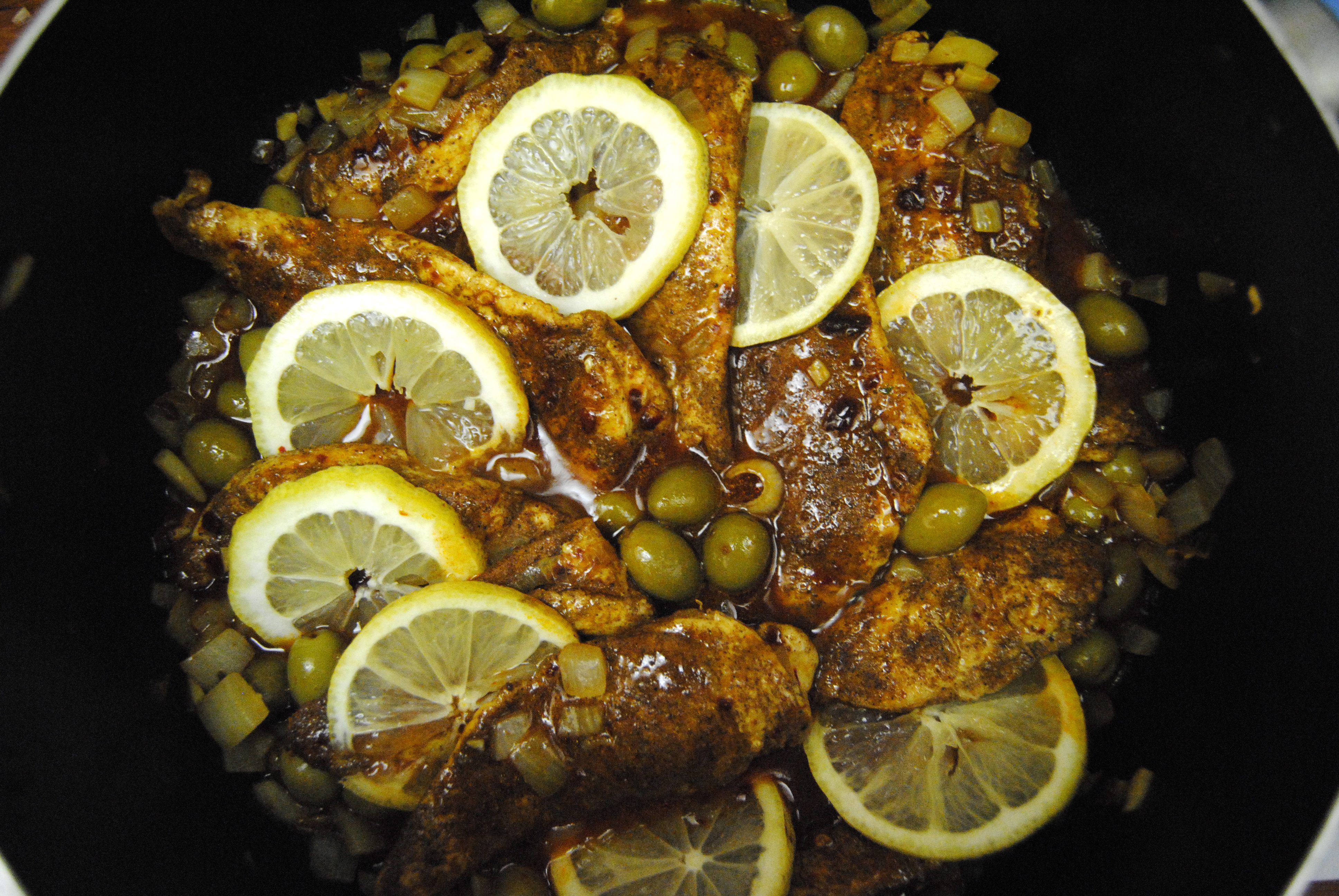
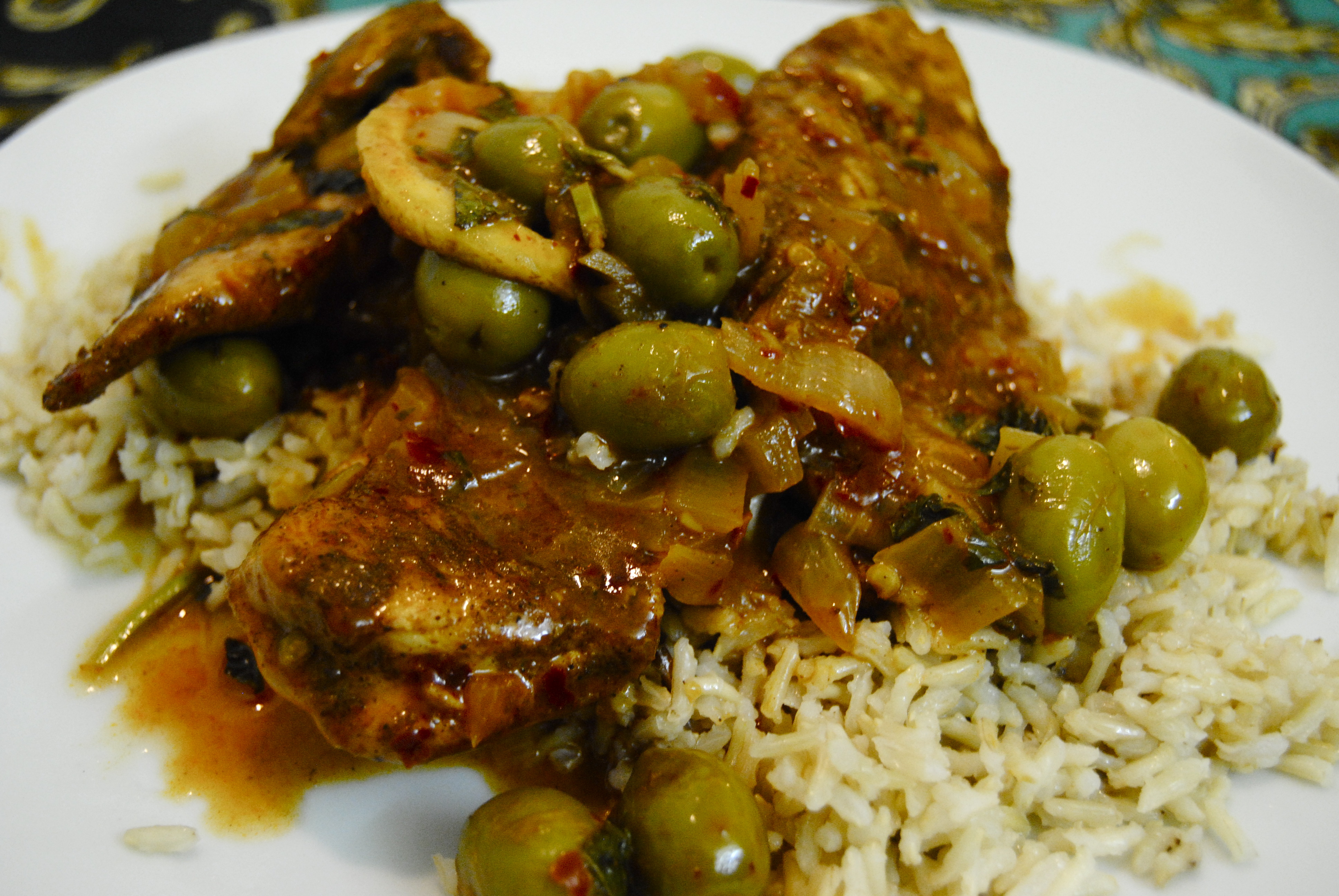
Are you having a “special someone” over for a date night soon? Did someone invite you over for dinner only to burden you with being responsible for the main course (or maybe that just happens in Israel)? This cooked in under an hour, required little attention but tasted like a wise grandma with chubby fingers and been infusing it with love for hours. This will impress everyone, but be ware young lovers: you might just set the bar too high.
Many accidental forces united to create this dinner: an uncharacteristically indulgent purchase of Pereg Spices’ Tunisian harissa (spicy chili sauce), a can of green olives I bought in order to make a completely different dinner with but lost the recipe, the accidental purchase two weeks in a row of too many lemons and that good ‘ol meat craving that only a week of avoidance can inspire.
Don’t ask me why this is necessarily Moroccan, since I used Tunisian Harissa and Israeli green olives. I suppose it’s because I intended on using preserved lemons (but hadn’t made them in time) and laying the dish over a bed of couscous. So this is really more like “Intentional Moroccan Chicken With Lemons, Green Olives and Harissa.” Nevertheless, it looks like something I ate in Morocco last year, and if it looks like a duck…it could be a real one. If I owned a beautifully ornate tagine, I would have served it in it and then there would be no cause for question, so I think that might be reason enough to go buy one. What do you think?
Nevertheless, the last two posts have been intended to prepare you for this dinner, which was absolutely fantastic. So, if you can make the quick preserved lemons a few hours ahead of time, as well as the harissa, then you have all your ducks in a row to make this dish. But you can also just use a regular lemon.
Serves 5-6
What you need:
1 kg of chicken breast (you could use any part of the chicken you like or even a whole chicken)
1 1/2 c pitted green olives
1 lemon; sliced into thin coins OR one lemon’s worth of the preserved lemons; sliced into thin coins and also chopped
1 c chicken broth
1 large yellow onion; chopped
1 tsp cinnamon
1/2 tsp each of cumin, turmeric and cayenne pepper
2 heaping tblsp harissa
2 garlic cloves; minced
1 tsp fresh ginger; grated
salt & pepper to taste (I used about 1/2 a tsp of each)
2 tblsp date honey (or regular honey or agave nectar)
3/4 c fresh parsley; finely chopped
1/2 cut fresh mint; finely chopped
**A note on the lemon: Unless you’re using an organic lemon, if you’re going to use just a regular one, try boiling it for 10 minutes first so that some of the sprays or wax wear off and give it a good scrub with a towel after. Then add it to the meal.
How to do it:
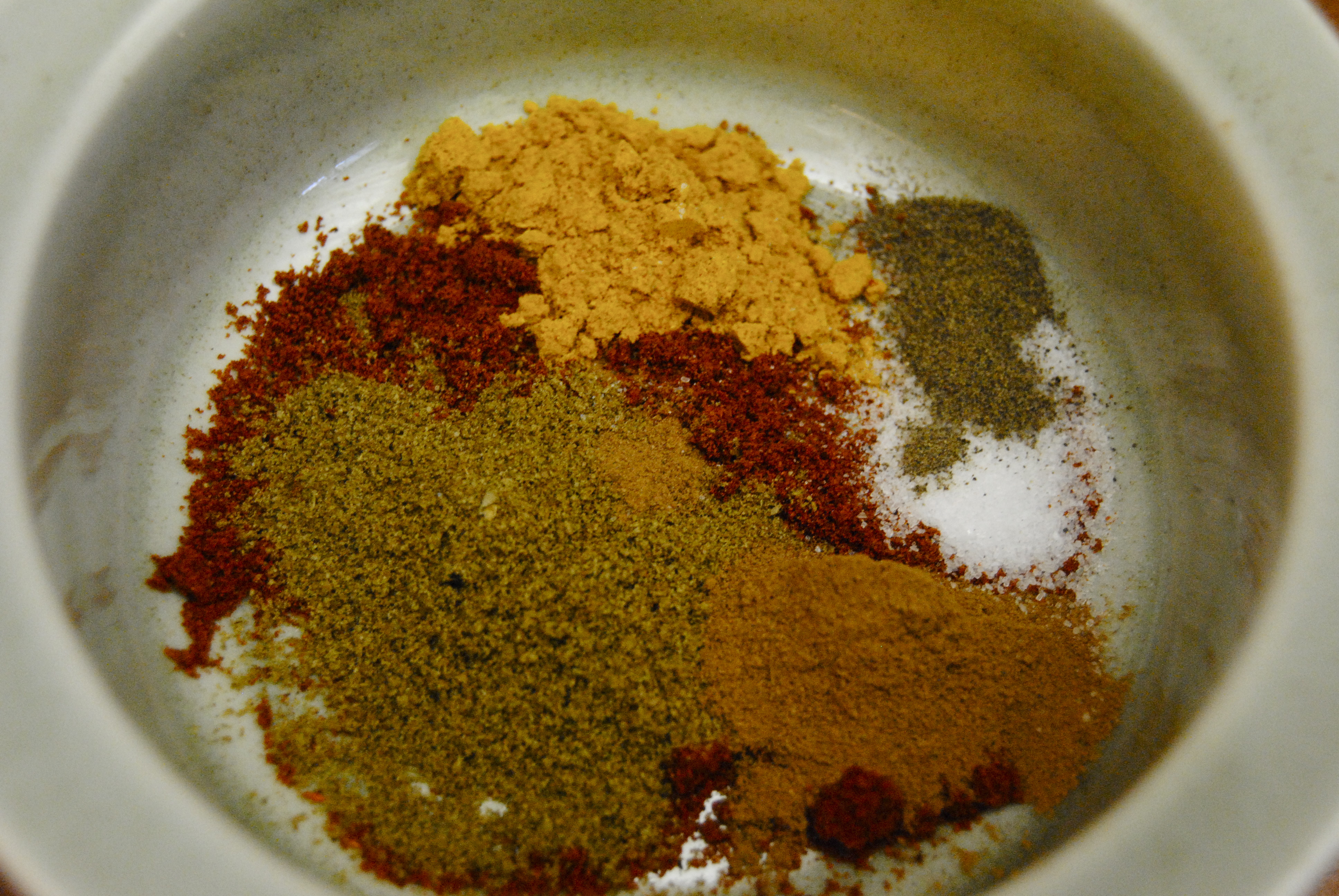
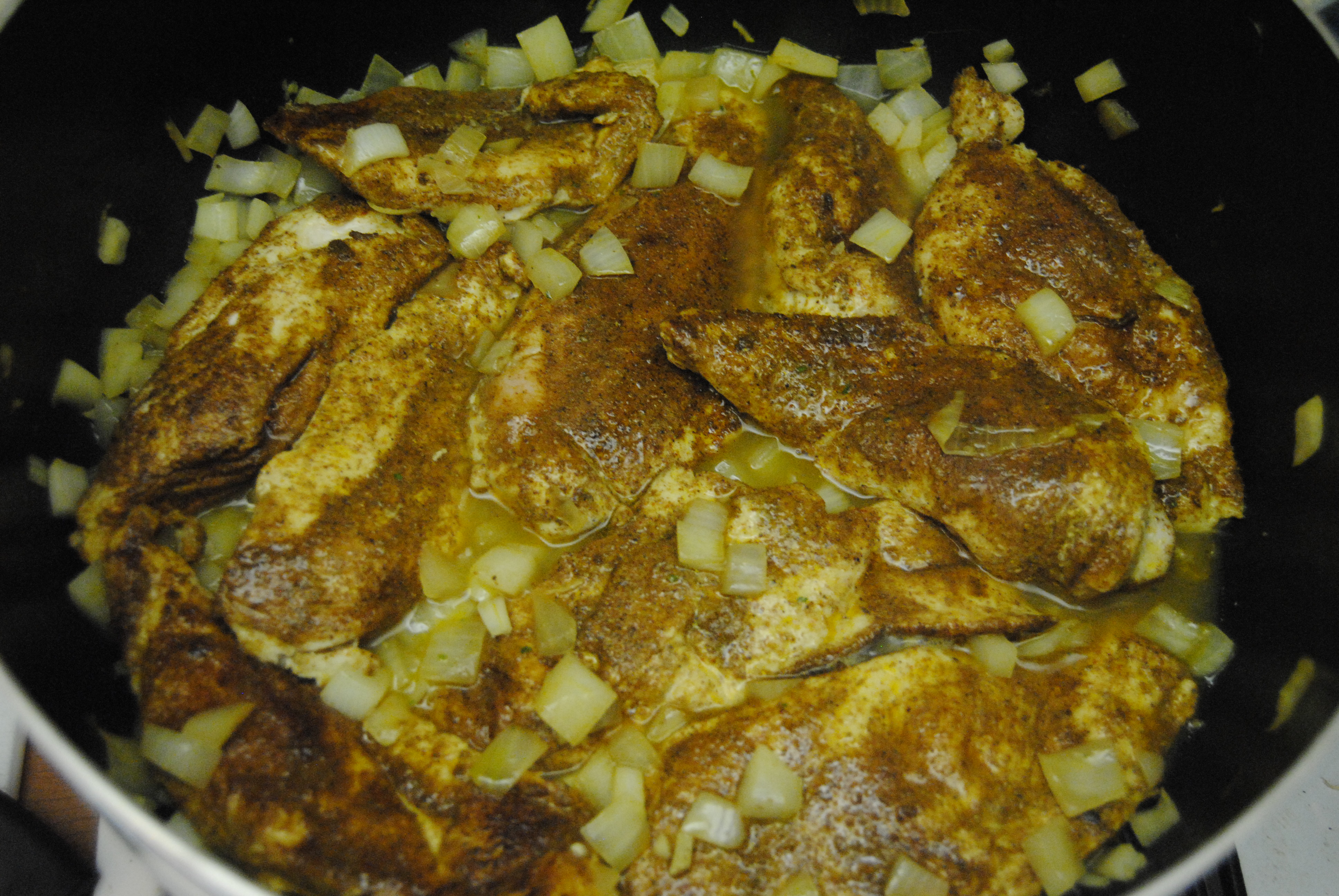
Combine cumin, cayenne pepper, salt, pepper, turmeric and cinnamon in a bowl and mix together well. Sprinkle over chicken, rubbing the mixture all over both sides. Heat up some oil over medium heat and place your chicken into the pot and let cook until both sides have browned (and yellowed from the the turmeric), which will take about five minutes per side. Once cooked, set aside on a plate until the onions have finished.
Add the chopped onion to the pot and saute for about five minutes. Add the garlic and ginger and saute for another few minutes. Put the chicken back into the pot.
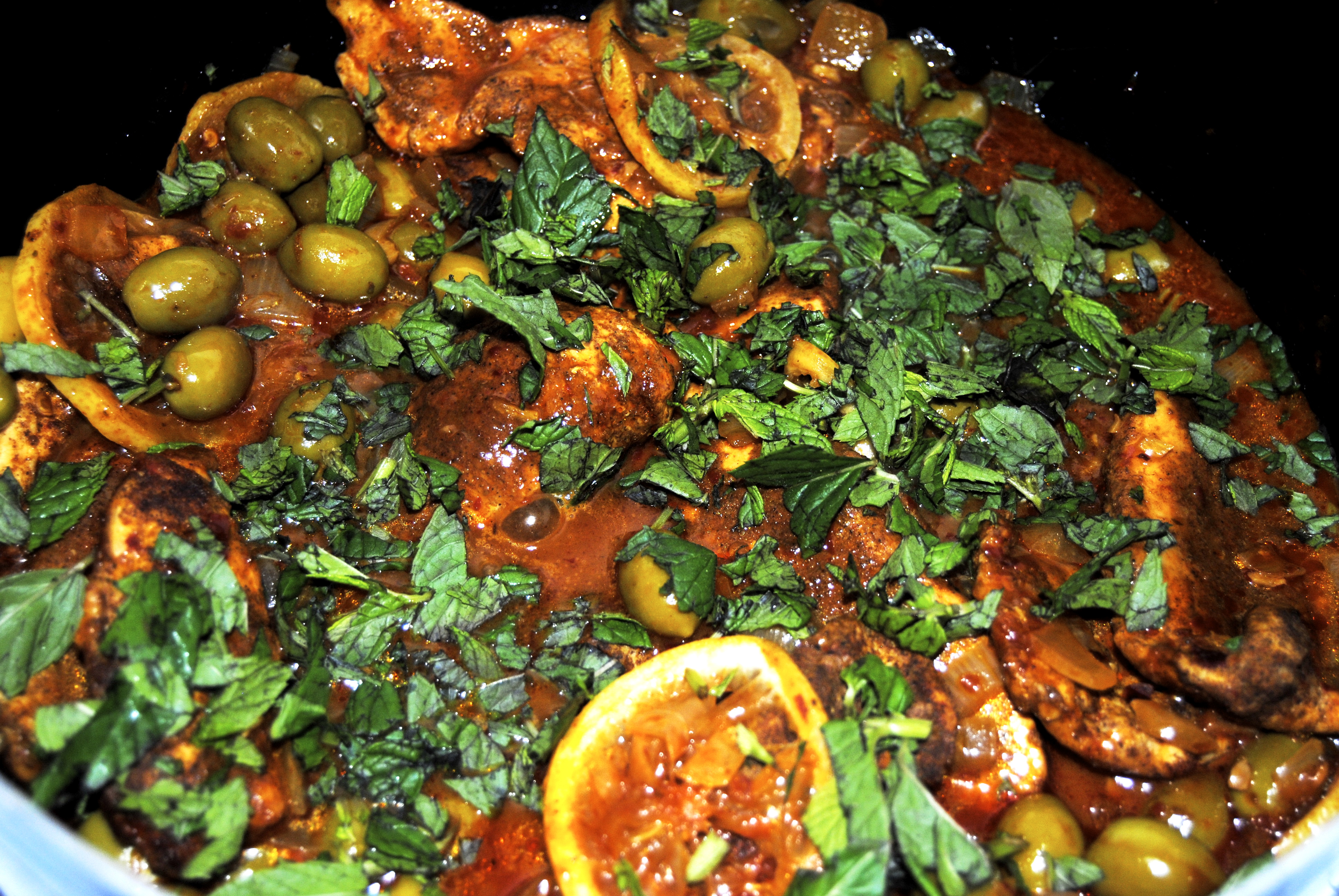
Add the honey, broth, lemons, olives and harissa. Turn the heat to low, cover and cook for 30 minutes. Add the mint and parsley, give it a quick stir and serve over brown rice or couscous. Enjoy!
If you are a woman, or if you’ve ever been one, you likely don’t remember that last time you ordered a regular muffin, a brioche, or stared at the pasty whiteness of an egg white omelette, threw your arms up and shouted out to your server, “Bring me the maple scone!”
And even though Beyonce says that women “run this motha’,” that we are “smart enough to make these millions” and “strong enough to bare the children and then get back to business,” the reality for most women is that we often do so at the expense of much culinary enjoyment just to look a little less fat naked. And even if we (read: genetically thin women who have never worried about their weight anyway) do allow ourselves a little indulgence now and then, the monotony of healthy eating can sometimes feel like a tired relationship.
But whether man or woman, there are days, weeks or even entire eras when our lives and diet stagnate. Perhaps you’ve spent thousands of $$$$ on a lofty degree from a fancy school, you’ve traveled the world and you’ve “stayed on track,” but you still can’t land more than an unpaid internship at Costco. And certainly there are times when we have all coveted a tiny space in our daydreams to imagine a different life. And this is where today’s post comes in. Everyone! We must live! And Tunisian Harissa (pronounced: huh-ree-suh) will help us do so.
Harissa is a Tunisian chili paste used commonly with meats, fish, vegetables or as a couscous flavoring. But this Harissa recipe will transform your food in many of the ways you wish you could transform your life. While it won’t make your husband stop leaving tea bags around the house and it definitely won’t pick the kids up from school, it will surely inject some fire into the monotony of your daily routines while also giving you a taste of how people eat in the Middle East and North Africa right from your own kitchen. Plus, spicy food (though this isn’t over-the-top spicy) boosts your metabolism!
So, don’t shave your head, don’t curse your Polish fat-storing genes, and don’t feel bad if you haven’t had that sinful, decidedly shameful tryst yet. If you want to shake things up a bit, just spread some harissa on bread, tablespoon it into your next chicken or fish dish, and stash away that $1500 you were saving to travel and enjoy this simple transport to a faraway land.
Variations include caraway, coriander and cumin seed.
How to do it:
Soak the peppers in water for 30 minutes. Cut off the stems. Grind peppers and garlic with a mortar and pestle or give it a few whizzes in the food processor. It shouldn’t become a liquid but also shouldn’t be massively chunky. It should look like a spread or thick sauce. Stir in the olive oil, lemon juice, salt and cumin. Taste and adjust seasonings. It will look like a lot of oil at first, but while it sits in the fridge it will help the dip get darker and darker in color. Store in a tightly lidded jar in the fridge. Enjoy!
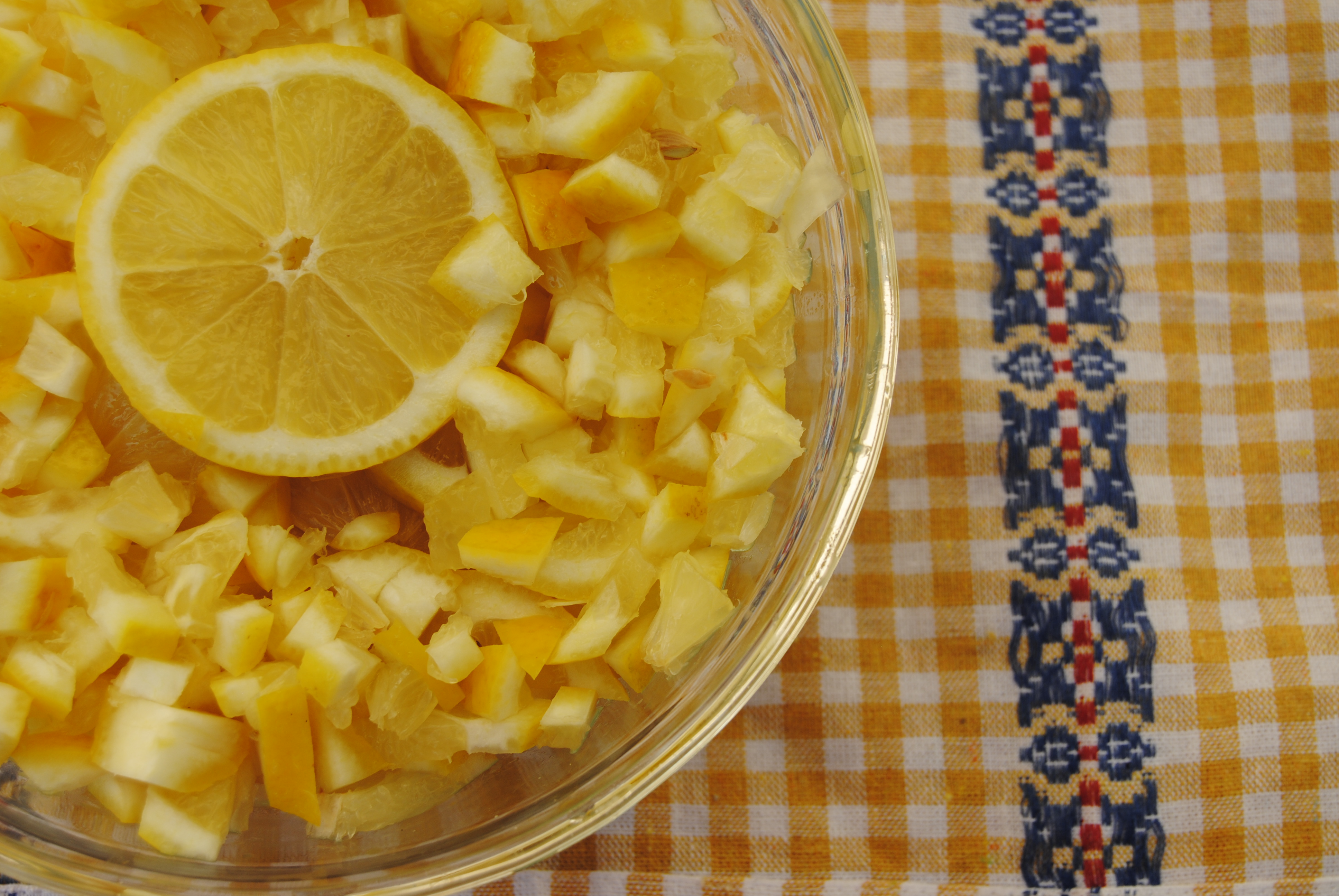
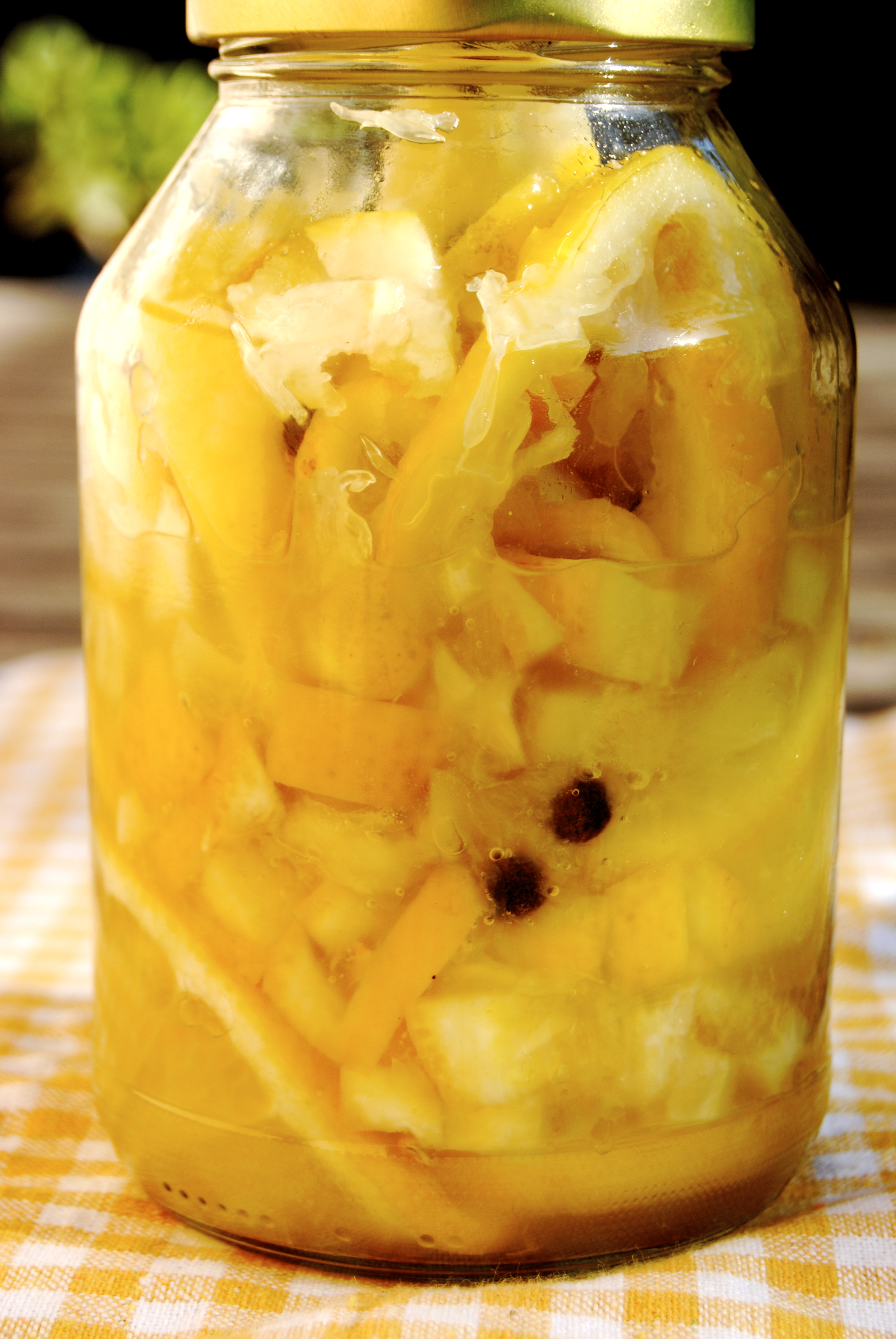
Since I went to Morocco last summer, I have been dying to make preserved lemons. Sadly, I can’t really get over my fear of canning and poisoning myself and friends with fatal bacteria from doing it all wrong. While I’m working up that courage, I found a very quick method of preserving lemons that takes only three hours and closely resembles how real preserved lemons taste after weeks. You can eat them after 30 minutes or so though. They’ll only get better with time. And I don’t know what you think, but I think it’s pretty exciting to be able to eat an entire lemon!
These go awesomely in salads, in a stir-fry, with meat and even with a simple scoop of vanilla ice cream. Check back soon because I’ll post how to use them in a Moroccan chicken dish with harissa and green olives.
**Note: Unless you are using organic lemons, boil your lemons for about a minute and scrub them thoroughly to remove the wax and other products that have likely been used on your lemons.
4 lemons; seeded and thinly sliced or diced (depends on your preference)
1 tblsp peppercorns
2 tblsp sugar
1 tblsp salt
How to do it:
Wash and cut your lemons, removing all the seeds. Place them in a bowl and add the sugar, salt and peppercorns. Give the mixture a good stir or two and you’ll notice that it will immediately begin to juice. Transfer them to a jar and refrigerate.
Not pictured: vinegar-spiked water dripping down my forearm as I munch on these and type.
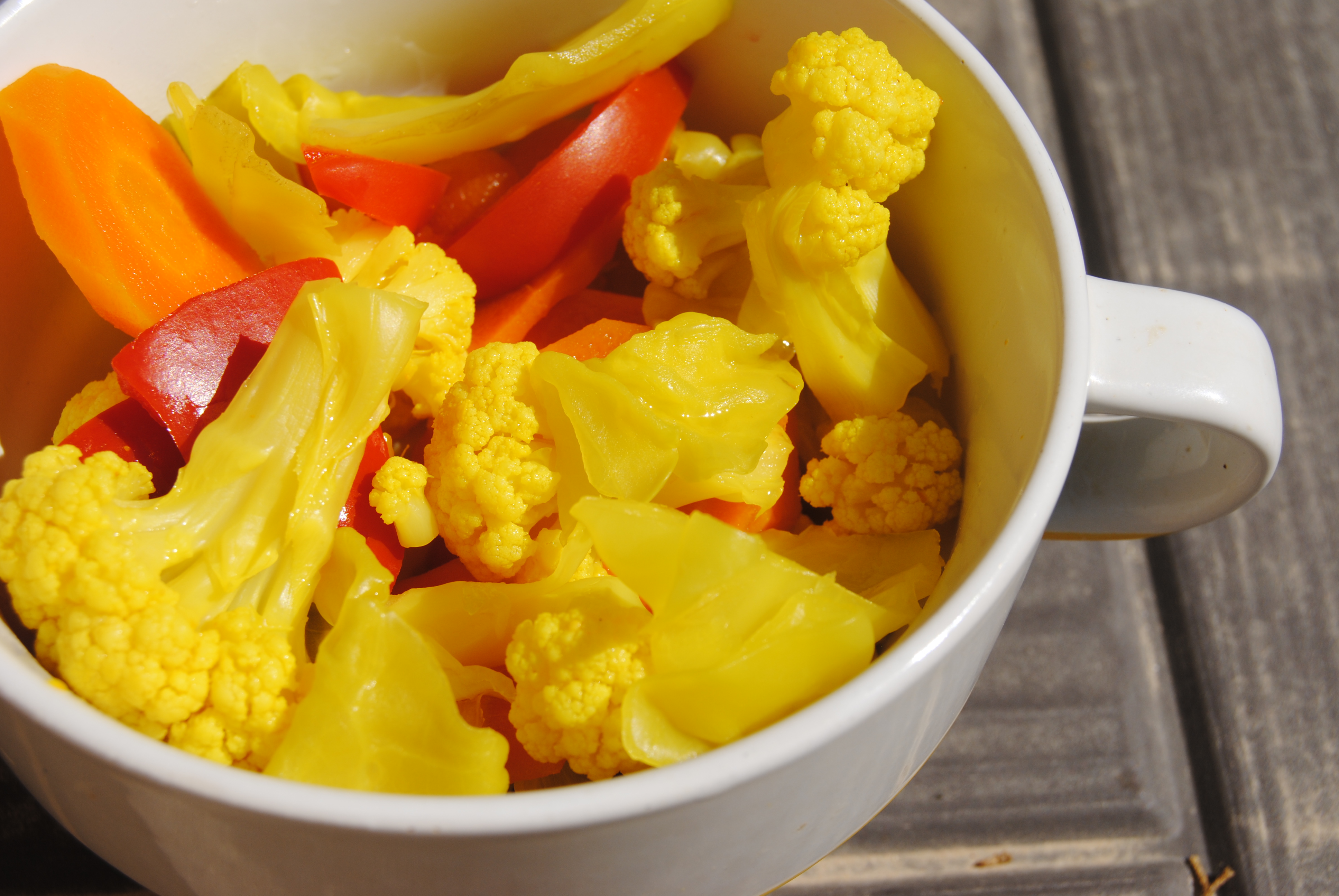
Hamutzim (pronounced: khawm-ooo-tzeem) are the Israeli version of the plate of bread that comes before your meal at a restaurant. And they are insanely addictive. Once I have one I have to eat the entire bowl and then I can’t stop thinking about them till the next time I eat them. They usually accompany hummus or go inside a falafel, though sometimes hamutzim merely refers to the bowl of cut up pickles and onion that can also accompany a bowl of hummus, instead of this version, which is cauliflower, cabbage, carrot and red bell pepper.
This recipe comes from Roni, a very nice man in the Iraqi shuk at Mahaneh Yehuda market, who sells large to-go containers but was generous enough to share his recipe with me, as well as his phone number in case I ran into any problems. Roni also sells olives and amba (pickled mango), and I met him a few weeks back when I asked him for a recipe for amba and he laughed in my face. I guess it’s really hard to make? Thanks to my friend Amira’s Iraqi grandmother, as soon as mangoes are in season here, I’m going to take a stab at it. And then I’ll go laugh in Roni’s face.
Nevertheless, I was shocked at the likeness of these. They are exactly what I eat in the restaurant. Add them to your salad, eat them with meat, munch on them, stick them in a sandwich or falafel, or enjoy them with some hummus. I’m salivating and going back for more right now.
Makes about 6 cups
What you need:
One head of cauliflower; leaves removed and florets separated and cut small
5 leaves of cabbage; coarsely chopped into 1″ x 1″ squares or 2″ x 2″
2 small red bell peppers or 1 large red bell pepper; cut into 1″ squares and small strips for variety
1 carrot; cut on a bias
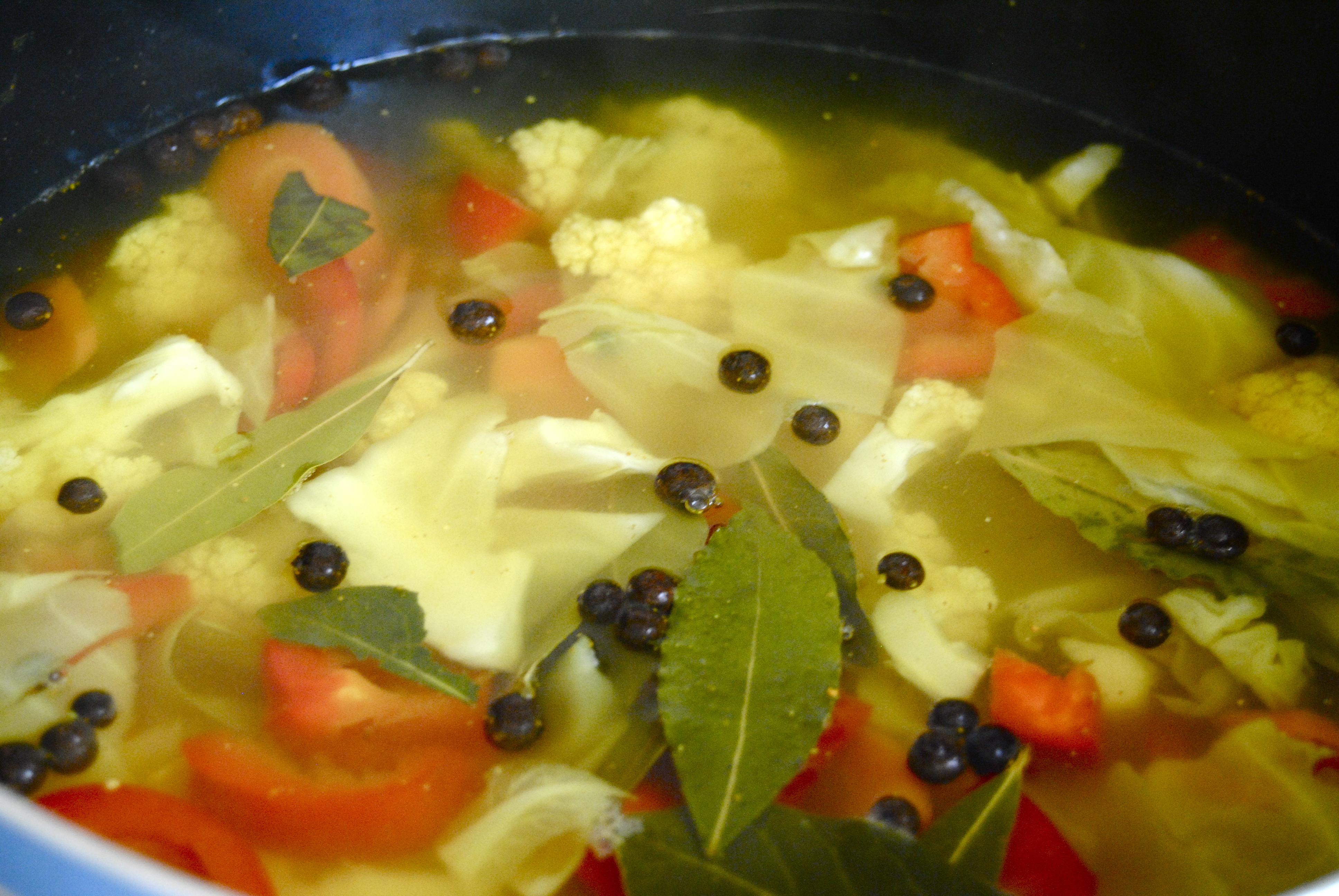
10-12 bay leaves
3 tsp amba spice mix – At an Indian or Middle Eastern spice store, it may be called “Amchur/Amchoor.” Alternately, pull together some ground mustard seeds, chili powder, hot paprika, and a little cumin. But FYI, I’ve made this without the spice mix and it’s still good.
1 tsp turmeric
a pinch of ground pepper
1 tsp peppercorns–the big ones (about 25-30)
3 tblsp salt
8 c water
2 c white vinegar
How to do it:
Cut the vegetables into slices and disassemble the cauliflower into little florets. Wash the vegetables and transfer them to a large pot. Add the water and vinegar and cook until water boils. Once it boils, turn off the heat, move the pot to another burner, add the spices and cover. Allow to sit for at least two hours on the counter. Transfer to a jar and secure tightly. Enjoy!
Ever make something that was so delicious that when you discarded the foil you removed it from the garbage a few minutes later to savor a stranded carmelized onion or sauce-soaked bread crumb? Me either, ew, that’s….disgusting.
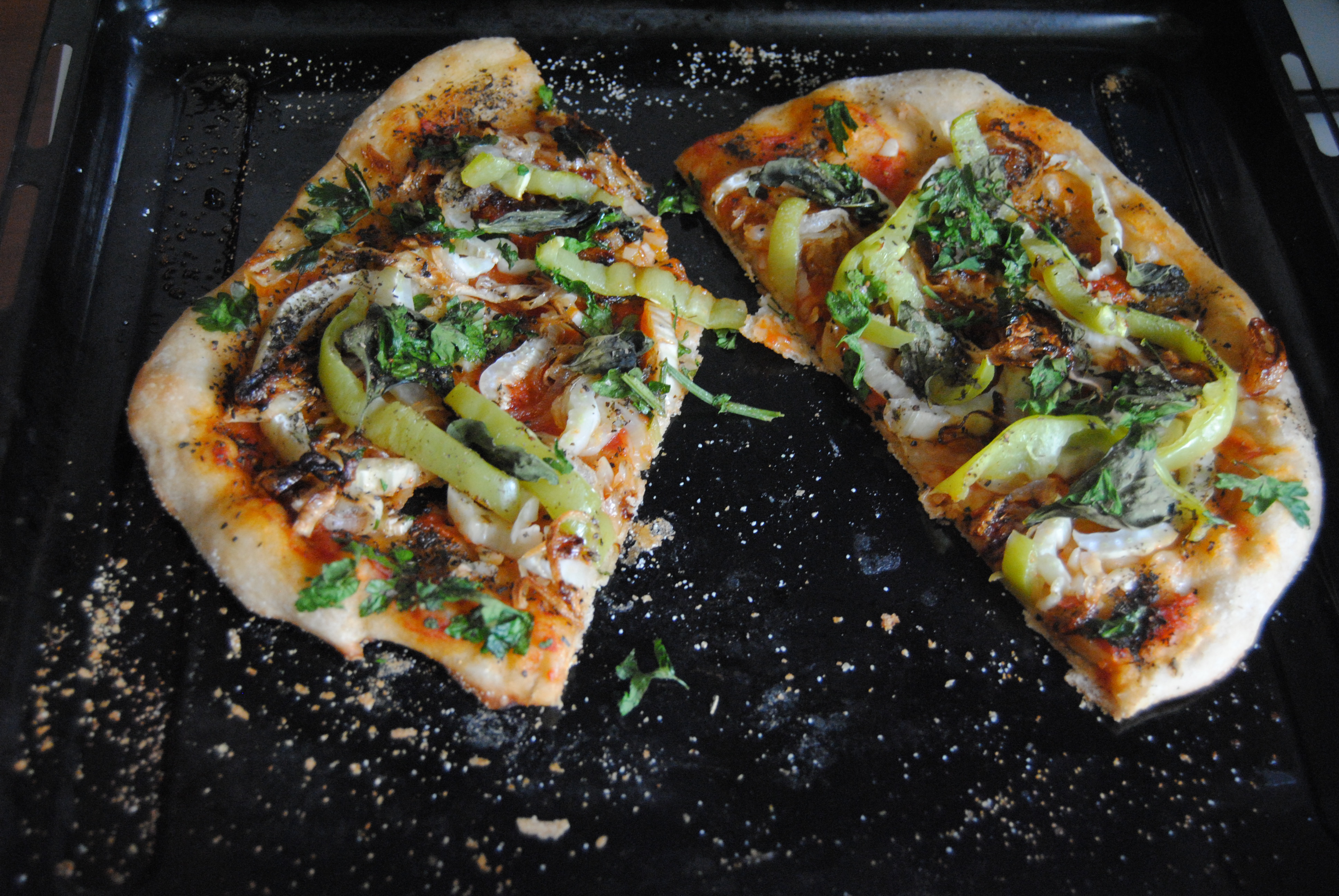
While a stir-fry is my usual “I have no idea what to make for dinner” dinner, large-batch no-knead pizza dough that can can be put into the freezer and taken out on-demand is a close runner up. What do I mean by no-knead? I mean that the dough takes 3 minutes to prepare, rises overnight and is ready to eat the next day. It’s ideal for those weeks you know you won’t have a lot of time to cook or if you like options. This is the kind of pizza dough that can be transformed into a flatbread with garlic, salt, rosemary and red onion or into a pesto-parmesan pizza appetizer or stand on its own as your lunch or dinner. The only catch is that you must prepare the dough at least one day in advance. But no worries! It freezes well.
1/2 yellow onion; thinly sliced into coins and carmelized (add a tsp or so of brown sugar to the onions with a little oil and fry until they become golden-brown)
a few sprigs of basil and parsley each; chopped
1/2 green bell pepper; sliced into thin, long pieces
1/2 fennel bulb; thinly sliced into coins
salt & pepper to taste
large pinch of dried oregano
How to do it:
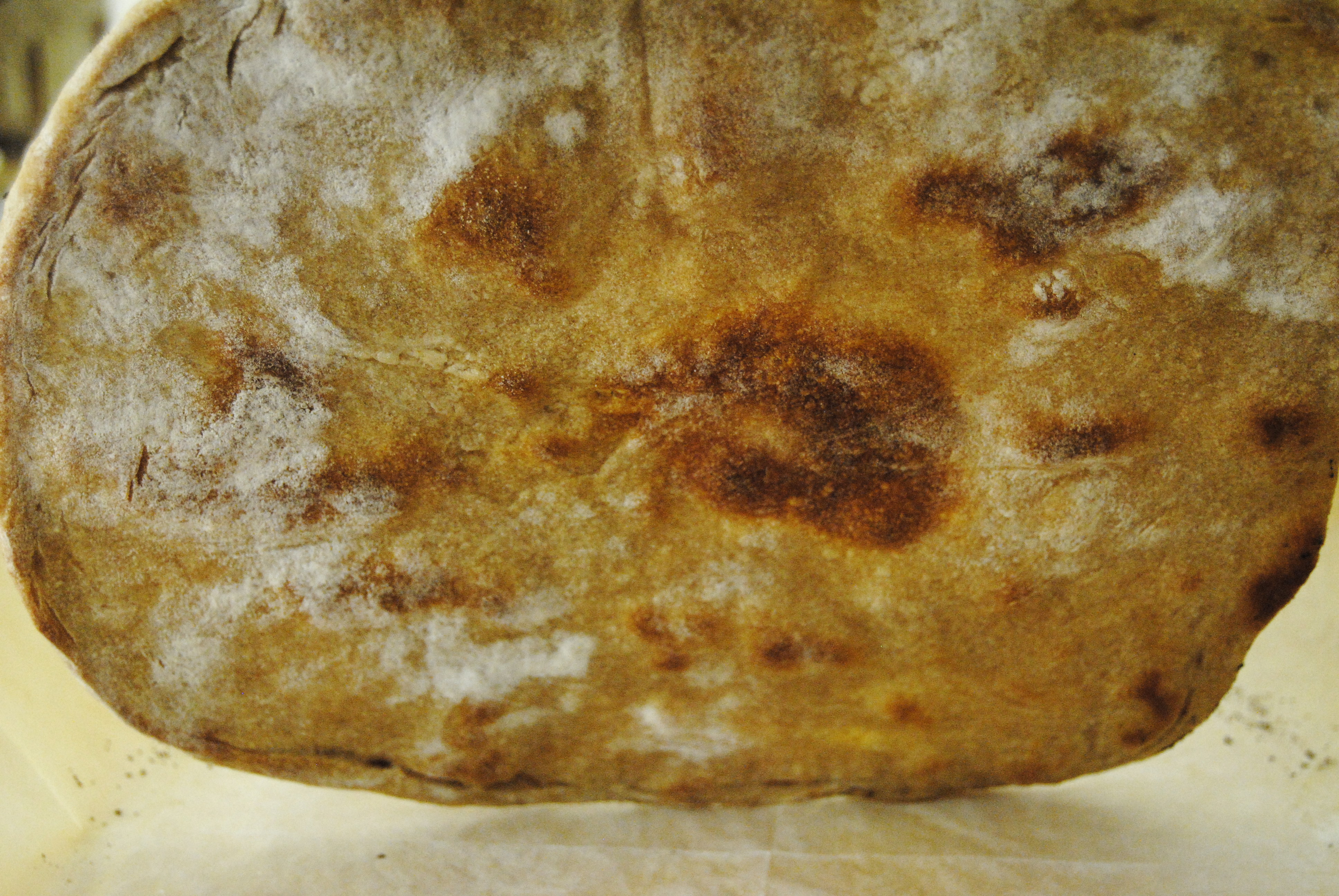
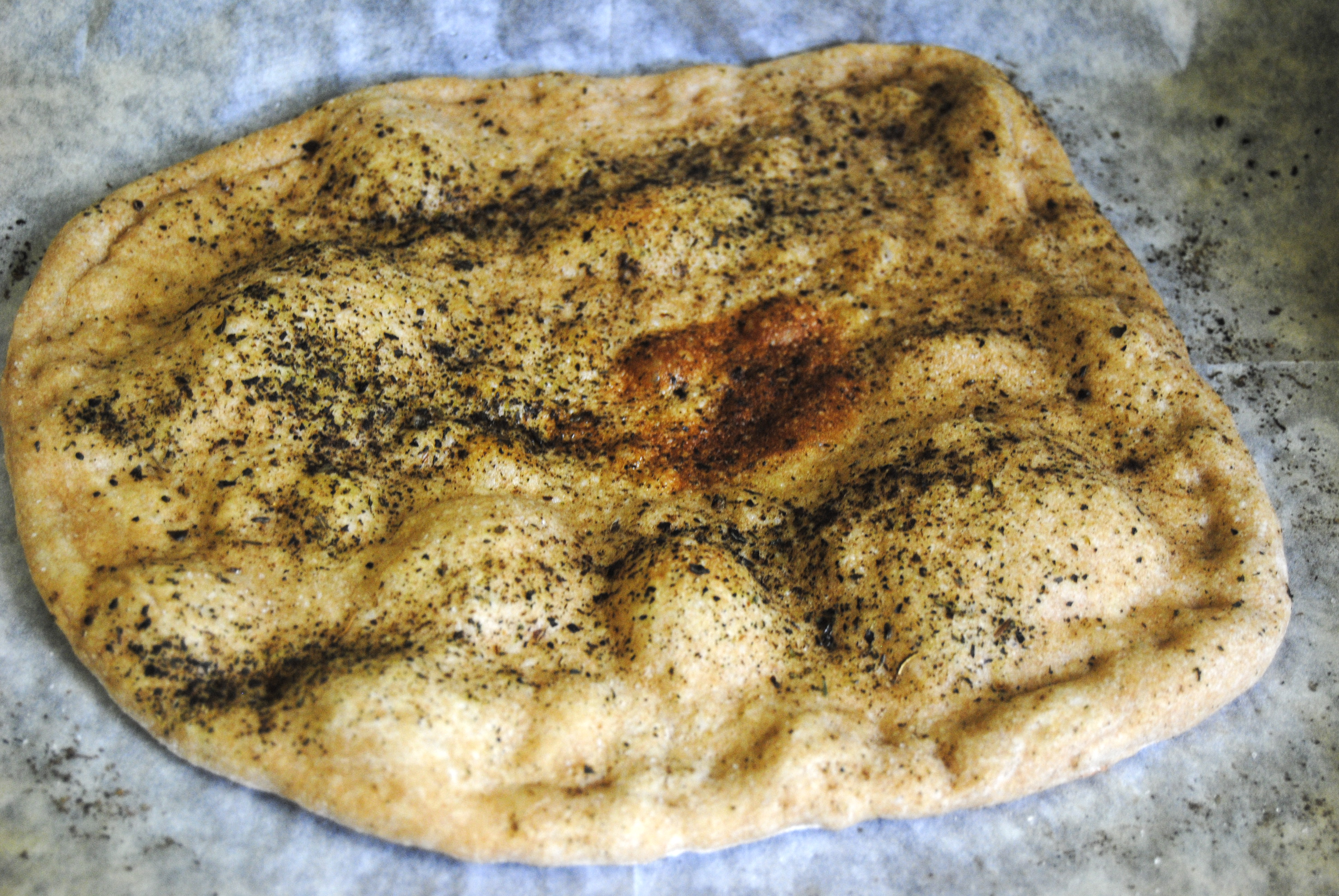
Preheat your oven to as hot as it will go or at 500 F. Take your dough ball and roll it out on a lightly floured surface with a rolling pin, glass or whatever else you use for a makeshift roller. Start from the center and spread outward; return to the center and spread outward just slightly to the right and left. Repeat this process while also rolling the edges horizontally to get a round shape. Using both palms, place the edge of the dough between your hands and form a crust by pressing down with the side of your hand. You can also just create one by pressing your fingers into the edges to form a dent and then rounding it with your palms after. Dust some corn meal or semolina onto a parchment-lined baking tray and transfer your dough to it. Reshape your dough at this point if it takes on a weird form. Brush 1-2 tblsp of oil on the dough (try not to put too much in the center or it will become soggy), garlic, salt, pepper and a large pinch of oregano. Place it on the bottom of your oven for about five minutes or until the crust and the bottom get a golden hue. If you lift it to check while it’s still in the oven, the dough should be stiff and not…wimpy. While this is happening, carmelize your onion.
Pop the holes or don’t pop them–as a kid I always wanted the slice with “the bubble” so I don’t pop them.
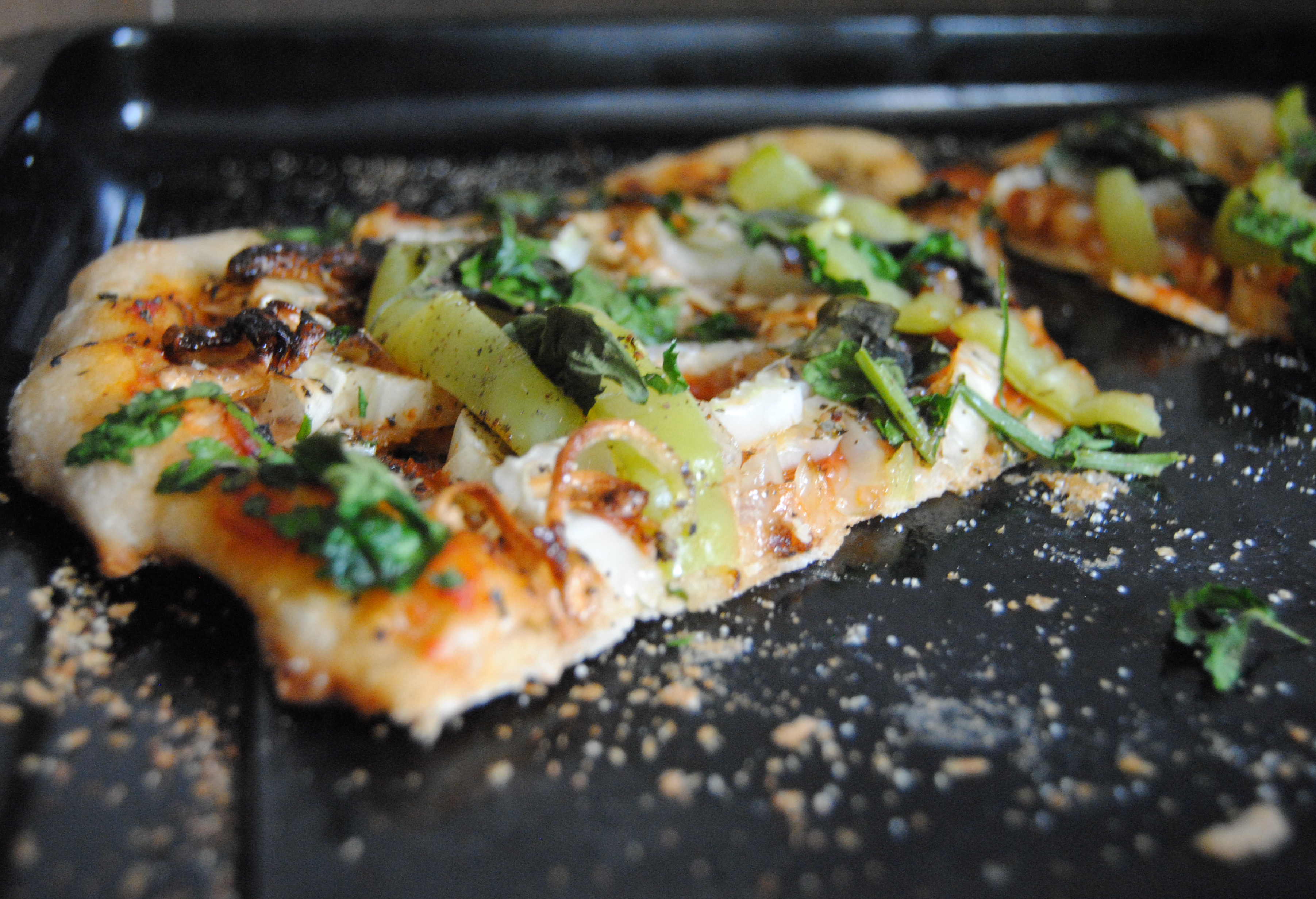
Spread 2 tblsp of sauce all over the pizza, leaving a 1″ margin for the crust. Again, try not to go overboard on the center of your pizza or it will become soggy. Add your carmelized onion, fennel, pepper and herbs. Place back into the oven on a middle rack and let cook for another 6-8 minutes. Enjoy!
1/3 c whole wheat bread flour
3 2/3 c all-purpose flour
OR
2 c whole wheat bread flour and 2 c all-purpose flour
1/4 tsp yeast
1/4 tsp sugar
2 tblsp olive oil
1 1/4 tsp salt
1 1/2-1 3/4 c warm water (baby bottle temp or long enough that your finger can stand being in the water for five seconds)
How to do it:
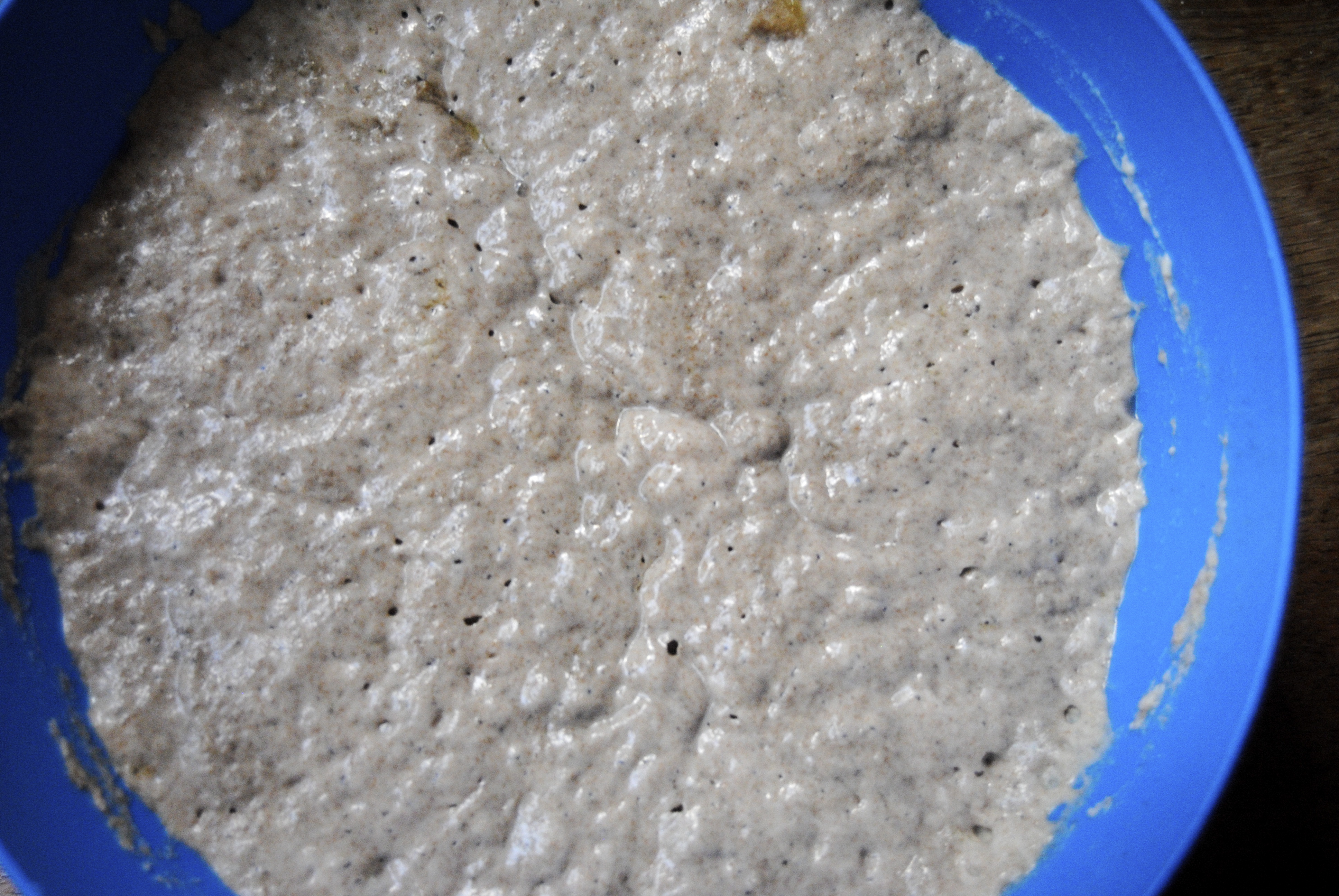
Combine all the ingredients together and cover with cling wrap or tie a plastic bag around it and place in oven (oven is off) for 18 hours. Your dough should be sticky but not wet. Start with 1 1/2 c warm water and if the dough is dry add another 1/4 a cup. If the dough becomes too wet though, just start over. I added 2 c water once because I thought my dough looked too dry and when I came back to check it after it rose, it was so wet that I could hardly handle it. I ended up having to add another 2 c of flour! It was a disaster.
BEFORE
18 HRS
When you check the dough, it should have wholes in it and look kind of creamy and a little bit like cellulite.
AFTER
Turn your dough onto a lightly floured surface. It will be verrrry sticky and too difficult to handle. Sprinkle some flour on the top as well and press the dough into a rectangular shape. Take a knife with a flat blade and divide the dough into four equal pieces.
Rolling technique:
Grab one of the pieces, holding it with both hands on either side. If it feels sticky, dust it with some more flour so that you can handle the dough easily. Tuck the edges underneath so that they meet in the center and until your piece gradually becomes a ball (you will have to do this several times till it takes on a ball shape). Leave to sit for 15 minutes. Store in the fridge for a few days or freeze the balls. If you do put them in the freezer, they will need to rest for about 30 minutes before you use them.
Note**When you are rolling out the dough for the pizza, if you notice the dough is bouncing back to its original shape and doesn’t want to roll out, let it rest for an additional 10-15 minutes and it will become easier to work with.
Breakfast is really tough for me. I’m not usually hungry and I always want something quick. I like to make frittatas and keep them in the fridge for a few days, grabbing a piece for breakfast or lunch along the way because they require almost no time investment whatsoever and you have ready-to-go food for days. If you are a frittata fan, you can also check out this Persian version of a frittata called a kuku that I posted a few weeks back.
In the Middle East, these are often served cold, but I think they’re just as good warm with a dollop of yogurt, hummus or tehina on top.
1 red bell pepper and 1 yellow bell pepper; diced finely
2 garlic cloves; minced
4-5 sprigs of basil; chopped
1 tblsp fresh thyme
salt & pepper to taste
4 eggs
2 tblsp soy milk (or whatever milk you have on hand)
How to do it:
Rinse the spinach and throw it into a frying pan over med-low heat, allowing the water to help wilt the leaves. Cook for two minutes, remove from the heat, run under cold water and wring out the spinach. Set aside. Heat 1 tblsp of oil over medium heat, add the pepper and cook them until they are soft (about 5 minutes). Add the garlic, salt and pepper to taste, and stir until it’s all mixed in well. Chop the spinach, and add the spinach thyme and basil to the mixture; stir together for a few seconds, remove from the heat and set aside.
Beat the eggs in a large bowl and add the milk, peppers, herbs and salt. Clean the frying pan and heat the remaining tblsp of oil over medium heat. Drop a small amount of the mixture onto the pan to see if it sizzles. Once it does, add the mixture, giving the pan a slight tilt to allow everything to spread out evenly. Scrape down the sides after a couple of minutes, lift the frittata up slightly with a spatula and allow some of the mixture to fall underneath. Turn the heat to low, cover and cook the frittata for ten minutes. In the meantime, heat your broiler.
Once the eggs are no longer runny, stick the pan into the broiler to allow the top to become goldeny-brown and the frittata to puff up like a chubby cheek. Make sure it doesn’t burn though. Remove from the oven, give it a wee shake to make sure it’s not stuck, and allow it to cool 5-15 minutes. Serve warm or cold. Enjoy!
When I went to by the fresh thyme for this salad, I didn’t recognize it amidst all the rosemary, basil, mint, parsley, chives, and all the rest. And then I saw the pretty little flowers and asked for a bunch. The man said, “You’re making meat in this heat?” I said, “No, it’s for salad,” and he replied, “Thyme isn’t for salad.” I had never seem thyme in a salad before either, but since trying it at a cafe here once, I’ll hardly make one without it.
This salad is inspired by one of my favorite cafes in Jerusalem, Cafe Naadi on Shatz St. If you’re ever in Jerusalem, you should stop by and also try one of their sandwiches or go for the Israeli breakfast spread. They have a delicious, lemony bulgur, thyme-scented salad that I order every time because it’s cold, light and filling. This is a really healthy salad for the warm days to come (or the 90 degree weather here in Jerusalem) and you can make extra, like I usually do, and bring it with you for lunch the next day. I always have some extra cooked bulgur in my fridge because all you need to do is chop some veggies and you can a quick, 10-minute meal ready to go.
Serves 2-4
What you need:
4 cups cooked bulgur (about 2 cups uncooked)
1 yellow pepper; cut into chunks
1 bunch green onion; sliced into 1″ pieces
handful of kalamata olives
2 cucumbers; cut into chunks
a few sprigs of thyme
2 tomatoes; insides removed and diced
Spinach (optional. they don’t use it, but I did this time around.)
for the dressing:
juice of two lemons
2 tblsp olive oil
1 tsp sugar
1/2-1 tsp salt, or more to taste
How to do it:
Soak the bulgar in twice as much water until it’s soft. There should be no crunchy pieces. Combine all the ingredients, dress, and enjoy another small taste of Jerusalem!

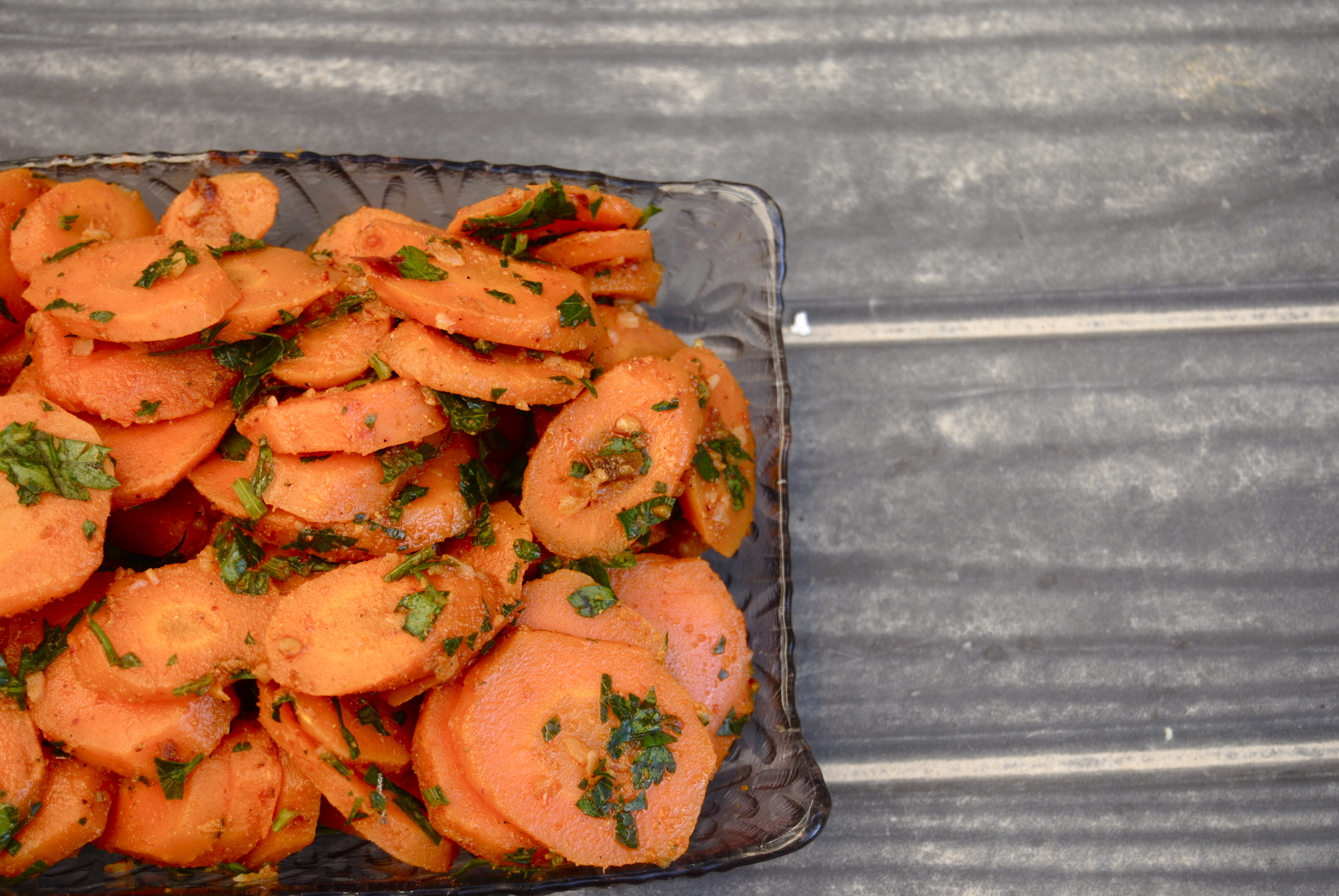 Maybe in ten years you’ll be able to lick your computer screen and taste these guys. But I wish you could now. These carrots are lemony, slightly spicy and oh-so-soft. When I went to Morocco, this was served as part of a mezze with lots of other intriguing salad combinations, including soft carrot sticks that had been soaked in sugar and orange blossom juice. To die for.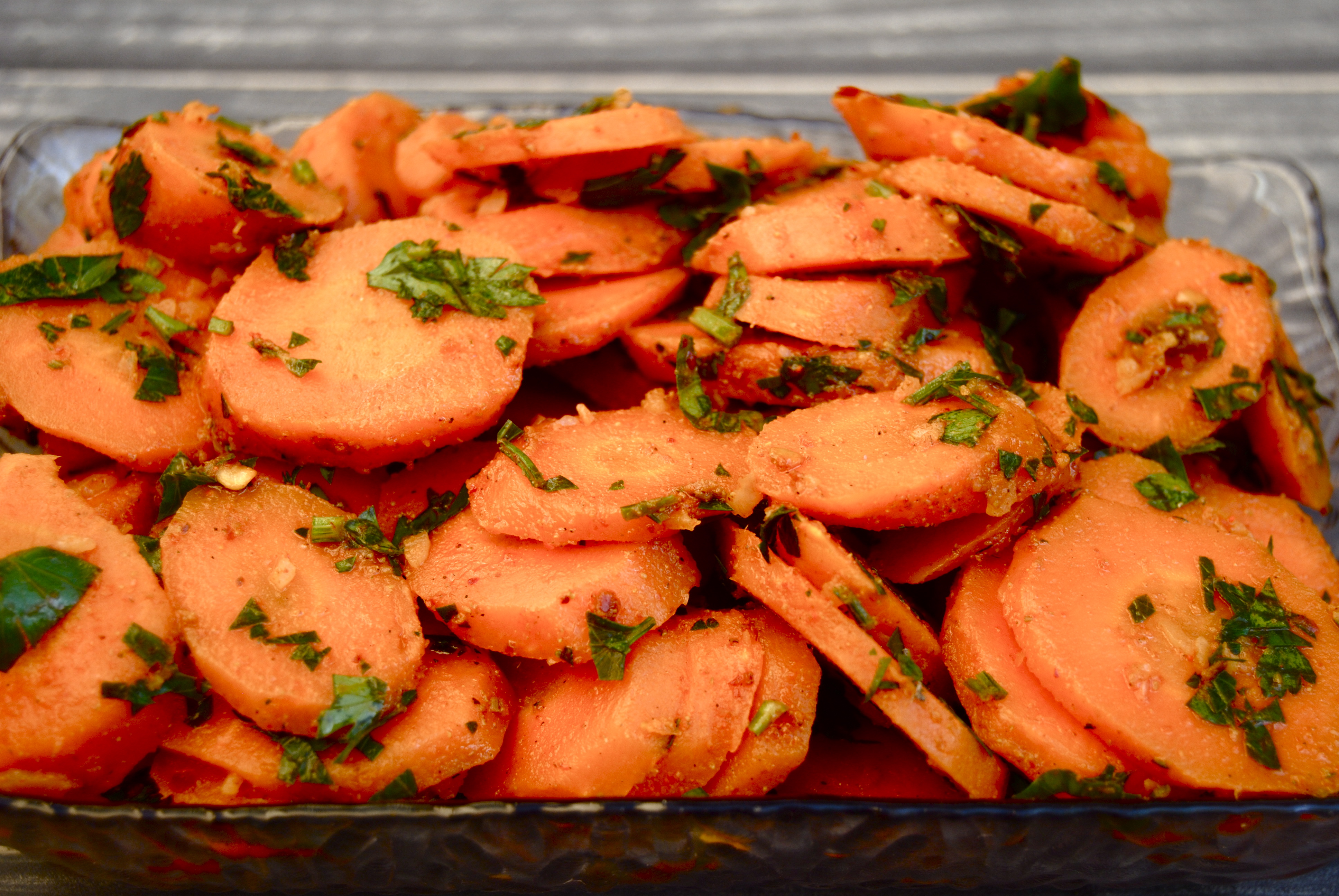







 my jerusalem kitchen